
Lawfare Daily: A Progress Report on the War on Terrorism with Peter Bergen
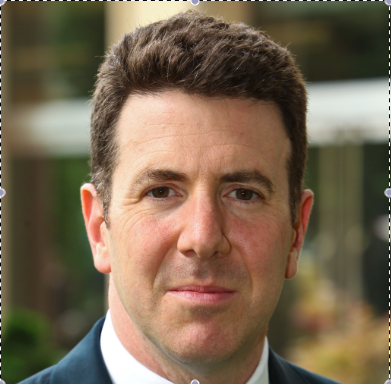

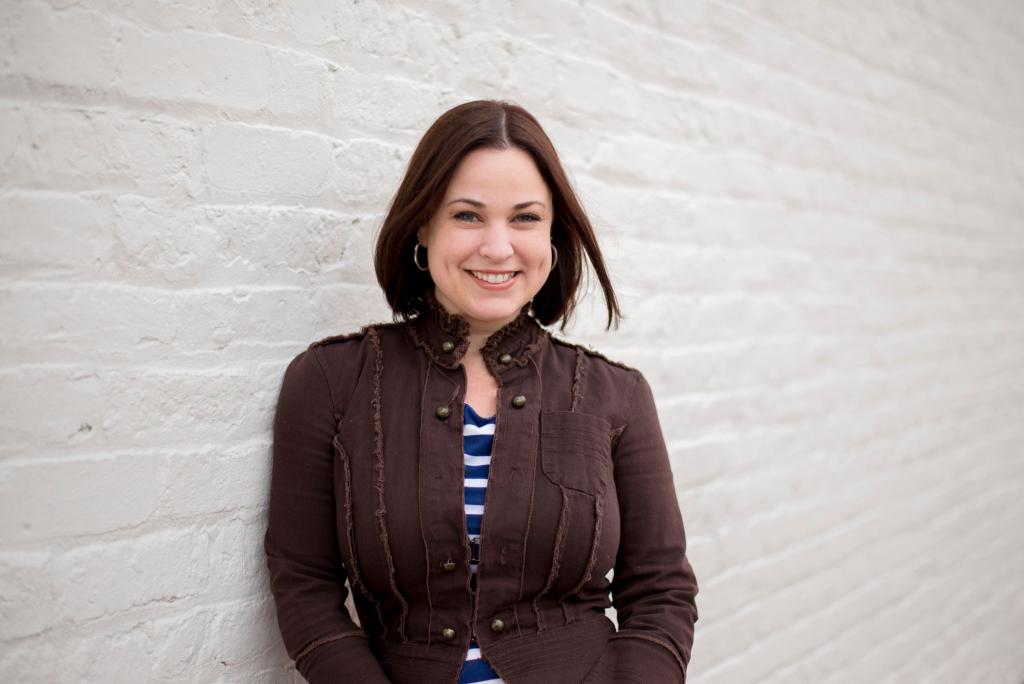
Lawfare Foreign Policy Editor Daniel Byman sits down with Peter Bergen, author of “All the Presidents' Wars: Twenty-Five Years of America's War on Terror,” to discuss counterterrorism in the 25 years after 9/11, reviewing the many mistakes the United States and al-Qaeda made, as well as some of the surprising successes. Peter also draws lessons from the war in Iran today for how to better respond to a future terrorist attack.
To receive ad-free podcasts, become a Lawfare Material Supporter at www.patreon.com/lawfare. You can also support Lawfare by making a one-time donation at https://givebutter.com/lawfare-institute.
Click the button below to view a transcript of this podcast. Please note that the transcript was auto-generated and may contain errors.
Transcript
[Intro]
Peter Bergen: You know, it’s a simple question. If you can’t answer it, like, you shouldn’t be in the business of invading the country and turning the power, like, basically turning the pyramid with the Sunnis, minority Sunnis on top and the majority Shia on the bottom. And flipping the pyramid is by overthrowing Saddam, you effectively started an insurgency, what became the civil war, and democratization simply amplified it.
Daniel Byman: It’s the Lawfare Podcast. I’m Daniel Byman, foreign policy editor of Lawfare, with Peter Bergen, who is the author of a new book, “All the President’s Wars: Twenty-Five Years of America’s War on Terror.”
Peter Bergen: There’s only two ways you can make peace with your enemies. You can either get them to surrender or you can make peace with them.
And peace is a, you know, is, classically is a mutual recognition of a hurting stalemate, which is where we are. And then it becomes, you know, what’s the least bad deal we can make and what’s the least bad deal the Iranians feel they can make?
Daniel Byman: Today we’re talking about America’s record in counterterrorism, what has gone well, what has gone poorly, and how the United States should be thinking about counterterrorism in the future.
[Main podcast]
Peter Bergen, let me congratulate you on your new book, “All the President’s Wars,” which certainly has a catchy title, and I will say to our viewers and listeners, is not only deeply informed, but is actually wonderfully easy to read. So, you have a gift for prose as well as for reporting.
Peter Bergen: Well, you know, I mean, as you’ve written many books yourself, the hardest thing to do is to write something about a relatively complex subject that is written in a such a way that it doesn’t complexify something, but tries to make it understandable.
Daniel Byman: I’ll say just as a endorsement of the book you’ve also done an excellent job being able to write for different audiences.
I’ve, you know, for better or worse, kind of lived some of these issues in great detail, yet I still learned a lot. But I just recommended it to a younger colleague who is entering this field as this would be a great primer for someone who wants to learn about really how the United States got to where it is today on counterterrorism for better or worse.
So, so very nicely done.
Peter Bergen: Thank you, Dan.
Daniel Byman: Let me start with kind of a big question. Your book makes clear that the United States spent trillions of dollars, lost thousands of Americans’ lives, destabilized parts of the Middle East that led to hundreds of thousands of deaths. Yet, there not only has been no repeat of 9/11, but there hasn’t been anything close to it on U.S. soil.
How should we weigh these things against one another when we’re evaluating the last 25 years?
Peter Bergen: Well, I think that’s a great question, and perhaps I didn’t do a good enough job of making that... I mean, it’s a hard, the cost-benefit analysis is a hard one because two hundred thousand Iraqi civilians dead, forty-five thousand Afghan civilians dead, sixty-six thousand Afghan police and military dead, six trillion dollars of current and projected U.S. taxpayer money to 7,000 service members.
And something I found out in the course of writing this book that I didn’t know, 8,000 American contractors, they got almost no media attention, but they were doing all these kind of quasi-military tasks, whether it was base protection or protecting VIPs or intelligence support or whatever. And so, you know, that it was quite a cost.
I guess, you know, we can easily say that many of our goals could have been accomplished at a much lower cost of blood and treasure, and also our own political and capital around the world, if we had done things smarter and better. So, I think that’s the right answer. I don’t think— Look, if Al Gore had won the pre-9/11 election presidential election, I don’t think Al Gore would have sort of said, well, we’re not gonna go to war against the Taliban and al-Qaeda.
I think the... I mean, the vote for the authorization of the use of military force speaks for itself. There was only one dissenting vote, Barbara Lee of California, a Democrat, who actually saw much further ahead than a lot of us. But, you know, there was, y- you know, rarely has a war been more legitimate.
We had a UN resolution in favor. We had NATO allies for the first and only time, Article Five. We had overwhelming congressional authorization. We had a real and imminent threat. We had a, we overthrew the Taliban in three months with very almo- No, the only Amer- the only American fatalities in the first war against the Taliban that overthrew them were caused by our own side which is astonishing.
It was a friendly fire incident in, near Kandahar on December 5th 2001. We also had a CIA officer who was killed in a prison uprising in northern Afghanistan during that timeframe. But I mean, it wa- it seemed like we were the hyperpower. You remember this, Dan, you know, the French would call us a hyp- hypérpuissance, I think, a hyperpower.
Well, all that kind of image blew up in the deserts of Iraq and the cities of Iraq, and we came off as hapless and incompetent, got us sucked into a war of choice which was very damaging in so many different ways, not least, you know, Dan, you know Joel Rayburn. You know, he was the lead panel on the Army History of Iraq.
It’s the only official history we’re ever gonna get because unlike the 9/11 Commission, which you served on as a staff member, there was never an Iraq War Commission, which is astonishing. There was a Chilcot Inquiry in the United Kingdom, but you know, we’d become so polarized already by the end of the Iraq War that there could be no real investigation.
So, the U.S. official Army History is the closest we’ll get, and that concluded that the sole winner of the Iraq War was Iran, which I don’t think was really the... I think no one who ordered the war thought that was gonna happen.
Daniel Byman: I’ll add to your plug of that history. It really is a remarkable document for something that the U.S. government did, which is it’s a pretty unsparing critique of the U.S. military as well as the broader U.S. government effort in Iraq done by very impressive U.S. military officers.
Peter Bergen: Yeah I totally agree with that.
The co-lead pen was Frank Sob- Sobchak, a, a colonel, Special Forces, PhD, Tufts. Joel’s a totally brilliant guy who was the other lead pen. I mean, so— And they assembled six other military historians, serving officers, and it’s really a work of history. Unlike a lot of these military histories, which is we took Hill 21 on day X, and, you know, that’s really very tactical level.
This is really… and they couldn’t get at everything. They never spoke to Rumsfeld. He kind of dilly-dallied them on that, and they also couldn’t really do much on special operations for classification reasons, and same with CIA. But on the other hand, it is a real history, which meaning, you know, it’s not just a military history.
There’s an, a political element to this history that is really good. It’s, it is a massive piece of work and a very good one.
Daniel Byman: Your book understandably goes in great depth in the U.S. mistakes in Iraq and also mistakes in Afghanistan, such as, I’ll say, misunderstanding the Taliban and missing opportunities to perhaps negotiate from a position of strength.
What mistake or mistakes would you highlight that the United States made after 9/11 in these theaters, but also outside them?
Peter Bergen: Letting Bin Laden go at the Battle of Tora Bora. I mean, we knew where he was. Yeah. One, the great thing about being a historian as you are, Dan, are you, do you consider yourself a historian or a political scientist?
Daniel Byman: Unfortunately, and with some embarrassment, a political scientist.
Peter Bergen: Okay. All right. Well, the great thing about writing works of history as you’ve done is like we keep learning things we didn’t know. So, I alway- we always knew that Jim Mattis, then a one-star general, had 1,500 Marines in Kandahar.
But it wasn’t really clear why they weren’t at the Battle of Tora Bora, what happened. And then, you know, when Jim Mattis published his relatively recent autobiography, he said that he repeatedly requested for his Marines to be deployed from southern Afghanistan to Tora Bora in eastern Afghanistan. Now, you can’t imagine a more gung-ho commander with a more gung-ho group of troops than 1,500 Marines under, you know, Brigadier General, then Brigadier General Jim Mattis.
That request was never disallowed and it was never a, you know, no one responded, so it just died. And similarly, Gary Berntsen, a very gung-ho CIA ground commander, requested a battalion of Rangers. That was actually turned down by General Tommy Franks, who will go down as one of the least impressive generals of the modern era in American history.
He managed to, you know, turn down a request to get bin Laden when he was surrounded for reasons that are, you know, either he’s elucidated publicly and to me in an email why he didn’t do that. Some of his reasoning was just totally specious. I think we didn’t want to replicate the Soviet invasion.
Well, eight- 800 Rangers in a small part of Afghanistan to get bin Laden is not occupying and invading Afghanistan for a d- you know, a decade as the Soviets did and killing a million Afghans. I mean, this is like, this is history by analogy that makes no sense. And then later, when it became a political issue in the 2004 election, he actually wrote a piece in The New York Times saying it wasn’t clear with the intelligence if he was really there.
This is untrue. And the reason I can say that with great authority is, you know, if you go back and you look at the public statements of Vice President Cheney, Paul Wolfowitz during that time period, they said, yeah, we think he’s in To- these are public statements. These are not classified statements.
So, you know, that was one of the big what-ifs. And I think another big what-if is there was a narrative that grew up, we should have included the Taliban at the Bonn conference that began November 25th, 2001. That was kind of the original sin. Actually, that narrative is not correct. Lakhdar Brahimi who was the UN leader of that conference, said that, but I think, you know, he’s a smart guy.
The fact is, the Northern Alliance, United States would never have let the Taliban to attend the Bonn conference when they were still fighting the war. Now, they surrend- they surrendered to Karzai, the president-elect of Afghanistan, in, on December 5th, 2001. That was the time to make peace. I mean, they knew they were utterly defeated, and we could have made peace with them.
You know, Karzai was willing to give them amnesty, make peace with them. Rumsfeld nixed it. We heard from the White House, from the spokesman at the time, he also nixed it, you know, within day, within a day or two. So that was a road not taken. Bracketing the Taliban and al-Qaeda was the same group, essentially, A, muddled our thinking during the initial stages of the war because the Taliban became the goal rather than necessarily al-Qaeda.
And then it also became a self-fulfilling prophecy because the Taliban began to look m- a lot more like al-Qaeda as the years went on, using IEDs, using suicide attacks and the like. So that was a big missed opportunity. So, I mean, unfortunately, there were quite a lot of them. And Obama made a version of this mistake.
We— After the Afghan surge, you know, he could have made peace with the Taliban, brought them to the negotiating table when they were really taking a real pounding in southern and eastern Afghanistan when McChrystal was the commander and the surge of troops had gone in. But, you know, Holbrooke was appointed as a special representative to Afghanistan and Pakistan.
That seemed to be a signal we were willing to do a deal with the Taliban. He died, unfortunately, and also, he began discussions with the Taliban at a pretty low level. So, it wasn’t the Obama administration missed the opportunity to make a deal with the Taliban. With every passing year, by the time we got to the negotiating table with them in earnest under the Trump term one in 2018, they drove a very hard bargain, a bargain that was a terrible one, which was, you know, no Afghan elected government officials at the table, you know, pretending to separate from al-Qaeda, et cetera, et cetera, and all the things you know that they didn’t do.
Daniel Byman: Let me ask you a very different question about mistakes because when I look at my own, you know, analytic record, I certainly made my share of misjudgments. Are there mistakes that the people in senior positions in the policy world made that you’re actually sympathetic to? You know, they got it wrong, but yeah, you know, that’s understandable and frankly forgivable, as opposed to, I’ll say some of what you detail, Tora Bora being one example, where I think, you know, most Americans would have scratched their head even more in 2001.
Peter Bergen: Right.
Daniel Byman: You know, they’re saying, right, you know, this guy who just murdered 3,000 Americans, you know, you’re letting him go? But are there things you look back and you’re like, okay, that was a mistake in hindsight, but I’m actually very sympathetic to it?
Peter Bergen: Well, I mean, some of the mistakes are so big you can’t be— I mean, the, the Iraq war of choice, you know, helped undercut...
I think the Iraq war of choice and the financial crisis in 2008 really kind of, there’s a reason that Americans are very suspicious of their elites because they had seemed to have absolutely no idea what they’re doing. And it p- you know, the Iraq War permanently hobbled Hillary Clinton’s chances of becoming president.
It greatly enabled President Barack Obama to become president, and the war on terror was quite useful for Trump as you know, the Muslim ban was a somewhat popular idea, and for— and terrorism was top of mind in the first Trump term election because ISIS was at its height. So, I will say that as I was writing this You know, counterinsurgency, you will recall Dan at a certain point in D.C. became a sort of religion, and I, and I will include myself as somebody who was sort of converted.
At first start, I knew very little about counterinsurgency. But I remember go— attending a talk by Dave Kilcullen, a double I double S in London, and he was talking about it. I was like, wow, I haven’t really heard about these concepts before. I mean, and, you know, the whole— in— at West Point, you learn more about this American Civil War by orders of magnitude than of than about counterinsurgency, right?
And if you look, go back at the American doctrinal manual, I mean, the military runs on doctrine. I think there were on 9/11, there were 300 pages about various kinds of things and two about counterinsurgency, which— So, we went into these wars not knowing much about counterinsurgency. So once there was a doctrine developed, it seemed to be kind of a panacea because, you know, in Iraq it seemed to work so well.
But it worked in Iraq— When I hear the word counterinsurgency strategy, I don’t like that term because counterinsurgency is a set of tactics. It’s not really str- anything strategic. And most of it is common sense. Don’t kill a lot of civilians. Get off your large bases because you’re not gonna understand the country.
Take advantage of the political situation. And one thing we did very adeptly in Iraq was not only just apply counterinsurgency tactics, send the 30,000 troops at the surge, which indicated to the Iraqi government and our allies that you could ally with us and it wouldn’t be a problem because we were still staying the course.
And I— which at the time I thought was a doubling down on a bad bet. But I mean, the big deal was the awakening, as you know, Dan. And the awakening was 100,000 Iraqi tribals who used to be firing at the United States. We then put them on our payroll, and they started firing at al-Qaeda in Iraq and the Shia militias.
And, you know, that was a huge surge. So, we adeptly... Yeah, it’s a great question because I was— as I— You know, what we couldn’t— the counterinsurgency couldn’t solve the basic strategic questions we had in Iraq, which were the underlying Shia-Sunni civil war that we in part precipitated and that eventually produced ISIS.
Now, one of the other great what ifs, what if we’d left troops in Iraq in December 2011? You know, Leon Panetta, who was Secretary of Defense, Bob Gates, who was also Secretary of Defense, Hillary Clinton and Jim Mattis, who was central command commander, all urged for a residual force in December 2011 Iraq.
Could the rise of ISIS have been stopped if we’d had, let’s say, three or 4,000 U.S. troops in an advise and assist air support intel role that we left? Maybe. I mean, the— but the fact is, this was an agreement negotiated by the Bush administration. The Obama administration went through with the withdrawal, and it was very popular with the American public and the Iraqi public.
So, it was a what if moment. But on the other hand, if you were in charge in Iraq or the United States, this is something Americans wanted out and Iraqis wanted to have. But, you know, one of the themes of the book, which I, you know, I’m curious to see what you think about this, Dan, is on the left of the Democratic Party and on the right of the Republican Party, there’s sort of unanimity that the absence of American troops equals peace.
I happen not to believe that. I mean, I turn— you know, one of the lessons of the book is persistent level of relatively small numbers of American troops can really be a force multiplier. We saw that with the war against ISIS. You know, we trained up the Iraqi Counterterrorism Service, in particular their Golden Division.
They really, you know, they ended the rule of ISIS in Iraq with our support. Same with the Syrian Democratic Kurdish, largely Kurdish forces. So, you know, that turned out to be politically sustainable, financially sustainable for the United States. It was very relatively few American fatalities. The dying and the fighting was done by Syrians and Iraqis.
The liberation was done by Syrian and Iraqis. That said, it came at a tremendous cost. There were thirty-five thousand American airstrikes. We— Mosul was turned into almost into a parking lot. So, you know, my— one of the... Obviously, you don’t want— The first lesson is don’t go to war at all if you can avoid it.
The second lesson is what is the least bad approach we can take? And, you know, I’ve— what I call go light, go wrong is probably the least bad approach. It itself is not a panacea. And, you know, can we, in a future conflict, could we go light and go wrong, but also, like, reduce the massive amount of American air power that’s used to defeat whatever the enemy is that we’re fighting?
You know, that would be, I think, the next step. And probably with, you know, I— that was in between twenty fourteen and twenty eighteen. With far more precise armed drones, maybe you could lower the number of airstrikes that you carry out. But, you know, you asked the question about, you know, were the decisions that were… You know, I mean, certainly the, the surge of troops in Afghanistan was something I thought was a good idea.
And I don’t think it was a bad idea, but I didn’t think we took advantage of it politically. And we weren’t gonna solve some of the big strategic questions just by a surge of troops, which were the incompetence and corruption of the Afghan government, that was gonna take a while, and the Pakistan safe haven for the Taliban leadership.
And I can one— You know, I spent a lot of time in Afghanistan. You often hear Americans of various kinds who’ve served there who say, you know, blame Pakistan. I’ve always had the same reaction. It’s like we- we’re never gonna bribe, control, pay, traduce, you know, order the Pakistanis to do things that were ultimately not in their national security interest, just as they weren’t going to, you know...
We’re gonna act in our national security interest. It’s kind of childish to think that a fairly major nuclear-armed power is just gonna do what we want to do, them to do. It just, that’s not the way... When it came to fighting al-Qaeda, they were more than happy. As you recall, Pervez, General Pervez Musharraf was, narrowly escaped being killed twice by Al-Qaeda in 2003.
So, you know, they were perfectly happy to help us with that. But when they saw that our attention was wandering to Iraq, I quote Ryan Crocker, the very effective U.S. ambassador to Pakistan, who talked to General Kayani, who was the chief of staff of the army, effectively the most important person in Pakistan like.
And, you know, where they were having this discussion about the Taliban, and Kayani was very blunt with Crocker. Just said, look, we know you left in the 1980s after the Soviet withdrawal from Afghanistan, and, you know, that, that’s very lived history for us. Yeah, and we’re hedging our bets. We think you’re gonna leave.
Well, I mean, unfortunately, he was right.
Daniel Byman: I would strongly agree with your point about limited numbers of U.S. troops can do a lot. I think both recognizing the, that capacity, but also, as you said, understanding the limits is vital, right? You’re not gonna, you know, do regime change in Iraq in the sense of putting in a new government that’s stable with a couple thousand troops, right?
Peter Bergen: Yeah.
Daniel Byman: So, you have to kind of lower the bar of what you’re trying to accomplish. But since frankly, over 100,000 troops didn’t do that particularly well, I’m not sure that you’re losing much by giving up the rather grandiose ambition.
Peter Bergen: Well, also, you know, I mean, some of this is so basic, it’s ama- it’s amazing that we have to even say this, but like understanding the environment you’re about to go into. I think it was Jeff Stein who was a, he’s a American journalist.
I believe it was he’d often ask American politicians what’s the difference between the Shia and the Sunni, and almost none of them, including I think the, the guy who was like the head of the House Armed Services Committee, had no idea. You know, it’s a simple question. If you can’t answer it, like you shouldn’t be in the business of invading the country and turning the power, like basically turning the pyramid with the Sunnis, minority Sunnis on top and the majority Shia on the bottom, and flipping the pyramid by overthrowing Saddam, you effectively started an insurgency which became a civil war, and democratization simply amplified it because the Sunnis boycotted the elections and the Shia suddenly were in charge, and then they behaved in a sort of authoritarian way, which ultimately led to the rise of ISIS.
Anyway, we had no idea. We, the United States, had no idea about Iraq, and we didn’t have, and clearly the people around Trump have very little idea about what was possible in Iran. And so here we are. It’s actually a depressing place because you as a political scientist and also an expert on terrorism, myself as a quasi-historian and journalist on terrorism, it seems like we don’t even learn from our very recent history, let alone yeah.
You know, just-
Daniel Byman: That is depressing. I wanna drag you back to a conversation we had almost 25 years ago that you may not even remember, and perhaps I’m misremembering. But I will say for readers who don’t know, you know, Peter was, to, to my knowledge, the first outside person, non-government person, to warn about al-Qaeda, not just as, hey, this is a dangerous organization, but that this is a tremendous threat, right?
And, you know, we can go around the world, there were individuals, but it— You were one of the few voices saying that.
Peter Bergen: I produced the first television interview with Bin Laden, and he’d given other interviews when he was living in Sudan to Time Magazine and to Robert Fisk of The Independent. He presented himself as sort of a wealthy businessman, sort of, he misrepre- I’m just a
Daniel Byman: I’m just a dissident trying to change, you know, things peacefully, right?
Peter Bergen: Yeah, just a kind of a nice guy. But so, when by the time he got to Afghanistan, he dropped that, and he declared war against the United States to a kind of Western audience for the first time, I think. And certainly, it was his first television address and, you know, didn’t really get much attention at the time because he hadn’t, seemingly hadn’t done anything.
But that would, as soon as the two U.S. embassies in Africa were blown up within nine minutes of each other, more than 200 civilians dead, you know, then people began really paying attention.
Daniel Byman: The other addition to that kind of very early warning of the threat, when we talked in 2002, you also said something that at the time was the opposite of what everyone was saying, which was, al-Qaeda has been hit extremely hard and is greatly diminished and okay, right?
Like the- ... the next 30 things the United States was gonna do probably, you know, I’m not sure, didn’t need to be done might be a little strong, but that this was an organization on its back foot and sustained intelligence pressure on it could do a lot.
Peter Bergen: Yeah.
Daniel Byman: And I found that at the time, you know, shocking because every intelligence thing that was leaking out was that, you know, 9/11 was nothing.
We’re gonna see something bigger and bigger and bigger. But is it a question that to me is actually a very hard question, is at times I think the United States grossly overestimated al-Qaeda.
Peter Bergen: Oh, yeah.
Daniel Byman: And like why would you say that happened given the, you know, we were putting a lot more resources into the examining the group after 9/11, yet we often, I feel some of the analysis within the government was better before 9/11 than after it.
Peter Bergen: Well, agreed. I mean, but that, that’s because the policymakers, you know, they were really surprised, shocked and they knew that, I mean, you know from the nine... They fought very hard for the 9/11 commission not to happen. As you may recall they said we couldn’t be distracted during wartime, which was total nonsense.
I mean, there were eight separate investigations of Pearl Harbor during World War II. So, I mean, it’s like we needed to know, and you were part of that, and this, so 9/11 commission is one of the great, you know, pieces of public, you know, work that the government’s ever produced. So, but, you know, people were...
I think they amplified the threat. When I say they, senior Bush administration officials, which may have been picked up, you know, that filters down to people in the IC and everywhere else, right? I mean, they’re in charge of policy. And the anthrax attacks that happened weeks after 9/11 where five Americans were killed in Washington and New York, I mean, that really scared people and frightened people.
Daniel Byman: Yeah.
Peter Bergen: So, this has gone in cycles down, which makes it even more interesting because al-Qaeda knew that it had been really badly damaged by the campaign. Abu Musab al-Suri, who had took, was one of the guys who took me to see Bin Laden in ‘97, he estimated that 1,600 to 1,800 of the Arabs in Afghanistan had either been captured or killed, which was like probably, you know, that, a very, a big percentage of that and a lot of...
Being a member of al-Qaeda, there were only 170 members of al-Qaeda in 1998, so it was kind of an elite organization. But they were either captured, killed, or they escaped to Iran or Pakistan. But, you know, then there was also the kind of Sageman, Marc Sageman, Bruce Hoffman debate that began to develop.
And I, you know, I— Sageman saying, well, this is, these groups are over. Bruce Hoffman, our colleague and friend at Georgetown saying you know, that actually the al-Qaeda retains some, you know, it’s not out of business. And organizations by definition can do more than isolated individuals who may be radicalized by what they read on the internet.
And co- neither of them, of course, was wrong, but Sageman was wrong about the sort of the collapse of al-Qaeda because, you know, the seven-seven attacks were in July 7th, 2005, were directed by al-Qaeda. You know, al-Qaeda affiliate in Bali killed more than 200 people in 2002, and I mean, I can give a whole list of they, in fact, they me- they mounted in Saudi Arabia what amount...
It wasn’t a terrorist campaign, it was almost a domestic insurgency the Saudis faced in sort of the po— And that’s when the Saudis finally got serious about cracking down on, you know, Wahhabi ideology me- being exported. They fired thousands of clerics who were militant. They, you know, when it be- when it was in their own interest, they actually acted against this.
So, you know, yeah, al-Qaeda took a lot of hits, but the Iraq War resuscitated them. And I, you know, I quote the National Intelligence Estimate on this, which is, as you know, it’s 18, or at that time, maybe 16. Now they’re 18 intelligence agencies. They all have to sign off on this estimate. It’s an estimate, but it’s usually a pretty good one.
And the estimate said essentially the Iraq War resuscitated this group, which is true. Gina Bennett, who you know, teaches at Georgetown, went into the White House, briefed George W. Bush in cer- in 2004 at a time when using the word insurgency outside the White House was verboten, and said, look, this is a lot like all the foreign jihads I’ve traced, you know, I’ve been working on for the last, you know.
Gina had been starting working on this, you know, 20 years earlier or certainly so 2000... Yeah. So, I mean, it was she’d been working on this for at least a decade or more, and she’d seen this pattern before, and so suddenly the, you know, the, the Iraq War, you know, created what it was supposed to not create, which was al-Qaeda in Iraq which eventually became ISIS, so.
Daniel Byman: Let me flip things around.
Whenever I got depressed reading your book, I would cheer up reading about the mistakes made by al-Qaeda and various affiliate organizations. And, you know, there’s a kind of... I would say people who don’t follow this closely, you know, we have this impression that, you know, al-Qaeda had a 30-year master plan, and every bad thing the United States did was, you know, Bin Laden had lured us into a trap.
And you’re pretty blunt in your book saying that was not the case and that he, you know, Iraq being one example, he wasn’t thinking, you know, when he launches 9/11, that the United States is, you know, several years later gonna do something really, you know, foolish by going into Iraq. Can you talk through some of the mistakes on the al-Qaeda side just to, you know, give a, or a balanced record for our listeners here?
Peter Bergen: Oh, yeah. I mean, al-Qaeda, luckily they made more mistakes than we did. And the, the first big one was Bin Laden’s faulty reading of American strategy, which he based on our pull-out from Lebanon in 1983 after the Marine barracks attack killed 241 American service members. Ronald Reagan pulled the plug pretty quickly.
We have some interests in Lebanon, but not enormous ones. Bill Clinton similarly pulled the plug after Black Hawk Down in Somalia, where 18 American service members, many of them U.S. Special Forces, Special Operations Forces, were killed in the course of one day. And Clinton, although he didn’t serve in Vietnam, he understood the Vietnam-era problem of, you know, kinda doubling down on bad bets, and he just...
We have no interest really in Somalia, and he pulled us out. But so, Bin Laden took the wrong lesson from that. In fact, the U.S. military took the wrong lesson from Mogadishu, and so did Bin Laden. So, we’ll start with Bin Laden. Bin Laden thought that if you apply enough U.S. military pressure to the United States, we’re gonna pull out of the Middle East.
This is spectacularly naive. He didn’t really understand us at all. He had visited the United States when he was 17. One of his younger— His first son, I think, had some medical issue, and he came to the United States briefly for, to... You know, but he really misunder- He didn’t, like- he didn’t really understand the U.S., and he ran al-Qaeda like a, you know, a dictatorship and didn’t really brook dissent.
And even within al-Qaeda, there was considerable doubt about whether attacking the United States was a good idea and would produce the outcome he wanted. So, he thought he would attack us, and Ahmad Zaidan, who’s actually now a senior advisor to al-Sharaa, the president of Syria, who previously worked for Al Jazeera and had known bin Laden and interviewed him, gave me a very interesting, you know, manuscript.
He had a fairly long discussion with bin Laden and Abu Hafs, who was the num- the real number two in al-Qaeda. There’s been a narrative that Ayman al-Zawahiri was the brains of al-Qaeda. That is simply not the case. Zawahiri was a minor player. I think he was just window dressing for when they announced the global front of, you know, he happens to be Egyptian.
But the, the two people who founded al-Qaeda were bin Laden and Abu Hafs. Abu Hafs was a former Egyptian soldier, and they said to Zaidan that the United States, if it responded, it would look like the Kosovo Air War 1999, where there were no U.S. fatalities and no U.S. boots on the ground. I mean, and they weren’t totally...
It wasn’t a totally naive assumption because when we, the embassies were attacked, we responded with cruise missile attacks, ineffectual. And when the Cole was attacked, neither the Clinton administration or the Bush administration did nothing. So, they weren’t completely wrong. But they, you know, obviously, if we’re attacked in Washington or New York and 3,000 Americans die on the course of a morning, you know, we’re gonna have a very different response than sort of just doing nothing, which of course is what we did.
And the other big problem they had, Dan, and this was something that bin Laden, the Abbottabad papers are full of this. So, the last five years of his life, he was living in Abbottabad, and he had a lot of time to write long memos between himself and his senior officials and others, including his two wives who had PhDs were kind of helping him with his letters and strategy.
He was gonna relaunch al-Qaeda on the 10th anniversary of 9/11 as a kinder, gentler al-Qaeda that wouldn’t kill Muslim civilians, ‘cause a group that is supposed to be defending Islam that kills mostly Muslim civilians, whether it’s al-Shabaab in Somalia or al-Qaeda in Iraq or... This is not impressive.
And so, I think bin Laden was dimly aware that this was re- a real problem for him. He didn’t have, he didn’t have any compunctions about killing non-Muslim civilians, but he did have a, you know, he belatedly realized that this was a real problem. So, you know, they certainly made errors, and they tried to learn from their mistakes, kind of.
I think that we made errors and that we did learn from our mistakes more than they did, which is not surprising because, I mean bin Laden and his crew were, you know, they, I mean, they represent a 0.0001% of the Muslim population roughly in terms of their, the people who hold these views. And one of the, you know, I had a conversation with Dame Louise Richardson with two days ago, who wrote a great book called “What Terrorists Want.”
You know, I read it when it came out two decades ago. Hope it, it stands up very well today because what it, it says, and I, this is total- but true of many terrorist groups, right? They’re very focused on the revolution, and they’re very vague about the details of the perfect society they’re gonna create once the revolution happens.
And that’s, I think, also a big Achilles’ heel for these groups because what are they really offering? I mean, you’ve... I mean, I mentioned al-Sharaa. I mean, al-Sharaa his journey from leading al-Qaeda in Syria to becoming president of Syria and recognized by all these countries around the world and meeting President Trump and going to the UN and giving a speech.
Well, that journey was the journey from jihadism, al-Qaeda style, which isn’t offering anything and has no program for governance. And then in 2015, his group seized Idlib, a city of about 200,000 people, began providing services. And then, you know, when he saw the opportunity of the Iranians and the Russians both being weakened, whether with, by the war in Iran or the 2025 war against Iran led by Israel and the United States, he saw that as an opportunity.
Now he’s running the whole country. But I think he’s running the country because he actually made a journey from jihadism to essentially, let’s say you know, Islamism of a, you know, kind of that prioritizes the delivery of services and some sort of level of peace in the country. And, you know, if al-Qaeda, I mean, al-Qaeda, we wouldn’t be on having this discussion if al-Qaeda hadn’t, you know, had these sort of dystopian and completely, you know, unachievable beliefs which were not tethered to really the reality of politics.
And they, in fact, they regard the Muslim Brotherhood as a bad thing because the Muslim Brotherhood engages in normal politics.
Daniel Byman: No, I’d, one government person I talked to years ago described it as a battle between, you know, Sheikh Omar Abdel-Rahman, the Blind Sheikh, and Max Weber, right? And the real question is when you’re— are you gonna be ruled by ideology or pragmatism?
Peter Bergen: Yeah.
Daniel Byman: And, you know, and if you look at al-Sharaa on Syria, you know, he seems much more interested in foreign direct investment than, you know, supporting, you know, some, gee you know, cause around the world, and this doesn’t make him a Democrat, it just makes him a pragmatist.
Peter Bergen: Yeah. Yeah. I mean, I, you know, a big story in Syria just recently is you’re now gonna use credit cards there, which, you know, I mean, it’s something we take for granted, but it hadn’t happened for a long time.
So, Syria, I mean, it is in the process of joining the kind of the slightly, you know, somewhat functional Middle Eastern states, right? I mean, it, you know, that’s the hope.
Daniel Byman: Let me try to put a few silver linings into our conversation. Your book also discusses, you know, obviously individual successes like, you know, killing of, you know, terrorist leaders, including Bin Laden, but also significant institutional reforms.
And, you know, you mentioned to Crystal earlier the kind of, I’ll say the, how JSOC has really kind of blossomed as a counterterrorism machine over time.
Peter Bergen: Yeah.
Daniel Byman: You know, what would you look at and say, this one worked really well and should be continued, right? Like, this was, you know-
Peter Bergen: Yeah ...
Daniel Byman: … keep this particular capability or approach.
Peter Bergen: JSOC worked well. Special Forces worked well, advise and assist worked well. NSA, I talk up in the book about Real-Time Regional Gateway, which was recently declassified. A young lieutenant colonel named Jen Easterly was in Iraq sort of managing that. And, you know, the insurgents were— who were very reliant on cell phones, they had no idea that we understood the content of a million phone calls a day in Baghdad, in Iraq in t- 2005.
And we kne- we understood who was calling who, 100 million of those calls every day in Iraq. They had no idea. You know, when I read Stan McChrystal’s book, “My Share of the Task,” it was like a revelation because, you know, basically, you know, all the stuff that JSOC was doing, JSOC itself is— was not a well-known entity, but suddenly we h- this other history.
And then NSA has declassified the Real-Time Regional Gateway, which is NSA’s ability to listen to a lot of calls. And obviously that’s gone on and, you know, there’s problems with, you know, too much surveillance and, you know, that, you know, that can be a double-edged sword. And, you know, JSOC, you know, it’s a very— it’s an industrial level killing machine, but do you want it to apply it to every problem?
The answer, of course, is no, and people in JSOC know that as much as anybody else. What else worked? TSA worked. I think, you know, it’s annoying to go through TSA checkpoints, but, you know, in terms of keeping us the safe, it’s mostly done that. DHS, I think is sort of a mixed bag because it’s such a, like, behemoth.
I think the National Counterterrorism Center, which is part of the Office of Director of National Intelligence, has actually worked pretty well. The Office of Director of National Intelligence is kind of very personality dependent. As you know, those were two recommendations of the 9/11 commission.
They happened, like anything that’s new. Like I remember when NCTC was set up, the National Counterterrorism Center, no one wanted to work there. It was like if you were, you know, it was like seen as the kind of not good for your career. But like now, that- that’s not true at all. And I think they do a good job.
So 30 terrorist— joint terrorism task forces on 9/11, more than 100 now. As long as they’re directed at the right targets, I think these are all good reforms. If we suddenly start saying, well, drug cartels are essentially foreign terrorist organizations, you know, DEA has that pretty covered, so does U.S. Customs.
I think we’re wasting a lot of effort and we’re kind of devaluing what it means to be a terrorist organization. There are terrorist organizations that engage in drug trafficking, the FARC in Colombia and the Taliban in post-9/11 Afghanistan, but they were designated anyway. So, you don’t need to designate these, these low level, well, these, you know, these drug cartels who are not I mean, we’re scholars of terrorism.
By definition, a criminal group is not a terrorist organization. I mean, it’ll be fascinating a few years from now, Dan, to see the underlying office of legal counsel rationale for this particular new approach. You know, but it... You— I mean, I hate to be cynical about lawyers, but you can usually find a lawyer to kinda write the policy brief that you need to carry out an action that really, on the face of it, doesn’t make a lot of sense.
Daniel Byman: I wanna close by asking you a couple of, I’ll say, forward-leaning sort of questions.
Peter Bergen: Yeah.
Daniel Byman: One is, of course, the war the United States is currently engaged in, which is Iran, and you discuss this a little bit in your book. It, it— This question of kind of what to do about Iran is a very difficult one.
I shouldn’t say in your book. In other writings you’ve done, you’ve talked about Iran the Iran war. And this question of: are there lessons from the twenty-five years of the war against al-Qaeda and the Islamic State that we should be thinking of as we’re in this kind of on-again, off-again conflict with Iran today?
Peter Bergen: I think there are, Dan. I mean, what would you want at the beginning of a war? You’d want a congressional authorization in favor, you’d want public buy-in, you’d want NATO allies, you’d want maybe a UN resolution in favor, you’d want a plan for the day after, and you’d want a strategy. And other than sending large numbers of troops into Iran, and I just did an interview with General Votel, who commanded CENTCOM and did it, it’s a public interview and, you know, I said— I asked him what would it take to take Kharg Island?
Which is something, you know, the island 12 miles off the coast of Iran. I mean, you know, anybody who’s interested can go and see that discussion. But, you know, it turns out it would take a lot and it would. So we haven’t made that mistake, but we’ve made every other mistake. And I, you know, if I was President Trump, and I’m not, but I would just take the win and just sort of say, yeah, we did obliterate their program. Yeah, unfortunately, they’re gonna have a little more control of the Strait of Hormuz than we would like, but not be...
You know, now, you know, I said in an interview on CNN, I was with— on with Beth Sanner, I don’t know, it would probably be like 12 weeks ago now. And I said, you know, the big card that the Iranians could play is if the Houthis get in the game.
And, you know, they’re not— It’s not that Iran ordered the Houthis to... They, of course, they’re aligned, but their strategic interests are even more aligned. And now we’ve got the straits, you know, leading into the Suez Canal essentially closed down. So, 13% of global shipping goes through Suez Canal, and 20% of global oil and gas go through the Strait of Hormuz.
We have really snookered ourselves, and we don’t really seem to have a really good plan to get out. And, you know, bombing the Houthis, which you know, the Saudis did 20,000 airstrikes during the first anti-Houthi war that MBS, the de facto leader of Saudi Arabia ended realizing that there wasn’t much— he wasn’t really getting much from it.
Well, now the Saudis are back at war with the Houthis. We’re at war with Iran. I see that the Fed just raised interest rates for the first time in a while. Brent crude was at $108 a barrel just like a few days ago. I mean, like this is gonna be really messy. And if you are not an expert on any of this, but look, if you look at the private credit market, people are trying to get their money out, but they’re not really succeeding because there are kind of caps on what you can take out.
So, there is the real possibility that all these things will be a disharmonic convergence that will be very damaging to the American economy and the global economy because The Trump administration seems paralyzed and doesn’t seem to have a real plan to try and stop this. Look, I mean, there’s only two ways you can make peace with your enemies.
You can either get them to surrender or you can make peace with them. And peace is a, you know, is classically, is a mutual recognition of the hurting stalemate, which is where we are. And then it becomes, you know, what’s the least bad deal we can make and what’s the least bad deal the Iranians feel they can make?
Somewhere in there, but I have no faith that… I every time I read about... I don’t believe very much what the administration says about this anymore because they’ve said a bunch of different things, and it would be in their interest to wrap this as fast as possible. The Iranians would get some oil sanctions relief.
You know, it would be painful, but we would have to, I think, allow them some greater control over the strait than they have now. You can make up some face-saving things where they get fees for environmental damage or whatever it is, you know? So, it’s not a sort of fee for passage. There is a way out. I mean, look, Dan, you could construct a way out, you and many other people that you’ve worked with in the past.
It will be less good than the 2015 deal we did with the Iranians, and the original sin in this case was Trump pulling out of a deal that was working in 2018. It was a completely unforced error as the Iran war is, as a, as an own goal in soccer terms.
Daniel Byman: Last question for you. Let’s imagine a bad future.
There is another massive attack on the American homeland. It emanates from abroad. We could say Somalia or Mali, someplace where al-Qaeda type groups are active that currently some have links to the al-Qaeda core or what remains of it. What would you be advising the president? And here, let’s take aside this particular administration and just say, you know, in general, you’re writing a memo and saying, here are some things that we’re gonna act because the political impetus is so overwhelming from the tragedy, but how should we act smarter than we did in hindsight the first time around?
Peter Bergen: Yesterday I did a conference at New America about some of the lessons. I mean, I heard again and again people saying take a, you know, take a pause. I mean, revenge is not a particularly great way to fix policy. You know, you may feel like you need revenge, but you know, you might take a pause. I mean, you say al-Qaeda, you know, I think the likelihood of al-Qaeda attacking the United States in any meaningful way is pretty low.
ISIS-K did kill 140 people just over a year ago in Moscow, so these groups are not without reach. But I— my concerns are maybe more broader than the jihadist issue now. I wrote a piece for the Soufan Group that looked— with David Sterman, which looked into the question of non-state actors using drones, and I was surprised to find that Haitian— the Haitian go-government fighting these Haitian gangs is using private military contractors, including what used to be Blackwater, and they’ve killed more than 1,000 people with armed drones.
Now, these are private military contractors. So, I mean, you know, we’re gonna have an armed drone attack on the United States of some level of problematic size. Is it an empowered individual? Is it a non-state actor? I don’t know, but that seems highly predictable soon And then, you know, more down the road is, you know, when you have AI leaders saying we’re very concerned about the use of synthetic biology and AI in the wrong hands, I take that at face value because unlike during the 2003 WMD kind of hyped up worries about WMD, which were coming from politicians, this is coming from scientists and the people who own these AI companies.
You know, we in August, Stanford scientists created de novo 18 new viruses. Now, those viruses are benign, and it would be helpful to— because it was Stanford. But, I mean, if we extend out 10 years and, you know, there could be people who... If Bruce Ivins, the guy who carried out the anthrax attacks with access to a level four bio lab, had access to AI, could he have made those anthrax attacks so much worse?
I don’t know. But I think we are seeing some advances in technology, whether it’s not the non-state actors using armed drones and advances in synthetic biology that open up some pretty I think dystopian kind of possibilities. And I hope I’m wrong, but I certainly... The armed drone seems only like a matter of time.
We can’t protect against everything on that front. And there are, as you know, terrorists, I mean, there’s a lot of academic research on this. Terrorists tend to be pretty well-educated. Some of them are also biologists. So, you know, that I think is a concern, whether it’s al-Qaeda or a right-wing group or somebody like Bruce Ivins with very idiosyncratic motives that I think is really an issue.
Daniel Byman: I’ll say for those of you interested in Peter’s thoughts on the AI and bio issue he has a new essay out in the Combating Terrorism journal that the West Point folks put out, which is really excellent. Peter Bergen, thank you so much for joining us today.
Peter Bergen: Dan, thank you.
[Outro]
Daniel Byman: You can get ad-free versions of this and other Lawfare podcasts by becoming a Lawfare material supporter at our website, lawfaremedia.org/support. You’ll also get access to special events and other content available only to our supporters. Please rate and review us wherever you get your podcasts. Look out for our other podcasts, including Rational Security, Allies, The Aftermath, and Escalation, our latest Lawfare Presents podcast series about the war in Ukraine.
Check out our written work as well at lawfaremedia.org. The podcast is edited by Jen Patja, and our audio engineer this episode was Goat Rodeo. Our theme song is from Alibi Music. As always, thank you for listening.
.jpeg?sfvrsn=e09ff2cc_5)
