Lawfare Daily: Did Washington Walk Into Beijing’s Trap? Xi’s State Visit with Jonathan Czin

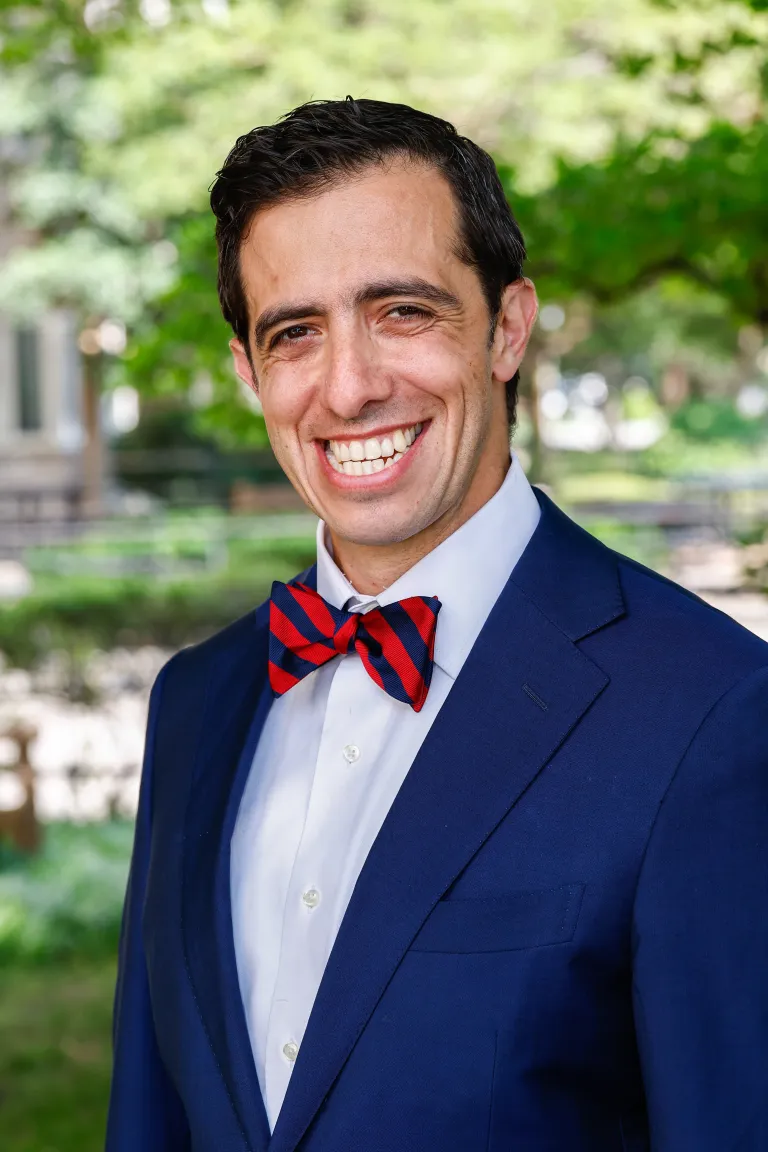

Lawfare Public Service Fellow Julia Curlee sits down with Jonathan Czin, the Michael H. Armacost Chair in Foreign Policy Studies and fellow in the John L. Thornton China Center at the Brookings Institution, to unpack Xi Jinping’s state visit to Washington, his first in 11 years.
The two former CIA and National Security Council colleagues discuss what each side walked away with, including a two-month extension of the trade truce and potential channels on artificial intelligence and military crisis communications. They look at the implications for Taiwan, the war in Iran, and how the loss of China expertise and policy staff showed in the summit’s preparation and readouts.
For further reading, see:
To receive ad-free podcasts, become a Lawfare Material Supporter at www.patreon.com/lawfare. You can also support Lawfare by making a one-time donation at https://givebutter.com/lawfare-institute.
Click the button below to view a transcript of this podcast. Please note that the transcript was auto-generated and may contain errors.
Transcript
[Intro]
Jonathan Czin: I
worry about this. I struggle to see what we really got out of this summit,
either in terms of the optics, which I think were not strong, right? There was
a lot of bonhomie at a moment when there are a lot of big issues on the table
that were largely left unaddressed, including the explosion of anxiety in our
own country about artificial intelligence.
Julia Curlee: This is
the Lawfare Podcast. I’m Julia Curlee, a Public Service Fellow at
Lawfare. My guest today is Jonathan Czin of the Brookings Institution.
Jonathan Czin: The
fact that so much of this is percolating in the Chinese press, I think what it
underscores is that it’s useful for Xi Jinping to have Trump think that he’s
his friend, right?
And to have him think that they’re his buddies and that there’s
some kind of bromance going on between the two of them, right? Because again,
it gets to that underlying strategic objective. What is Xi trying to
accomplish? Not much in the, in terms of the way of tangible deals, but to buy
time and space and relief from U.S. pressure.
Julia Curlee: Today
we’re talking about Xi Jinping’s state visit to Washington last week, what the
two sides agreed to, what they left out, and what the dueling readouts tell us
about U.S.-China relations. For those who don’t know, Jon and I served together
at the CIA and in the NSC. Jon was a member of CIA Senior Analytics Service in
the China Mission Center.
He was a director at the National Security Council for China,
where he staffed President Biden’s engagements with Xi Jinping, and he’s the
guy I call to make sense of anything related to senior-level Chinese
engagements with the U.S. president.
[Main podcast]
I’ve invited you on the podcast today because Xi Jinping just
made his first visit to Washington in 11 years, and our two governments came
home telling noticeably different stories about what actually they agreed to on
trade, on Taiwan, what even call AI and sorting out what it means. I can think
of no better person that I’d want to talk to about it. So, before we dive in,
can you get our listeners just a little bit more on your background and how you
came to watch Xi Jinping for a living?
Jonathan Czin: So,
the way I got to, into the China business is a little bit circuitous, but
really what got me into national security affairs in the first place is that I
grew up in New Jersey with a view of the Manhattan skyline, a real bridge and
tunnel kid, and 9/11 happened a week after I showed up at my college campus,
right?
And so, that was obviously a transformative moment for me, and
I think for a while I thought I would be like many in our generation, including
you, Julia, I thought I’d be a Middle East person and go hunt bad guys in the
desert. But what happened was as I went on in my education, what I really
realized was that I was more interested in great power competition.
So, I guess you could say I was into it before it was cool,
going back to the early 2000s, and that’s kind of what got me hooked. I think
what got me into the China business was that I realized that no matter how much
time I would study this, I would always be impressed by how much I didn’t know,
and I think that’s been a big part of what’s kept me going.
In terms of the Chinese leadership, I was at the mercy of our
bureaucracy. I knew when I showed up at the CIA that I would be doing something
related to Asia, hopefully China, ‘cause since that was my background and I had
studied the language. But I didn’t know until I walked into the bubble in- got
sworn in that I was going to be following China’s leadership.
And just by happenstance, I started just weeks after Xi Jinping
became vice president of China. So, it’s just good luck.
Julia Curlee: Yeah,
it sounds like it. I mean, it, you and I had the similar story of 9/11, and you
apparently just stayed on track, whereas I was like a squirrel, you know? Or, I
was like a dog following the squirrel chasing it wherever it went.
Jonathan Czin: I can
assure you, I have many squirrel-like moments too.
Julia Curlee: But, I
finally got back to what I really wanted to work on, which was China, just in
time for us to get to work a little bit together. But that’s great. Appreciate
that. So, let’s start with your expectations going into this summit. So, I
watched a bit of what you’d written and spoken about and, you know, you said
you had pretty low expectations I think, that for an extension of what you call
the gentleman’s agreement.
You know, could you walk us through that?
Jonathan Czin: Yeah,
I mean, it’s, it was driven by kinda two main factors, right? I think
especially as a former NSC staffer, just at a very mundane level, it was very
hard to detect any signs of kind of meaningful discussions since the last
summit, right? There were a couple of engagements, but He Lifeng and Secretary
Bessent, who had the lead on these issues, hadn’t had any in-person meetings
until just the week before the summit.
You had the executive vice foreign minister, Ma Zhaoxu, come in
the middle of August for a pretty abbreviated trip. So, really, like, these
trips, I think your listeners should be aware, they just require a painstaking
amount of effort, right? And work, and especially with the Chinese, right? I
have often joked that, you know, planning a summit with the Chinese is like wedding
planning, but really, it’s like wedding planning with the worst possible
in-laws you can imagine, right?
Like, they don’t like the food, they wanna haggle over
everything. So, it requires a tremendous amount of preparation, and that just
didn’t go into this, right? So, I think just at a mundane level, there just
wasn’t the runway to adequately prepare for a lot of this. And I th- and then I
think structurally, I don’t think that there was a real focus from the
administration on this set of issues.
I mean, the decision-making, as you well know, has become so
centralized and so personalized on foreign policy in this administration. The
old National Security Council, as you’ve written up, as we knew it, has kind of
been blown up. And I think more so on China issues than any other suite of
issues.
Trump is his own China desk officer, right? Like, you don’t see
people like Witkoff or Kushner or these other characters anywhere involved in
it, right? And just from a bandwidth perspective, I think to the extent
President Trump is focused on foreign policy issues, it’s really Iran as the
first and probably second priority, Ukraine and Russia, you know, kind of a
distant third, and then I think China’s number four, right?
And so, I think that was part of why I just had very low
expectations, just ‘cause you didn’t see the focus from the U.S. side on
getting its act together ahead of the summit.
Julia Curlee: Yeah. So,
Jon, I mean, I wanna get a little b- bit more on this council that was involved
in national security of which you speak in the, the previous administration,
and help just tee this up just a little bit more on how you would contrast with
how this administration, you know, prepared for this summit.
Jonathan Czin: Yeah. I
mean, when I was on the National Security Council, I mean, the preparation that
would go into this would start months ahead of time, right? And you’re
negotiating with the Chinese over every aspect of this: the content, the
sequencing, how this is going to go down. And especially since, you know, in
the Biden administration, we didn’t do any state visits.
There was no visit to Beijing or to the United States by
President Xi except until the end of the administration. We were often meeting
in third country, right? So, it was a question of who is technically hosting
whom, ‘cause then you get to control the agenda. And I just wouldn’t
underestimate the level of detail to which we would negotiate things, right?
How long are those opening pleasantries going to be? Are they
gonna be thirty seconds? Are they gonna be a minute? That sort of thing. And
all of that fell to us. And then in terms of the substance, you know, there was
more of a bottom-up process about, you know, what kind of decisions needed to
be made ahead of this meeting, right?
Not just about the summit itself, but, you know, the broader
geopolitical dynamic and everything else that’s going on, which I think
especially in this instance is such a, such an important part of the story here
too, right? It’s not just about the summit, it’s about the things that we’re
not talking about because the summit has sucked up so much of the oxygen in the
room right now.
Julia Curlee: Yeah. So,
if we were still so fortunate to have you writing the PDB on the summit, you
know, how Beijing might perceive the outcome objectively, how we all did, the
scorecard of a summit like this, what would you write in terms of, you know,
what was agreed with the deliverables, the optics, and anything else?
How would you measure who came out ahead?
Jonathan Czin: Yeah. So,
there’s two facets to this, right? There’s the way I would’ve thought about it
going into the piece, and this is kind of my natural starting point anyway,
right, as a former analyst. How does this look from Xi Jinping’s perspective?
What is Xi looking to get out of this meeting, right?
And I think the main thing that I would really emphasize, and
that I was emphasizing before this meeting, is that Xi’s not really looking for
anything in particular in terms of tangible deliverables coming out of this
meeting. He really wants to do two things in a meeting like this. I think,
number one, from an optics perspective, he wants to position himself and China
by extension, as the United States’ peer and as Donald Trump’s peer, right?
So, by that metric, I mean, I think it’s very clear from what
we’ve seen, check. He got that in spades, especially with Trump going out to
Joint Base Andrews to personally greet him. And I think the other thing that Xi
is looking for, it’s less about the particulars, it’s more about just buying
time and space and relief from U.S. pressure, right?
From the variety of competitive actions that were undertaken
earlier in the Trump administration, going back to the Biden administration,
right? So, there’s not really an affirmative agenda that Beijing is looking to
accomplish here, which I think gets back to the first question, too, about why
were there so few concrete deliverables.
So, I think by both metrics coming out of the summit, I think
Xi got what he wanted, right? Even though the gentleman’s agreement that we
talked about has only been extended till January, I mean, we’ll see what
happens with that. But I think they are making a calculation that given
everything else that the Trump administration has on its hands, they’re not
gonna want another cycle of escalation, and for China to yank on the rare earth
supply chain again and create the pain that it would cause for U.S. companies
and the broader U.S. economy, which is already facing a variety of headwinds in
the, in this moment.
So, I think if you’re grading it afterwards, that’s what I
worry about, too, and this was, you know, this was never our job at the agency
to assess and appraise, you know, how the U.S. did coming out of this. But now
that I’m out in the wild, I do have the liberty to do that, as you know. I
worry about this. I struggle to see what we really got out of this summit,
either in terms of the optics, which I think were not strong, right?
There was a lot of bonhomie at a moment when there are a lot of
big issues on the table that were largely left unaddressed, including the
explosion of anxiety in our own country about artificial intelligence. And
yeah, in terms of the substance, I don’t really know what we got substantively
out of this meeting except for, you know, you’re gonna get a two-month
extension of the gentlemen’s agreement on rare earths, which I think my
understanding is that’s gonna alarm many in the business community because it
doesn’t allow them enough time to really prepare and do what they need to do to
inventory and stock up.
And so yeah. So, it’s really challenging for me to see what
were the positive aspects that came out of this meeting, especially because I
think part of what Beijing’s doing, we already ha- see evidence of this, is
that as they’re pulling the United States in closer, they are pushing our
partners and allies much harder, right?
And we saw that after the first encounter between the two
presidents in Busan, South Korea last year, where just a month afterwards there
was this big kerfuffle with Japan, right? And they’ve been pushing the Japanese
pretty hard. And again, we are seeing it with this summit, that at the same
time, just as Xi is wheels up from Washington, there’s a note in my inbox about
the Southern Theater in China, the Southern Theater Command, starting a
military exercise around Scarborough Reef, right?
Right at the same time, on the heels of this. So, they see this
as an opportunity to push and to probe and see what they can get away with our
allies and partners.
Julia Curlee: You
also host a, a rival podcast, which I will not hold against you, The Beijing
Brief. But in that you a- you actually warned a few months ago s- about
something called the constructive strategic stability trap, and we saw the U.S.
in the readout of this seemingly adopt that, that language in the fact sheet
with the words fairness and reciprocity adapted.
Did we just walk into the trap that, that you said that was
being set for us?
Jonathan Czin: Yes,
we did. And you know, I keep joking that constructive strategic stability is a
lot like Defense Department programs. The more innocuous it sounds, the more
dangerous it probably is, right? I mean, it sounds on the face of it like, oh
yeah, it’s constructive, it’s strategic, it’s stable.
But no, I think the real issue here is the spin that Beijing is
gonna put on the ball, again, with our allies and partners, and try to
undermine not just our soft power, but really our hard power too, right?
Because what they’re going to say to folks around the region, which I, what I
think they have been saying to folks around the region, is that when the United
States says that it wants constructive strategic stability with China, it means
that they are setting aside your gripes and your grievances and your challenges
with the PRC, right?
So, I think that’s true with the Japanese. I think that’s true,
like what we were just talking about, with the South China Sea, right? That is
how Beijing is going to frame it. And I think the fact that, you know, if you
look at the readout from the previous summit, that was the only mention of any
of the strategic issues that were on the agenda between the two sides.
There was no reference to South China Sea, or Japan, or any of
the other issues that you would usually see mentioned in these kind of
readouts. So, that is the real danger in terms of accepting Beijing’s framing.
It’s not necessarily that, you know, Trump is not, and his administration are
not really constrained by, you know, by such niceties of phraseology.
They’re gonna do what they’re gonna do, but that is where the
real damage is done. It’s not about Washington, it’s about the message that it
sends globally and especially to our allies and partners. And they’ve tried
this before, right? Going back to the Obama administration, they had a similar,
similarly sounding innocuous phrase, called new type of great power
relationship, that we want to avoid the conflicts that have beset a rising
power and a declining power in the past, right?
And you still see some of this floating around from Xi Jinping
with his discussion of the Thucydides Trap, which again, it’s remarkable that
the Trump administration hasn’t pushed back on it, because what he’s saying
pretty explicitly is China’s— we, China, are the rising power, and you,
America, are the declining power, right?
And for a president not to push back on that is fairly
remarkable.
Julia Curlee: Yeah,
completely agree. Before we go on, I wa- I wanna make sure we dive into a
couple of the substantive issues-
Jonathan Czin: Yeah.
Julia Curlee: … that
you haven’t yet mentioned in depth. The first was this AI discussion, where our
side was seemingly focused on what do we call AI, but the other side was
focused on what potential agreements could be between us.
Could you give us a, a bit more on the, the AI, what was in it
and what wasn’t?
Jonathan Czin: Yeah,
I mean, so what’s disappointing about it is that this was part of the homework
for Secretary Bessent and his Chinese counterpart coming out of the last summit
in May, that they were supposed to stand up an AI dialogue.
And then just in terms of the mechanics, what ended up
happening was that this ultimately got rolled up into the meeting I mentioned
between Bessent and He Lifeng just the weekend before President Trump and
President Xi met. So, what that means is, I mean, they spent a day together in
New York at JP Morgan headquarters talking about a whole suite of issues,
right?
So, these are meetings that typically occur in consecutive
translation, right? So even if they spend a full business day together, you
know, each side gets, you know, half that amount of time to express their
views, assuming the Chinese side doesn’t filibuster, which they often do,
right?
So, AI was one of many issues aside from the trade, standing up
the board of trade, maybe discussion of board of investment. I’m sure the
Chinese talked about export controls that the United States has in place that
they don’t like. So, AI would have gotten really short shrift. And again, it’s,
it, this is part of the issue when you consider that in the broader context
about this explosion of anxiety about AI and the U.S. and China having the
lead, you know, these are not meetings that are meeting the moment by any
stretch of the imagination.
Especially because, you know, even the meeting between
Secretary Bessent and He Lifeng, I mean, this is a discussion between a guy in
his sixties and a guy in his seventies who may or may not have had first-hand
contact with AI in the first place, right?
And now they have the charge afterwards. So, it remains to be
seen. It’s a positive set that they agreed to talk about it, but there just
doesn’t seem to be a lot of there there. This just seems to be if there is some
kind of incident, you know, Bessent and He Lifeng agree that they would pick up
the phone and call each other.
But the issue, as you know, Julia, is that one, is Beijing
really gonna pick up the phone? This has been the perennial issue with crisis
communications, that they don’t have an interest in talking to us when things
get tense. And number two, if China has an issue and they have an incident, are
they gonna pick up the phone and call the United States, their chief geopolitical
rival?
And I worry about this, because as we saw during COVID, that
was not the case, right? Their default setting is not to be communicative when
they have a potentially embarrassing problem on their hands domestically,
right? So, it’s positive sign that they’re doing it. It’s better than them not
doing it, but it’s pretty it’s pretty thin stuff at this point, and it’s kind
of jarring when you contrast it with you know, the proliferation of discussion
of people talking about, you know, the probability of doom from AI.
Julia Curlee: Yeah,
and you would think if it was serious, it would be more than just Bessent and
its Chinese counterparts exchanging cellphone numbers, right?
Jonathan Czin: Yes.
Julia Curlee: I don’t
detect anything that suggests there’s an ongoing working group of technical
experts in exchange of, you know, monitors to make sure that the other side is
complying with whatever agreement.
It seems pretty shallow.
Jonathan Czin: Yes.
Yes. I think that’s right. That’s the main takeaway.
Julia Curlee: And
some people I’ve read have compared this to the strategic stability talks or
the idea that the U.S. and China should have agreements on nuclear weapons and
exchange ex- you know, monitors to build confidence.
And do you think that’s a good analogy to this, and why Beijing
might not be interested in such a deal?
Jonathan Czin: I
mean, it’s not a bad thing to aspire to, right? But the problem with this, and
including on nuclear issues, right, not just this suite of emerging
technologies, is that Beijing is allergic to discussing these issues with the
United States.
They see any discussion about arms control or about these
emerging technologies that could have military applications as a trap, right?
That China’s behind us in these domains and that any kind of dialogue mechanism
would just be designed to lock that in from China.
And I think the discourse about AI probably has only reinforced
that perception in Beijing because while President Trump and Dario Amodei don’t
agree about much, including, you know, the probability of doom from AI, the
common denominator in both of their public comments is that China needs to
remain behind the United States, and the United States needs to maintain its
lead.
So, if you’re a policymaker in Beijing and you’re staffing Xi
Jinping ahead of this meeting, you’re gonna hear that, and it’s just gonna
reconfirm your priors, right? That this is what this is really about, right? It’s
about keeping China under, underfoot rather than having any kind of meaningful
dialogue, right?
So, I mean, across all these issues, I get— I understand the
impulse, right, to go back to what we were able to accomplish with the Soviets,
right, in terms of arms control. But, you know, when you make that comparison
to the Chinese, you’re actually rubbing that raw nerve, right? Because they
know how the Cold War played out.
They know that the Soviets lost and unraveled, and so they—
that logic does not have resonance with them at all. Quite, quite the opposite.
It ends up having the opposite effect.
Julia Curlee: I wanna
move on to the other easy issue in U.S.-Chinese affairs, which of course is
Taiwan. As a longtime Taiwan person, I was relieved that we didn’t leave the
summit having traded Taiwan for a soybean deal.
I know that’s setting the standards a little low. But I was
wondering if you could speak a bit to what actually happened here. I think
there was ... It’s pretty clear there was a divergence in what Beijing said on
the subject of what was agreed to on Taiwan, or the words that were used, and
the words we used.
Of course, that would never happen in the context of Taiwan,
but I’m being sarcastic. Jon, please give us a bit-
Jonathan Czin: I
know.
Julia Curlee: ... of
what happened on Taiwan.
Jonathan Czin: Ta-
Taiwan policy has the tendency to slip from the tangible quickly to the, the
theological, right? And disputations over the liturgy. But, you know, neither
side really mentioned it in their formal readouts, but what we did see in
Chinese press was Xi pushing the United States to adhere to the correct course
of opposing Taiwan independence.
And for, you know, the laity and the, the uninitiated who are
going to be listening, this is something the Chinese have pushed for a long
time, right? That they want the U.S. to come out and say explicitly that we
oppose U.S. independence, which we have said in the past, but it was, it’s been
a long time since we’ve said that officially.
You have to go back to the Bush administration to really find
an instance of saying this. Usually what we say is we don’t support Taiwan
independence, right? That’s the official U.S. position and has been for quite
some time. So, the Chinese have been pushing for this. I think what they are
doing, though, is they’re not looking for some kind of big bang moment where
Trump says the thing that they want him to say.
I think they, they expect ... I think they kind of suspect that
the distinction is so nuanced that it’ll be lost on Trump. And honestly, it’s,
I think it’s lost on most people. It kinda sounds like tomato, right? And if
you’re talking about a real estate developer from Queens, you know, do not
oppose versus, you know, oppose independence versus do not support what’s the
difference, right?
I think what it shows instead is that China just keeps chipping
away at this, right? And again, the intended audience is not necessarily the
Trump administration. I don’t think they expect them, Beijing expects them to
abide by what they say. The message is to Taipei, right? That the U- raising
these doubts and underscoring that, you know, behind closed doors or even
publicly, the U.S. ain’t gonna have your back, right, if it really comes to a
crunch, right?
And I think that is what they are trying to do on the Taiwan
front. And again, I think it’s a real missed opportunity, right? I was just in
T- Taipei for a Brookings trip last month, and we got to meet with President
Lai and a variety of senior political and national security officials, and what’s
striking to me, having watched this issue evolved over time, is that they still
have a long ways to go when it comes to doing what they need to do on the
defense side.
But I think they have reoriented the ship of state, right? And
they are taking this issue seriously, and they’re not complacent in the, about,
about the threat from China as they have been in the past. That’s number one.
Number two is that the economic pieces are in place. They have a huge economic
boom going on that’s basically riding the coattails of our own AI boom here in
the United States.
And I would say, you know, in a lot of ways, I think the bumper
sticker for me is that Taiwan has refashioned itself as a model Trump
administration partner. They are taking their own defense seriously. Their
economy is increasingly tied to ours rather than to China’s, including they
have a trade deal with the Trump administration that unlike most countries,
they actually seem to be happy about, right?
What that means is the short pole in the tent or the weakest
part of this relationship right now is what should be the easiest, the talking
points, right? And the things that we say about Taiwan. This should be easy,
and we should be capitalizing on the opportunity that we have to double down on
that relationship with Taiwan instead of focusing on, you know, vetting Xi
Jinping in this moment
Julia Curlee: Yeah, I
completely agree with you and especially about the Taiwan’s turning the corner
on their defense strategy.
But what they don’t have is unlimited time, and it seems as if
the $14 billion arms package, including arms that they desperately needed, has
been put on hold or declared a, a negotiating chip. And correct me if I’m
wrong, but with the president a- agreeing to go to Shenzhen and Xi coming to
Miami, is this basically on hold now, or can we ever expect the arms deal to go
through?
Jonathan Czin: I
would be shocked if something happens by the end of this year, right? Between
the midterm elections going on and you’re gonna have these two additional
summits I have a hard time envisaging a scenario in which the Trump
administration actually moves forward with this deal sometime before the end of
the year.
And I think your point about the upcoming summits is a point to
emphasize, right? Like, the optics from this meeting where Trump is hosting our
chief geopolitical rival just weeks before a midterm election were already,
frankly, living in Washington, D.C., kind of surreal and strange. But, you
know, the words of Alice in Wonderland, it’s gonna get stranger and stranger in
the coming couple of months, right?
And it’s not just because they’re gonna have reciprocal visits.
I think part of the way the, the Chinese have been trying to bait Trump into
visiting China and schlepping across the Pacific again, which is, you know, a
big deal for a leader in his 80s, right? Like, this is no ... it’s a big trip,
as, as you know, Julia, right, to cross the Pacific even at, when you’re half
that age.
Julia Curlee: It’s
how I ended up in Papua New Guinea with Mike Pence.
Jonathan Czin: Yeah,
yeah.
Julia Curlee: It’s
like for APEC, yeah.
Jonathan Czin: Yeah,
exactly.
Julia Curlee: The man
at the top wasn’t gonna get on the plane.
Jonathan Czin: Yep,
exactly. Exactly. But I think part of the way that the, the Chinese have
enticed Trump into doing this is that they’re talking about a Big Three photo
op with Trump, Xi, and Putin, right? With the obvious and unfortunate
historical resonance with Yalta and the other Big Three meetings from World War
II, or maybe Cairo is the better reference here since the Chinese participated
in that one.
So, it’s, it ... The optics of all this are about to get a lot
stranger as President Trump really focuses more on, you know, courting two
hostile powers more than he seems focused on actually countering them.
Julia Curlee: Yeah, I
completely agree. And one imagines this photo of the three, you know, great
leaders, the great men of our world bestriding all of the middle powers, you
know, instructing them to suffer what they must.
It’s gonna be, it’s gonna be a rough optic, but it does play
directly to how Trump seems to perceive Xi and I don’t wanna use the, the Xi’s
not into you, but which… the most overused. But, I mean, clearly Trump sees his
relationship with Xi as the personal aspect of it as being fundamental to the
relationship rather than the underlying competition.
Jonathan Czin: Yes.
Yes, and that’s what we’re— that, that is very much what we’re seeing, and, you
know, you even have some people you know, in the Twitterverse pointing out
that, you know, a lot of Chinese commentators are also saying this, right? But,
you know, my understanding of Xi, and I wrote about this in The Atlantic a
couple weeks ago, is that we know very few things.
There’s a lot we don’t know about Xi Jinping, but one of the
things we do know is that this is not a guy who’s sentimental about his
personal relationships, right? And we have gotten a lot of evidence of that
just in the past year, right? And the, the probably the best data point about
this is the purge of General Zhang Youxia, who was formerly the top commander
of the PLA, and this is somebody that Xi Jinping has known since childhood.
Their fathers fought together. They were in the same field army
in China’s civil war back in the 1940s, right? And even more recently, Xi had
kept Zhang around after he had passed his expiration date at the last party
congress, the last time there was a big leadership reshuffle. So clearly
somebody who had a historical relationship with Xi and had a current
contemporary relationship with him, and Xi just got rid of him, right?
And so, if that’s how Xi treats people in his innermost circle-
I think we can extrapolate how he’s gonna think about his encounters with,
again, his chief geopolitical adversary, right? That he’s not going to be
sentimental. I think what, the fact that so much of this is percolating in the
Chinese press, I think what it underscores is that it’s useful for Xi Jinping
to have Trump think that he’s his friend, right?
And to have him think that they’re his buddies and that there’s
some kind of bromance going on between the two of them, right? Because again,
it gets to that underlying strategic objective. What is Xi trying to
accomplish? Not much in the, in terms of the way of tangible deals, but to buy
time and space and relief from U.S. pressure, right?
So that there isn’t a reorientation from the United States that
focuses primarily on countering China. So, that’s useful to Xi, but I think we
could see it in the body language, both from this summit and the last summit.
You know, I mean, Trump, you know, was very explicit and forward-leaning in his
praise for Xi Jinping, and Xi just doesn’t really respond, right?
It’s very unrequited, this focus on the personal relationship.
And yes, they did things in Beijing, like the tour of the gardens and the
Chinese leadership compound to give Trump face, but it’s not reciprocal, to use
the Trump administration’s term, right? It is lopsided in the dynamic between
the two of them.
Julia Curlee: Yeah, I
saw many fewer gold baubles and, you know, FIFA World Peace prizes delivered by
Xi Jinping to the equivalent of whatever that would be, and it’s just not much
courting from the other side.
The— I was gonna ask you, l- just one more bit about the
agreements. If the two militaries sign a crisis communications agreement, who
on the Chinese side is actually gonna pick up this phone, and where in the
Chinese system do we expect that kind of mil-mil cooperation to happen, if it
does?
Jonathan Czin: Yeah.
So potentially, like, the person that they, the Chinese side usually puts
forward as a counterpart to our own Secretary of Defense is their own Minister
of National Defense, right?
The problem with that is that the Minister of National Defense
is not in the operational chain of command the way our Secretary of Defense is.
He’s not even, in Xi’s third term, even on the Central Military Commission,
which is the party’s supreme military decision-making body, right? And as our
former colleague, John Culver, used to like to point out, he’s also the only
minister in China with no vice ministers, right?
Which tells you something about just how much wasa this guy has
inside the Chinese system, right? So presumably, that would be the counterpart
because that’s often who they shepherd us towards. But it’s also worth noting,
because of the purges in the high command, and this is one of the really
dramatic stories of Xi Jinping’s third term, there’s nobody at the top to pick
up the phone right now, right?
Like, if the chair— our chairman to the Joint Chiefs of Staff
used to actually have a relationship, right, or an ability to reach out and
contact the chief of their Joint Staff Department. There is no chief of the
Joint Staff Department right now, right? And a lot of the deputies are gone,
too, right?
So, it is kind of striking. The other thing that’s really
peculiar about this is that this, this kind of crisis communications and
mil-mil engagement is something that the United States has been seeking out
since the George W. Bush administration, at least, right? Since the EP-3
crisis, where, you know, a Chinese fighter jet crashed with a U.S.
reconnaissance plane in the South China Sea, and I think everybody on the U.S.
side had kind of an oh shit moment.
Like, we don’t have a way to get in touch with these guys if we
have steel hitting steel. It has not been a priority for the Chinese side,
right? This goes back to our conversation about arms control. This is one of
the things that they see as a trap. They see it as a way for the United States
to try to bound China and hold them down in a crisis.
So, it’s really striking in the readouts that it’s mentioned on
the Chinese side, not on the U.S. side, and there’s no mention of it on the U.S.
side. And, you know, in the reporting that’s come out overnight, you have
anonymous administration officials denying that it came up at all in the course
of the conversation.
So, it’s— I still don’t have a good explanation for that yet at
this point, except that, you know, these two readouts, like I said, it’s like
the old Chinese idiom, like it’s like a chicken talking to a duck, right? These
look like two things that should be talking to each other, but not really.
Julia Curlee: I’ll
try to work out which is the chicken and which is the duck at this point, but
we can figure out that later.
You know, one of the issues that, that you would think would
command more prominence between two of the world’s most powerful leaders, the
United States is in the middle of an ongoing war in the Middle East in which we
are blockading and restricting the passage of oil of, from one of China’s most
important energy providers, in Iran.
China depends heavily on Gulf energy and yet has, of course,
declined to help with the reopening of the Strait of Hormuz. I don’t know if we
would want them to. But can you explain what, if anything, comes out of this
summit related to the war in Iran? What explains Beijing’s real strategic
patience on this subject?
Jonathan Czin: Yeah.
I think it just captures a mismatch in the two sides’ geopolitical assessments,
right? I mean, there’s such an intense focus on this right now in Washington,
and I think sometimes we end up mirror imaging that Beijing is just as
concerned. But, you know, Beijing has been preparing and planning for some kind
of contingency like this for much of the past decade, right?
And this gets back to their response to the first Trump trade
war, right? They’re trying to minimize those vulnerabilities and those
dependencies, not just on the United States, but on kind of international
exogenous shocks on their system. And so, I think they’ve been hesitant to play
any kind of constructive role with the Iran crisis and war in particular
because they haven’t felt like they needed to, right?
They’ve weathered the shock much better than just about any
other country, especially in East Asia, right, ‘cause they built up tremendous
stockpiles. We don’t know exactly how big they are, but it just hasn’t had the
same kind of jarring effect on China’s economy so far. So, they really feel
insulated from it, in part because they don’t have the kind of dependencies
that they did in the past.
Some of that is green energy, but some of that is that their, a
lot of their manufacturing base is equipped to go, to shift readily from, you
know, from fossil fuels to coal, right? And China does produce a lot of its own
coal domestically. So, I think that is a big part of the driver. They just see
it as an unnecessary, what’s in it for them to bestir themselves to try to get
involved in this?
I also think it gets to their theory about how to surpass the
United States. They are not looking for some kind of big bang moment where they
overtake the United States, and they want to surpass the United States, in my
view, and I know this, again, this is one of these theological questions in the
China watching community, but they are not looking to have the same
responsibilities that the United States has taken onto itself, especially in
the Middle East, right?
They have watched what we have done and the ways in which we’ve
gotten bogged down and distracted and dissipated our strength in the Middle
East for the last quarter century. And I think they have zero appetite for
doing that. And, you know, kind of you’ll appreciate this, Julia, kind of
getting their tie stuck in the shredder on this one, right?
They really want to avoid that outcome and don’t see— they don’t
see any reason to. That might start to change a little bit as they, as this
gets on. I mean, they can’t rely on their reserves forever. But again, I think
the threshold is gonna be high. And I think, you know, how they’ve handled
other major international crises that they’ve had a stake in is instructive,
right?
Look at their role in Russia, Ukraine. It’s basically been to
back Russia throughout this crisis, right? They haven’t really played a
constructive role. And look at the North Korea issue for much of the century,
right? That’s right on their backyard. You’re talking about, you know, kind of
a junior partner to Beijing acquiring a nuclear weapon.
And at most, you know, kind of episodically and with a lot of U.S.
wrangling, they’ve occasionally maybe sometimes played something of a
constructive role on the margins, right? But not really, right? It’s a, it’s—
so it’s a high threshold for them to really get animated about things that are
beyond their own very narrowly construed interests.
Julia Curlee: Yeah. I
mean, I’ve written extensively how I see the Iran war as the giant geopolitical
debacle for the United States, and it’s undermining our relationships with our
allies and partners and weakening American power around the world. And if I
were in Beijing, I would be not wanting to interfere with my strategic
adversary while it was committing great power suicide.
I was wondering if you— first, if you see it that way, if part
of Beijing’s hesitation is just letting the United States play out its own
debacle to its logical finish.
Jonathan Czin: Yeah,
I think that’s right. I think they see it as presenting an opportunity to them.
And it’s not that, you know, they’re about to undertake, you know, the, the
million-man swim to Taiwan.
It’s because they see it as an opportunity to continue
fortifying themselves. And I think what, you know, what listeners should
appreciate is that, you know, although Trump is, in fact, in many ways very
idiosyncratic and different from his predecessors, I think from Beijing’s view,
when they look at this war and this conflict, they see a lot of continuity,
right?
I think in their view, this is no different from, you know, the
Obama administration and its intervention in Libya or the Bush administration
and its interventions in Iraq and Afghanistan, right? They see this as the main
thrust of U.S. foreign policy. And it— I think from their perspective, it’s
been beneficial, right?
We’ve been talking about pivoting to Asia. We’ve talked about
it so many times, I think we’ve gone round and round in circles a few times,
right? And from Beijing’s perspective, that’s fine. Let the United States
continue to dissipate its strength in the Middle East without, you know,
frankly, having much to show for it in terms of real tangible benefit for the
United States.
Julia Curlee: Yeah,
completely agree. I mean, this summer writing in Lawfare, I talked a
little bit about what lessons the war in Iran might hold for Beijing and the
PLA thinking about a military campaign against Taiwan. Do you think that
whether it is at the military level or strategic level that Beijing is drawing
any real lessons for its future potential operations against Taiwan?
Jonathan Czin: Yeah.
I assume they are because they’re very diligent students, as you know, Julia,
about U.S. military operations and try to glean any lesson that they can from
it. You know, and here I’ll be speculating a little bit about, you know, what
kind of lessons they might be drawing from this. I think there’s probably a
couple.
Number one, I mean, especially at the onset of the war, and I
think for both this conflict and Venezuela, you know, the, the initial phases
of this war, tactically and operationally, for the United States were pretty
impressive, right? Like, you know, we did kidnap a foreign head of state,
right, with this kind of very precise operation in Venezuela.
And then, you know, the Trump administration talking point is
not wrong about obliterating Iran’s navy and air force, you know, early in the
early phases of this campaign. And I think Beijing will take that— see that and
take it seriously. The problem is really about what happens over time, right?
It’s the temporal aspect of this. And I think what they are
learning, number one, is so they have a new suite of things to think about in
terms of U.S. offensive operations. But I think in terms of playing defense,
they are also probably learning new things from the Iranians, right? Beijing
has built out a lot of advanced capabilities, right, and high-end munitions,
but I think they’re also learning about what they can do more cheaply at the
lower end with drones and that kind of technology, right, if it did come to a
conflict with the United States, and I think thinking really seriously about
that aspect of the equation.
And then there’s a deeper strategic question. I think what they
are learning from this conflict is that, yes, the U.S. military does have a lot
of impressive kit and capability, but what it doesn’t have is willpower, right?
And the stomach for taking things to their logical conclusion or even— and also
more practically, the magazine depth that they need, right, for a sustained
conflict.
I mean, we’re really, you know, exhausting ourselves fighting a
military that is in no ways comparable to the PLA and the kind of capacity that
it has, and a country that doesn’t have the industrial manufacturing base that
China would be able to bring to bear in a conflict, right? And yet we’re
already running out of munitions and ordnance.
So, I think they’re watching this quite closely and really
thinking hard about all these issues, right? And I’m— what it reminds me of,
this was from a civilian Chinese counterpart, even before the Iran war got
underway. I think what they’ve learned from the U.S. and from watching the
Trump administration in particular over the last year, is that we just don’t
have the appetite for taking risks, right, and for escalation from Beijing in
particular.
And what they— what this colleague said after the Busan
Agreement last year was really bracing as an American. He said, it’s not that
the U.S. doesn’t have leverage over China. You do. What we’ve learned over the
past year is that you don’t have the stomach to use it. Right? And so that’s
what I worry about being their takeaway.
I think there’s actually a really interesting parallelism here
between the Iran conflict and its narrative arc and what happened in the Trump
administration’s trade war in the first year, right? They’ve basically followed
the same course where the Trump administration comes in, you know, literally in
the second instance, guns blazing, right?
And underestimating the other side, right? Bessent said that
the Chinese were, quote, “playing with a pair of twos” before the Liberation
Day tariffs. And then learning, through sight by touch, how much resilience and
capacity and leverage the other side has, including a hold over key choke
points, right? And then scrambling to find some kind of diplomatic denouement
to get them out of the, out of, themselves out of the corner that they painted
themselves into.
So, it’s unfortunate because, I mean, they’re ba- it’s
basically learning on the job about the parameters of your foe’s capacity,
which is, you know, what people like you and I were paid to do, right, in an
earlier time. So, I just offer that as an observation about how this has all
played out, obviously with a much different scope and scale on the Iran side,
and we don’t have a tidy resolution or any kind of gentleman’s agreement like
we do with the Chinese case, and it’s not clear if and when we are going to
actually arrive at that.
Julia Curlee: Yeah.
And I would hope that among other people learning lessons from the Iran war
that are relevant are the Taiwanese who could be- ... observing how a country
with no navy has now denied a strategic strait to one of the most powerful
navies on earth.
Jonathan Czin: Yeah.
Julia Curlee: Hint.
Jonathan Czin: Yes.
Julia Curlee: Yeah.
And I— It’s fascinating. We’ll have to see how that one plays out, ‘cause I don’t
think the war is gonna end anytime soon. That’s just my hot take for the
moment. I wanted to just, as we head toward the end, and you’ve been really
generous with your time, looking ahead on the next two summits, first of all,
you have full employment, I think, through the end of the year.
Yes. You might have been taking, thinking you were gonna take
the rest of the year off. Sorry, John. Sorry, Brookings. You got some work to
do. Could you walk us through what to expect in Shenzhen and then, and in
Miami? Can we expect Xi Jinping on the golf course? Appreciate your insights.
Jonathan Czin: I
think we can expect, like with this summit and the last summit, I think we can
expect very little of substance, right?
There is another Chinese idiom that I like to throw around with
these meetings: It’s all thunder and no rain, right? So, I think at best what
we can get is maybe, you know, some kind of manifestation of the agreements
that, that we were talking about earlier, another iteration of the AI dialogue,
right?
This board of trade that the two sides are discussing seems to
be finally showing some fi- signs of life after the summit. But I think in the
context of relations between the two superpowers, I think it’ll be small ball
stuff. This isn’t gonna be like Yalta, where these two leaders are gonna sit
down and have a real serious conversation about the fate of the international
order.
It will be kind of a sad pantomime of it. Right? It’ll have the
photo ops and the feels, and I think all it’s really going to accomplish is,
like I said earlier, sending the signal that we’re not serious about thinking
about international order or about how to create some kind of order in this
really chaotic moment.
So, I’m very pessimistic about what of good is going to come
from either of these meetings. And I think the interesting question too that I’ve
been, that I’ve been starting to think a little bit about is not just what
happens through the end of the year, but really what happens next year, right?
This is kind of an unusual bumper crop of head of state
engagements between the two side. I think this will be the most encounters that
a U.S. president and Chinese president will ever have had in a single year. But
then what happens next year, right? After the midterm elections, when President
Trump will be a lame duck, right?
And Xi Jinping is going to be increasingly occupied with laying
the groundwork for his fourth term in office at the party congress in the fall
of next year. So, I don’t know. I think it creates more space as little has
come from these meetings and as much damage as I think they have done to some
of our interests, if you don’t have this backstopping on the calendar next
year, you know, who’s gonna be— what’s going to focus Trump’s mind on the China
relationship, and does it create space for, for things to unravel and for the U.S.
to have, you know, some kind of other real foreign policy problem on its hands?
Julia Curlee: Yeah. I’ve
been trying to think through what could be the points of escalation and, you
know, it’s embarrassing to admit as a former CIA analyst, it’s hard to pin down
‘cause some of the things, like for example, the allegations that the
administration made about Chinese interference-
Jonathan Czin: Yeah
...
Julia Curlee: in our
elections, which is seemingly laying a predicate for further interference down
the road, whether it’s this midterms or down in, in ‘28, seemingly swept under
the rug when-
Jonathan Czin: Yes.
Julia Curlee: … we
hosted the leader of China. Are there any other escalation points that we
should be thinking about?
Jonathan Czin: It’s a
good question. I think the main ones are the obvious ones, right? Like there,
there was this great note in you know, Matt Turpin, who was a China director in
the first Trump administration, said that, you know, well, you know, the reason
the gentleman’s agreement is only prolonged to January is because Trump’s not
gonna really need it once he gets through the midterms, right?
Which is striking because it just leaves— opens the question
then, well, what happens if Trump just becomes inattentive to this? Is China
gonna yank on the rare earths card proactively? Are we gonna go back to
tariffs? Are we gonna have, you know, trade war three point oh next year? I don’t
really think that’s where the Trump administration is going.
But what I worry about is that what you will have instead is
this kind of Jimmy Carter-esque sense of malaise and just drift, right?
Especially on our China policy, right? That there’s not really a focus on
competing with China or, and there’s not much that really comes from all these
engagements next year, right?
And I think part of the issue too, in terms of flashpoints, is
that the things that normally would be flashpoints, enhanced Chinese pressure
on Taiwan or Japan or in the South China Sea, we’re already seeing all of that,
and it is not unsettling the relationship, right? Which is in and of itself
alarming, right?
So yes, on the one hand it’s good that there’s not a
flashpoint, but on the other hand, it’s like, well, maybe we should be really
worked up about these things and just concerned about what’s going on.
Julia Curlee: Well,
thanks, John. One last question, and this is directed, you know, directly at
our former CIA colleagues.
What is the best part of not working in a windowless box in
your post-government career? I know I’m ambushing you with the hard one at the
end.
Jonathan Czin: Oh,
man. You know, as, as much as I learned from the coordination process at the
agency, it is nice not to have to go through the government clearance process
to just write what you think, right?
Like, I keep joking that, you know, the, the bureaucratic
equivalent of I love you the three magic words are cleared without edits,
right? And those are words I actually hear more on the outside that I... I
never heard those words on the inside, right?
Julia Curlee: That-
that’s remarkable. Yeah, I’ve got the same feedback on my Lawfare
editors that include one or two layers of review, which is delicious, versus
the, what, we have like twenty-five layers of review with, at CIA for the
average PDB, which made the product better at every level as, as you know, I’m
sure.
Jonathan Czin: Yeah. I
can neither confirm nor deny that.
Julia Curlee: All
right. Well, John, appreciate it. Please let us know if there’s gonna be a
World War III before the holidays, and it’s been great to catch up with you.
Likewise. Thanks so much for coming on Lawfare.
Jonathan Czin: Thanks
so much, Julia.
[Outro]
Julia Curlee: The Lawfare
Podcast is produced by the Lawfare Institute. If you want to support the
show and listen ad-free, you can become a Lawfare material supporter at
lawfaremedia.org/support. Supporters also get access to special events and
other bonus content we don’t share anywhere else. If you enjoy the podcast,
please rate and review us wherever you listen.
It really does help. And be sure to check out our other shows,
including Scaling Laws, Rational Security, Allies, The Aftermath, and
Escalation, our latest Lawfare Presents podcast series about the war in
Ukraine. You can also find all of our written work at lawfaremedia.org. The
podcast is edited by Jen Patja with audio engineering by Cara Shillenn of Goat
Rodeo.
Our theme song is from Alibi Music, and as always, thanks for
listening.