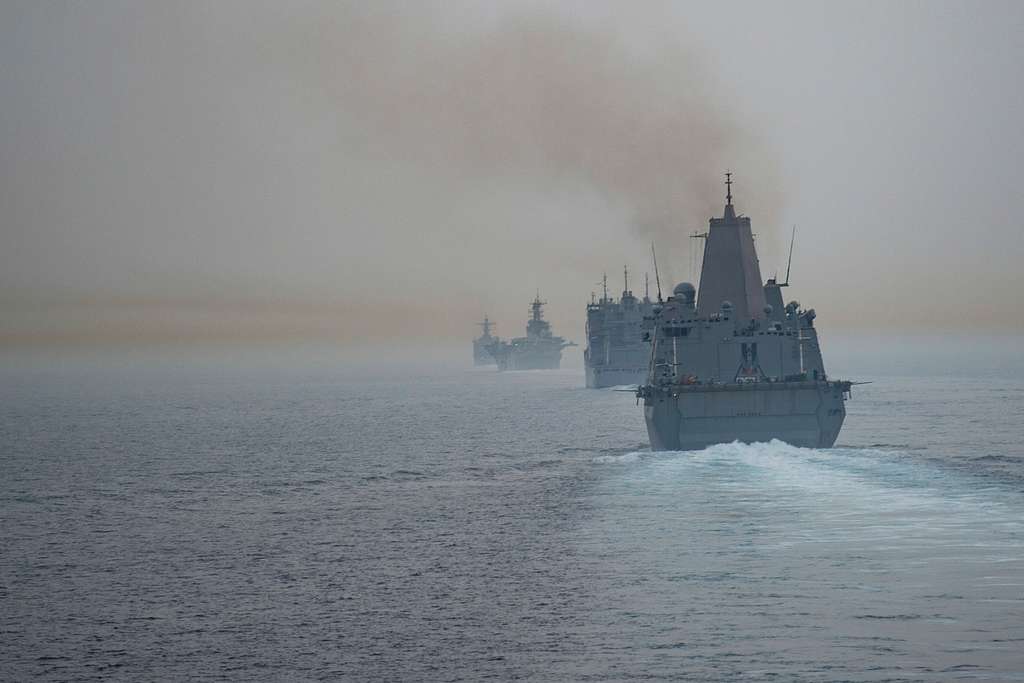
Lawfare Daily: Gulf Countries Hedging Amid Iran War Debacle


Lawfare Public Service Fellow Julia Curlee talks with former CIA analyst Shawn Howard and Ariane Tabatabai of the Chicago Council on Global Affairs about Shawn’s new Foreign Policy essay on how the Gulf states are coping with a war they didn’t start. They discuss why U.S. protection has made the Gulf states targets, how Tehran sees them, Iran’s strikes on the mediators, the possibility of a UAE side deal, and what a post-midterm return to U.S. bombing would mean for the region.
Mentioned in this episode:
Shawn A. Howard, “Gulf States Are Hedging and Suffering,” Foreign Policy
Julia Curlee and Ariane Tabatabai, “How Could Iran Happen? An Autopsy,” Foreign Policy
To receive ad-free podcasts, become a Lawfare Material Supporter at www.patreon.com/lawfare. You can also support Lawfare by making a one-time donation at https://givebutter.com/
Click the button below to view a transcript of this podcast. Please note that the transcript was auto-generated and may contain errors.
Transcript
[Intro]
Shawn Howard: And you could ask yourself, what does this do to really help Iran win the war? But I think Iran has a different calculus, and it’s more about showing that they’re doing something and hitting back against Western, or U.S. strikes, U.S./Israeli, I should say, strikes against Iran.
Julia Curlee: This is the Lawfare Podcast.
I’m Julia Curlee, a public service fellow with Lawfare. Our guests today are Shawn Howard and Ari Tabatabai. Shawn and I worked together at CIA, where he worked for more than 20 years focused on the Middle East, and now he’s a founder of American Veterans for the Defense of Democracy. Ari is vice president of research, strategy, and defense at the Chicago Council on Global Affairs and a contributing editor to Lawfare.
Ariane Tabatabai: Back in June, the United States set the bar for what Iran could achieve and could get out of the United States, and what it got was essentially a laundry list of things that Iran had been wanting for years and years, and no administration, Republican or Democratic, had been willing to give to Iran. And so, I think that anything short of that is going to be kind of, you know, rejected by the Iranian system right now.
Julia Curlee: Today, we’re here to talk about Shawn’s new piece in foreign policy, “Gulf States are Hedging and Suffering,” how the Gulf monarchies have tried to protect themselves in a war that they didn’t start, and what comes next as the war heads toward the U.S. midterm elections.
[Main podcast]
Well, I want to get started with you, Shawn, first. So, in August, a Gulf official told The Washington Post that Trump had started this war and that we’re all paying the price. And so, I want to focus in on your piece, which you open with a paradox. You said that Gulf States depend on the United States to protect them from Iran, but that this protection also makes them targets.
Could you walk us through that? And was this predictable before the war began in February?
Shawn Howard: Yeah, so absolutely, Julia. And you’re exactly right. The protection has made them targets, placing the GCC states on the horns of a real dilemma. Uh, generally speaking, the Gulf States are no fans of Iran, but at the same time, they weren’t very keen on the war either.
And as the war has dragged on, they’ve grown more frustrated with the U.S. And you look at... If you look at the war from the GCC’s perspective, you can understand why. They’ve suffered billions of dollars in infrastructure damage, significant economic disruption, in addition to many casualties. Eight months into the war, the Iranian regime remains in place, retains the ability to disrupt the Strait of Hormuz and attack its neighbors, and the underlying nuclear problem hasn’t gone away either.
Meanwhile, the conflict has spread back into Yemen, creating another threat to the Red Sea, and there’s still no clear endpoint to the war in sight. So, the question is, how is the GCC reacting to all this risk and uncertainty? Well, same as investors facing a financial, risky financial market, they’re hedging their bets, and this layered strategy has three distinct components to it.
First, continuing to work with the U.S. Second, more independently engaging in diplomacy, regional security measures, and even at times seeking to restrain the U.S., and finally, in some select cases, even seeking to accommodate Iran. Of course, the Gulf countries have no choice but to look to the U.S. for protection if the missiles and drones are flying.
Even before the war, the GCC states were integrated into a U.S.-led regional air and missile defense architecture. And during the major, initial major combat phase of the war, CENTCOM said the system intercepted more than fifteen hundred ballistic missiles and six thousand attack drones aimed at U.S. forces, its Arab partners and Israel.
But even that wasn’t enough to fully protect the Gulf States. Missiles and drones still got through, U.S. bases were hit, energy, transportation, and other infrastructure were threatened or struck, and the sheer volume of incoming fire put enormous pressure on interceptor inventories. And it’s worth underscoring here that this wasn’t just about economic cost.
At the height of the infrastructure attacks, there were serious concerns that additional strikes on desalination plants could threaten water supplies to major Gulf cities. And in May, drones launched from Iraq also struck very close to the UAE’s lone nuclear power plant, raising concerns about a possible nuclear disaster.
So, for the Gulf States, this wasn’t a distant war, it was happening literally right on top of them with potentially catastrophic consequences. And eventually, for some Gulf states, simply defending against these attacks wasn’t enough. Despite publicly distancing themselves from offensive operations, four GCC states, Saudi Arabia, the UAE, Bahrain, and Kuwait, were reported to have conducted covert retaliatory airstrikes inside Iran, although none publicly acknowledged doing so.
So, to circle back to your original question, Julia, war is always inherently uncertain, but I do think some of this was predictable or possible to anticipate. The problem was that the administration did not plan for the possibility that the war might last longer than a couple of weeks and, and for how a longer war might affect its allies in the region.
Julia Curlee: And so, Ari, I wanted to turn to you for Tehran’s side of this.
Do you think that striking the Gulf States is a strategy, is just a, a reflex? Is this at, like, the weak side of the U.S. alliance here? Does Iran see the GCC as one target set, six separate targets? Could you walk us through the other side of the picture?
Ariane Tabatabai: So, seen from Tehran, the GCC states are not monolithic, and they are not a single entity.
They are six separate countries, all of which Iran has very different relationships with. Some it’s been traditionally more on the partner side. Some it’s been more on the rival side, even adversarial relationships. And that’s partially because of Iran’s own history with these countries, but partially also because these countries have very different relationships with the United States, right?
And frankly, with each other. And so that is all coloring and shaping how Iran sees these different states. You know, obviously kind of on one end of the spectrum, we have Iran-Saudi relations, which are obviously extremely complicated, have tended to be even adversarial in some instances.
But at a minimum, these two are... these are countries that are rivals that see themselves as kind of the power brokers or powerhouses in the region, is, is probably more of a, a better word than, than power brokers. But they’re both kind of competing for influence in the region, in the Muslim world. They each see themselves as, you know, a bit of a leader in various areas.
And then you have Iran-Oman relations, which have been traditionally fairly, fairly good. You know, going back to before the revolution, actually, the Shah of Iran at the time sent troops to support, you know, the monarchy in Oman against the rebels. And interestingly, this is one of those relationships where even after you had the Islamic Revolution happen, the relationship didn’t sour just because there was that historical kind of tie, the, the ties between the two monarchies.
So you know, it’s been more on the positive side of things, and then sort of everything in between. That said, I do think that there is... and this goes to your initial question. I do think that there is an underlying strategy here that Iran is pursuing, and Shawn is exactly right. Iran has been, you know, targeting these GCC states.
It wasn’t the first time that that has happened in the course of this war. What was different is that all of these GCC states were actually struck during, uh, the war, and in some instances even as they were mediating between Iran and the United States, right? Qatar being the prime example, but also Oman.
So that’s maybe a bit of a difference, uh, compared to some of the previous, uh, instances we’ve had. So, you know, but the overall, uh, I guess, strategy here for Iran has always been that because the country is not able to strike the United States on the homeland, it is not really, it doesn’t have that reach with some of the kind of more core U.S. interests.
It was never going to be able to increase the cost of U.S. action in a way that deeply hurt the United States, right? And so that’s why it had kind of, the regime had shaped its entire military doctrine and its plans around the notion of being able to strike the United States in the region. And of course, given the kind of architecture of U.S. force presence in the region, we have given them that target essentially, right?
You have this web of installations throughout the region that help us obviously project power, that help us and help the Gulf, uh, partners deter adversaries, Iran specifically, that facilitate operations in the region, but also obviously put a target on the back of these states. And so, you know, what we’re seeing in this, in this war and what will be interesting to watch as the war continues to unfold, but even beyond that, after the war is over, when the shooting stops, how the fact that this deterrence has failed in some ways, that all of these countries, despite housing U.S. forces, despite housing U.S. installations and, and assets, have been struck, whether it’s going to change U.S. relations with the GCC states in a more long-term, more substantive way.
And then the last thing I was going to kind of point out is that, you know, for Iran, another reason why this is, the GCC states are a prime target in addition to housing U.S. forces and, and installations, is that these are countries whose value proposition internationally and economically is based essentially around two major things.
One is stability, and the second is wealth, right? And, you know, with the second, you have kind of energy obviously, that is a big part of it, but also tourism And so it’s not an accident that Iran has been striking, as Shawn mentioned, critical infrastructure, airports, energy installations. All of this has been a part of Iran kind of dialing up the pressure on the Gulf States to, in turn, press the United States to try to end its operations against Iran.
And it’s also been trying to kind of show that that stability that the Gulf States have enjoyed from, that has been such a magnet for essentially universities, museums, companies going into the region, that that stability can be changed, that that stability can turn into instability if Iran wishes for that to happen.
And so, you know, these two pressure points I think have also played a really important role in placing that target on the GCC states that I mentioned.
Julia Curlee: Yeah, completely agree, and I think it goes back to the piece that you and I did for, for Lawfare about how the violence and the negotiations are really the same, two sides of the same coin, for the Iran strategy, that they’re really shaping a post-war outcome that will be much more aligned with Iran’s dominance in the region once they can drive the U.S. out.
Shawn, I wanted to turn to you next and talk about, you know, going into this war, it seemed like Riyadh really wanted a NATO-style treaty, some more deep mutual defense agreement that would provide greater security. I mean, and since then, it’s had to bring in 8,000 Pakistani troops and launch the 13-partner maritime alliance, really unprecedented steps to try to get to this collective security arrangement.
Is that at all plausible at this point? Is it... Could it serve as a replacement for the U.S. security guarantee that’s, that’s shown itself to be wanting?
Shawn Howard: Well, I think it’s, remains to be seen. I think it’s, you know, for now it’s more of a hedge since nothing can entirely replace the U.S. security guarantees at the moment.
But if these guarantees continue to come up short, today’s hedging can turn into something more consequential down the road. It’s important to note that Saudi Arabia’s new regional alliances, the Multinational Maritime Defense Alliance to protect the Red Sea shipping, and the Mecca Joint Defense Agreement, are nascent, and it’s still unclear how effective they’ll be.
But they’ll nonetheless show that Saudi Arabia is attempting to look beyond Washington to enhance its security, and the war has really exposed some important differences between Washington and Riyadh. At several points in the war, Saudi Arabia and the GCC states have been frustrated by Washington’s lack of consultations. And don’t forget, Saudi Arabia was willing to push back against Washington, especially at moments when the war appeared to be spiraling out of control, threatening additional collateral damage.
At more than one point when President Trump was threatening a dramatic military escalation and even attacks on civilian infrastructure, GCC countries, led by Saudi Crown Prince Mohammed bin Salman, appealed to the president, contributing to Trump’s decision to call off additional strikes.
Yemen’s another area where differences have emerged. As the Houthis seized territory near the Bab el-Mandeb coastline, stepping up attacks on Saudi Arabia, Riyadh asked Washington to intervene militarily. The administration declined, and, while at the same time obtaining assurances from the Houthis that they wouldn’t threaten U.S. shipping. So, I don’t think this sat particularly well from the Saudi perspective.
Julia Curlee: Yeah, I can’t imagine that, especially when the, the Houthis started attacking, uh, Riyadh. Ari, I wanna turn to you next ‘cause, uh, one of the, one of the, the more interesting episodes in all of this was when the Iranians struck the mediators, uh, the Qataris, the Omanis. What was the strategy behind hitting the parties that could help find a way out of this?
And then what was the reaction when the U.S. president threatened to bomb Oman itself if it got in the way? Is, is there any room left for a mediator in this conflict?
Ariane Tabatabai: Yeah, I mean, you know, you started initially the kind of previous question with does Iran have a strategy or is it just acting based on reflex?
And I think this is maybe where reflex comes in a bit more so than strategy. And I should say with the caveat here that, you know, there is a lot we don’t know about the current Iranian system, just because so much has changed over the past few months. And, you know, what we used to know about Iranian decision-making is probably not true anymore, and there’s a lot that we don’t know.
There are many unknown unknowns, and many known known unknowns, so we should kind of, you know, be humble in our assessments of, of things. But with that said, I do think that we are more in the kind of reflex side of things when it comes to the mediators here. I do think the underlying assessment that I made previously still holds, that these are available targets essentially for Iran, and they’re important for Iran.
And so, you know, it’s trying to raise the cost of the United States, for the United States of its continued operations, and these countries happen to be there. They happen to have decent relationships with the United States. They happen to be housing U.S. forces there, so they’re an available target. I do think that, you know, I mean, the case of Qatar I think is particularly important here because on the one hand, Qatar is obviously trying to be a mediator between the U.S. and Iran.
On the other hand, it is home to Al Udeid, which is a major U.S. installation in the region. And, you know, as I mentioned previously, this is not the first time in this war that Iran has targeted U.S. forces and installations in the region. Al Udeid has been on the receiving end of many a missile strike in the past as well.
Obviously, this has been very different. And, you know, typically what would happen is that Iran would kind of say, hey, we’re going to strike Al Udeid, and we would have, you know, folks depart. And this, things have been a little different this time around, but I think the rationale still stands. In terms of your more important perhaps question of, is there still room for these mediators to continue to operate, to do what they were doing?
Is there still a deal to be had from the perspective of the Gulf states? I’d be interested in Shawn’s perspective here as well, and yours of course, Julia. But from my perspective, I think that, you know, these are countries that still ultimately would like this war to end. There is no good outcome from this war for the GCC states, right?
Even for Saudi Arabia, which is again, has the most kind of adversarial relationship out of the lot with Iran, this war has made them extremely vulnerable. It has made the region a lot more unstable in a way that a lot of folks maybe would be traveling there are, are not traveling. It’s making business more challenging.
It’s really shrinking the value proposition of these countries. So they want the war to end, and yeah, even if they’re going to be stuck between a rock and a hard place as they, as Oman is between Iran on the one hand, that is, that has struck it, and the U.S. president on the other hand, that, you know, has threatened to bomb them if they don’t do what he wants them to do, I think they will probably continue to, to work through this, and to try to bring an end to the conflict.
I do think that from the U.S. perspective, the notion of threatening your partners, at the same time as they’re on the receiving end of missiles is not particularly well advised. But this goes maybe to the second piece you and I wrote and did a podcast about, which is that when you don’t have the experts who can advise you on these things, and you’re kind of running on vibes, right?
In terms of how you’re designing your strategy, in the context of the war, of a war that is ongoing, perhaps you don’t stand to think about what, how should we manage the partners to make sure that they continue to be on our side as opposed to kind of thinking, oh, we just have two suboptimal actors that we need to deal with here.
Julia Curlee: Yeah. Well, Ari, when you said the phrase known unknowns earlier, I could tell Shawn and I both went into, you know, into, spasms over thinking- ... ‘cause we’re Iraq people.
Shawn Howard: Isn’t that Don’s Rums- Don Rumsfeld?
Julia Curlee: Oh, God. Yeah. Yeah. No, it’s just the memories of that. But I would think that the leading, you know, known unknown is, from the Gulf perspective, is what in the world is Washington’s end state for this?
What will we settle for when the president has had five different political ends throughout this conflict? And so, I wanna turn then to Shawn next because I think, you know, nearly every Gulf grievance that you laid out in your piece about consultations and shifting war aims and declined requests, it’s a process failure as much as it’s a policy failure.
As Ari mentioned in our piece, you know, the U.S. lost this war in Washington in not having a competent process or experts who could tell the president, you know, what is the reality on the ground. So, the question is, how much of the Gulf’s hedging at this point is just a rational response to a U.S. government that doesn’t know what it wants, that can’t tell what its partners what to do, and that from the Gulf’s perspective, they don’t even know who to talk to within this government?
Shawn Howard: Yeah, so I think this, from the GCC perspective, it’s a very, rational response, and the problem goes deeper than just a lack of communication. Ever since the opening phase of the war failed to decisively defeat the Iranian regime, the administration has yet to articulate a clear path to victory. It’s been preoccupied with trying to find a negotiated settlement that leaves the regime in place.
The GCC understands how problematic this is. Even though they never stated it publicly, I’d be willing to wager that the GCC going into this war, their message to the U.S. was probably something along the lines of, if you’re gonna do this, for God’s sake, have a plan, make it fast, and make it decisive. And the administration promised to do this and failed to deliver.
It has said repeatedly that the war was won or that Iran was on the verge of agreeing to terms, only to be refuted time and again by reality. You can only do this for so long until you lose credibility in the eyes of your allies, especially if, if your allies are on the front lines taking the hits.
And if you look at the history of this region, you understand that protection is paramount. There’s a long history in the region of smaller Gulf states seeking protection from larger powers, whether it was Britain in the 19th and 20th century or, you know, the U.S. in the 20th and 21st century. That’s how the system works.
Julia Curlee: I wanted to dig in just one more time into some of the behaviors that seem to defy this larger trend. So, you talked a little bit about the, the Emirates who ran a covert air campaign alongside the U.S. and Israel during the war, but then flipped and according to the press, said that they agreed to pay Iran up to $20 billion to stop hitting their infrastructure.
First, you know, how confident are you that there was a deal like this, and is this just a sign of more to come, that each individual state is just gonna, gonna cut their own side deal with Iran?
Shawn Howard: The Reuters article that I based the article on leaves some uncertainty as to whether the UAE actually transferred money, and it doesn’t give us a firm date for any alleged final agreement, so the evidence remains incomplete.
But at the same time, something does appear to have changed in Iran’s targeting pattern during the war. During the first phase of the war, the UAE was targeted more heavily than any other GCC state. By early May, those attacks became particularly intense, with Iran striking the UAE’s oil infrastructure at Fujairah.
And then we get to the June memorandum of understanding, and attacks across the region decline for a period. But here’s the interesting point. When the MOU began unraveling in late June and the United States resumed sustained strikes against Iran, Tehran retaliated heavily against targets elsewhere in the region.
Yet by my count, Iran did not strike UAE territory once during that period for the whole month of July and August. Again, that doesn’t prove that there was a quid pro quo, but I think that it’s noteworthy circumstantial evidence nonetheless.
Julia Curlee: Yeah, it’s not shocking to find that the Emiratis have, have cut, might have cut some sort of a side arrangement.
And, and given the state of American coherence, in its approach to the conflict, I mean, I’m sure if it hadn’t happened, I would have been surprised. So, I wanna move next and just try to zoom out since we’ve talked about individual Gulf states in this, just to get a gut check on where we are in this conflict and turn to Ari on this, is that Iran hasn’t fired on a Gulf state in more than three weeks, at least at my last count.
Please correct me if I’m wrong. And at the UN, the president framed the choice before us all as, as a deal or annihilation. Then Iran rejects the ceasefire, but yet here we are with the president supposedly saying that he’s willing to renew bombing after the midterms. Ari, are we in a period of a, of a kind of a de facto ceasefire or a restraint period of frozen conflict?
How, how should you frame where we are now? And what is the perspective in Tehran?
Ariane Tabatabai: I’ll just cite us again, from our piece in Lawfare a couple of months ago, which continues to hold. And I do think that it’s that kind of, you know, pause, strike, pause, strike cycle or pattern I, I suppose that we talked about.
So, you know, to me, this is not a strategic pause. It’s not a strategic decision. I think it’s a tactical one. I think Shawn is exactly, is exactly right there. And, you know, as far as I’ve seen just in the past 24 hours as of recording, so it’ll be a couple of days, more than that by the time folks listen to this, Iran is already threatening, uh, further retaliation as the United States is weighing in, sending more carriers to the region.
By the way, this is not just a Iran-U.S.-GCC triangle. There is also the proxies that come into play, and the Houthis have not stopped doing what they’ve been doing. In fact, they’ve been kind of... There’s been an uptick in, Houthi activity, right? Targeting of, of Saudi Arabia. So yeah, I don’t see this as a strategic decision or pause.
I do think that it is more of a tactical one here.
Julia Curlee: Yeah, I agree, and it doesn’t seem like the president is eager to reach an end of this. And I think that when we return to the talks in earnest after the midterms, I don’t know what magically will have changed at that point. My impression is that the region is effectively waiting for Washington to settle on some sort of an outcome that’s just already on the table that’s acceptable to the Iranians, like some sort of de facto or explicit agreement over the control of the strait or, or what a toll regime would look like.
Sean, your piece describes the Gulf leaders repeatedly trying to weigh in with the U.S. to restrain strikes against the Iranians several times this years. What is the current Saudi and other countries’ perspective on whether the U.S. should renew military operations against the Iranians?
Shawn Howard: Yeah, so I’m not entirely convinced we’re gonna see a major resumption of a bombing campaign in November.
The war has badly depleted stocks of key U.S. munitions, and replacing them will takes years. That’s reportedly generated considerable debate inside the administration over how much longer it makes sense to expend these weapons without a clear path to ending the war. But if the administration does return to large scale bombing, I think there’s a real possibility Iran will again retaliate against Gulf States.
Iran’s missiles and drones have been significantly degraded, but they haven’t been eliminated, and recent reporting indicates Tehran is preparing for a broader retaliation if U.S. strikes continue or resume. That could once again lead the GCC states to pressure Washington to pull back, whether by denying airspace, basing rights, or other, some other mechanism.
Now, who breaks first? You know, Julia, 20 years in the CIA taught me that sometimes the correct answer is I don’t know, but I think that even if the Iranian regime were to suddenly, suddenly collapse, it’s not necessarily a good news story because it would likely create a massive security vacuum as we saw with Iraq and later during the Syrian civil war, and I don’t think that that’s a scenario that the administration has even considered.
On the other hand, if there, there are scenarios where the regime hangs on, which would place the GCC in a difficult position, so it’s hard for me to see any kind of positive outcome here.
Julia Curlee: Yeah, so I think we could also see, as this drags on, potential continued Iranian attempts at horizontal escalation. We saw that, according to press, the cyber attacks, targeting the U.S. critical infrastructure, and we’ve seen in the last few days, and this reporting is still nascent and we can get further details by the time this airs, this threat of Iranian drones attacking the U.S. bomber base in the UK, which would be, in my view, pretty consistent with an Iranian tactic to try to spread the battlefield and put pressure on the U.S. and its allies.
I don’t know if you all have, have an additional thought on the potential for Iranian escalation.
Ariane Tabatabai: On my end, I mean, I, I fully agree with this. There’s a lot we don’t know for now, but what we do know is that, you know, this is... Again, Iran had been planning for a potential war against the United States for almost five decades.
It had put in place plans to be able to, in case of a conflict with the U.S., to be able to fight a war of attrition in an asymmetric way, knowing that it would not be able to strike Los Angeles or San Diego, as the president today, well, today as of recording, essentially said, they can do, right?
He kind of took the podium and said, eh, whatever. You know, they might strike Los Angeles or, or San Diego. Who cares? We have to, you know... It is what it is. Putting aside the just how insane it is that this is where we are and that the U.S. president would, would say anything like this, they can’t actually do that capabilities-wise.
What they can do is to try to target, you know, our interests and things that we care about like Jewish community centers in Europe and the Middle East and elsewhere. And so, I suspect that if this war continues, those are the types of attacks that we’ll continue to, to see, and this is something that, you know, as soon as the war started, I think analysts immediately were pointing to precisely these types of tactics from the Iranians.
Shawn Howard: Yeah, and just totally, totally agree with Ariane. I mean, that fits the pattern. We saw months ago that the regime put out threats prior to this incident in Britain that any bases they... I’m pretty sure were very explicit about bases in Europe and any European base housing, U.S. military facilities that were conducting strikes on Iran, that they were gonna find asymmetric terrorist attacks to hit these types of bases, so it kind of, you know, just fits right in within that pattern, and it’s been a long-term pattern for Iran of using asymmetric terrorist attacks.
I mean, you could ask yourself, what does this do to really help Iran win the war? But I think Iran has a different calculus, and it’s more about showing that they’re doing something and hitting back against Western or U.S. strikes, U.S./Israeli, I should say, strikes against Iran. So, I think if the war continues, if it escalates, you’re gonna see more to come of this.
Julia Curlee: Yeah, so by the same token, you know, if the Iranians are looking to expand the battlefield, I wonder if the Gulf States are also willing to expand their potential engagement to try to find alternatives to the U.S. to try to bring an end to this conflict. So maybe, Ari, do you think that China or Russia would be willing or have the will set to step in on behalf of the Gulf States looking to cut a deal, uh, with Iran or any of those outside countries willing to play that role?
Ariane Tabatabai: So, the challenge is that they can try to step in and do certain things, right? There, it was rumored a few months ago that China may play a role in the nuclear piece of the MOU that was signed in, back in June that obviously did not go anywhere, but that China may be a part of the implementation process as a nuclear weapon state taking on, for example, taking the ATU that Iran has produced, for example, helping with some of those nuclear pieces.
That is entirely possible, and look, the Gulf states have decent relationships, all of them, with, with China. I think they’ve been hedging pretty effectively for the past few years, for the past decade or so between the United States and China.
Ultimately, though, no one else can really end this war. It has to be the warring parties. And frankly, it’s not clear to me that either Russia or, or China has an interest in this war ending, partly because this war is keeping the United States very distracted. It is economically hurting the United States. Militarily, it is hurting the United States.
And if you’re China and you have essentially no carriers at this point, U.S. carriers, in your area of response in the kind of Indo-Pacific because all of them have been diverted to the Middle East, if you’re watching the United States deplete its stocks of munitions in this war, you’re probably having a really good day, right?
You are probably watching the superpower shoot itself in the foot as you’re continuing to build up your capabilities. So, I don’t imagine the Chinese have an interest in this war ending anytime soon, and by the way, it’s not particularly hurting them. Same thing with the Russians. They have their own war that they’re invested in.
Any amount of effort the United States and its partners put into this war, they have less bandwidth for Ukraine, frankly. By the way, this war has added to the tensions between the United States and its NATO partners, which is another goal that the Russians have, right? Is weakening NATO internally, and this war is doing that.
So, I think for either of those two countries, learning the lessons and seeing the weaknesses and the strengths of the United States in this conflict and just kind of watching things play out is probably, is probably a good time for them. And so, I don’t imagine that they’re going to be meaningfully contributing to trying to bring this war to an end.
Julia Curlee: Yeah, I have to absolutely agree with you. You know, Beijing sitting back, watching its principal strategic adversary commit great power suicide, for no apparent gain. Why would you get in the way of that? I can see more on the, on the Russian side, more of a Lucy and the football kind of approach.
The Russians are always willing to dangle something that they’re absolutely not willing to do, with delivering somehow, their partner in Tehran in order to get us to make further concessions in which they will never reciprocate. So, either way, probably not the road to resolving this conflict, and I absolutely agree.
So, Shawn, I wanted to talk about the end of your piece, where you talk about a warning that a longer war is gonna continue to push the Gulf States toward a greater accommodation with Tehran and continue to drive deeper and deeper wedges in this relationship. So, could you talk about the longer term trajectory of where we’re headed in that?
And, and then take a step back and see what, if anything, Washington can do to arrest this slide in what had been decades of, of deep relationships across the region.
Shawn Howard: You know, if the war drags on and continues to go badly, or if the U.S. signs a bad deal with Iran and it turns its attention away from the Gulf, then I think, yes, there’s a risk that some Gulf States will seek to accommodate, or greater accommodation with Iran.
So, what can Washington do about that, short of bringing the war to a satisfactory conclusion? I’d say be a better ally. Try to see the war from your ally’s perspective. These countries can’t change their geography. They have to live next to Iran after this war ends. Oman’s a good example. Its policy of pragmatic coexistence with Iran is rooted in its geography and its history.
It has to talk to Iran, period. So, when Washington threatens an Arab ally because it’s conducting negotiations with Iran, that doesn’t play particularly well in the region. It makes the United States look like it doesn’t understand the constraints its own allies face. A little more consultation, understanding, and patience might go a long way.
Julia Curlee: Thank you, Shawn. So Ari, just turning last to you, when you think about the long-term trajectory of this conflict, prospects for a deal, who might be left in Iran, that could be a partner or a, just a credible side to sit across the table from U.S. and, and other negotiators to bring this thing to a close?
Ariane Tabatabai: Yeah, I mean, ultimately if this conflict is to end, it, there needs to be some sort of deal. The question is, what kind of deal, on whose terms, and when? And we just don’t have the answers to those questions. I think the challenge we have fundamentally is that we have a Iranian regime that is in a more hardline iteration today than it was seven months ago.
So, that’s number one. And number two, the United States front-loaded a bunch of concessions to Iran in that MOU that we talked about back in June. So back in June, the United States set the bar for what Iran could achieve and could get out of the United States, and what it got was essentially a laundry list of things that Iran had been wanting for years and years, and no administration, Republican or Democratic, had been willing to give to Iran.
And so, I think that anything short of that is going to be kind of, you know, rejected by the Iranian system right now. That’s number one. Number two is that, you know, I think Iran is currently operating with a set of assumptions and it has a set of interests. So, let’s just break down these assumptions The first assumption is that the United States is not a reliable partner when it comes to negotiations because we, you know, withdrew from the JCPOA when it was being implemented, and all parties, including our European allies, were saying, hey, maintain this deal. We understand you have problems with other Iranian behaviors outside of the nuclear program, but we can address that separately.
And we said, no, no. We’re just gonna withdraw from it. No backup plan, no nothing. And, fast-forward a few years later, here we are. You know, the Trump administration had been negotiating with Iran when it decided to strike Iran.
So, from the Iranian perspective, why strike a deal when the United States is probably not going to abide by it in five minutes? The second assumption is what we talked about previously, which is that the United States is with every passing day of this conflict, the United States is being dealt a economic and political blow.
I don’t wanna overstate it, but we shouldn’t understate it either, right? We’re depleting munitions. Price of gas is, is what it is. Price of groceries is what it is. The war is dividing the United States domestically. My organization recently did a, you know, our annual survey of public attitu- public opinion on foreign policy, and for the first time in a long time, Americans are connecting the dots between foreign policy and domestic outcomes and their own pocketbooks, right?
They’re seeing the impact of the Iran war and tariffs directly affecting their lives. You know, so the, the longer the war goes on, the more the administration is in a weakened position to be able to really play hardball at the negotiating table. And then there is the interests that are driving the regime, right?
Staying in power, which it is currently, stand- withstanding this conflict, maximizing its leverage, and, you know, you and I, Julia, have talked about this extensively. The status quo is worse than the status quo ante, right? The status before the war was a better state for the United States than it is going to be after this war ends or that it is today, and for Iran, that is a good outcome.
And then, the last thing is regime consolidation. Look, I think it’s important for folks to understand that all of the troubles that Iran had seven months ago when you had mass protests throughout the country have not gone away. They’ve gotten worse, but the regime is able to basically continue to kick that, that can because it just keeps pointing to the fact that it is at war.
The second the shooting stops, Iran is going to have to, the regime is going to have to deliver for the people. It has to address really hard governance problems it has no answers to. And so, in some ways, I think that Iran can actually kind of stay in this murky state for the foreseeable future. You know, how long does that continue?
I don’t know. I don’t have a very good sense of that, but I do think that it is something that they can do for a bit longer at least.
Julia Curlee: Yeah, Shaun, Ari, I really agree, and I’m glad that you could bring light on the calculations of the many other parties involved in this conflict. I think that sometimes we look at it as a binary U.S.-Iran, conflict, but obviously the other parties are gonna get a vote for whether they will remain allies of the United States, whether they will cut separate deals for, with Tehran, and you really helped us get under the hood a bit today.
So, I want to thank you both for coming on Lawfare today, and thanks.
Shawn Howard: Thanks, Julia.
Ariane Tabatabai: Thank you.
[Outro]
Julia Curlee: The Lawfare Podcast is produced by the Lawfare Institute. If you want to support the show and listen ad-free, you can become a Lawfare material supporter at lawfaremedia.org/support. Supporters also get access to special events and other bonus content we don’t share anywhere else. If you enjoy the podcast, please rate and review us wherever you listen.
It really does help. And be sure to check out our other shows, including Scaling Laws, Rational Security, Allies, The Aftermath, and Escalation, our latest Lawfare Presents podcast series about the war in Ukraine. You can also find all of our written work at lawfaremedia.org. The podcast is edited by Jen Patja with audio engineering by Noam Osband of Goat Rodeo.
Our theme song is from Alibi Music, and as always, thanks for listening.