Lawfare Daily: The Israeli Elections—What Does it All Mean?
Joel Braunold, Benjamin Wittes, and Natan Sachs break down the results of the Israeli elections.



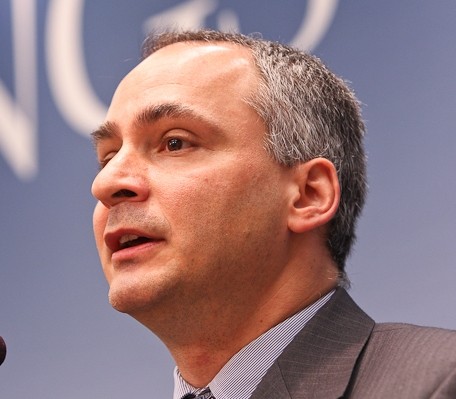
For today's podcast, Executive Editor Natalie Orpett is joined by Natan Sachs of the Center for Middle East Policy, Joel Braunold of the Center Project, and Lawfare Editor in Chief Benjamin Wittes to talk about the Oct. 27 elections in Israel. After record turnout by Israeli voters, especially Arab Israelis, we have an outcome—but the implications are far from clear. They unpack what happened and the questions that remain: Whether longtime Prime Minister Bibi Netanyahu has a path to staying in power, whether opposition parties can stay unified, and whether there’s any prospect of a governing coalition or if we’re heading toward another round of elections. The future of Israeli politics is still very uncertain. They explain why.
To receive ad-free podcasts, become a Lawfare Material Supporter at www.patreon.com/lawfare. You can also support Lawfare by making a one-time donation at https://givebutter.com/lawfare-institute.
Click the button below to view a transcript of this podcast. Please note that the transcript was auto-generated and may contain errors.
Transcript
[Intro]
Benjamin Wittes: One of the most encouraging things that’s happened in Israeli democracy in a long time is that the Palestinian community in Israel basically made a collective decision to vote at a enormously higher rate than it has voted before, and it did that because the current government is hostile to it and it wants change.
Natalie Orpett: It’s the Lawfare Podcast. I’m Natalie Orpett, executive editor of Lawfare, with Natan Sachs of the Center for Middle East Policy, Joel Braunold of the Center Project, and Benjamin Wittes, editor-in-chief of Lawfare.
Joel Braunold: I wouldn’t rule out some unusual things happening. Netanyahu offered an incredibly bleak vision, and he’s delivered a minority to his coalition.
You know, right now he might feel jubilant. Give it a week. Give it two. Because if pushes come to a unity government and if it’s the ultra-Orthodox are the ones who are left out, they’re not just going to sit on their hands and wait. It becomes very important the size of Yisrael Beiteinu, the size of Ra’am, and the size of the ultra-Orthodox bloc.
And we’re only going to know that at the end of Thursday once the double envelopes have been counted.
Natalie Orpett: Today we’re talking about the Israeli elections. After record turnout by Israeli voters, especially Arab Israelis, we have an outcome, but the implications are far from clear. We unpacked what happened and the questions that remain, whether longtime Prime Minister Bibi Netanyahu has a path to staying in power, whether opposition parties can stay unified, and whether there’s any prospect of a governing coalition, or if we’re heading toward another round of elections.
The future of Israeli politics is still very uncertain, and we explained why.
[Main podcast]
Okay. Natan, Ben, and Joel, let us talk about the Israeli elections that happened yesterday. By the time this airs tomorrow, it will have been two days ago, October 27th. The coverage in the U.S. is pretty complicated, and I want you all to unpack it.
So, The New York Times, for example, says, in a tight Israeli election, leading parties face a tough path to power. Pretty straightforward. It was indeed a tight election. Why is it a tough path to power? Well, coalition government, I want one of you to start by just explaining what that is to the novices.
But I wanna understand exactly what is at stake here. That itself is going to take a lot to unpack, but I wanna start with the infographic you can see on the Times of Israel website, which shows 53 seats for what is termed there, it’s red, but it’s not termed as the Conservative Party, it’s termed the pro-Netanyahu parties.
48 for the anti-Netanyahu party, and 19 for two unaligned parties which are the Joint List and Ra’am. We’ll talk about the parties themselves in more detail later. But with this red, blue, and gray graph, we don’t have any party, any coalition in the majority, which needs 61 seats. And so, I want to know in the first instance, who, if anyone, is happy about the current status of the outcome of the election?
Natan, let me start with you.
Natan Sachs: Sure. So happy is a relative term, and it often... it’s based on your expectations. This morning, Netanyahu and his camp are jubilant. The polls consistently, and certainly the last polls, which were legally published on Friday, you can’t publish in the last three days suggested a bigger victory, not a decisive one, but a bigger victory for the opposition.
This gives us, in particular the Netanyahu, the pro-Netanyahu camp, a larger a larger minority than the anti-Netanyahu camp has if you discount the Arab parties, which is a dramatic choice to do so. But Netanyahu has managed to convince the opposition that they need to— that they may not cooperate with the Arab parties.
So, in a sense, what we have is a struggle to get a majority out of 120 seats in the Knesset, and if it were two camps, one of them would have a majority. But Netanyahu has managed to convince the opposition and they were willing to take it, that the mostly Arab-based parties that did very well in these elections, and perhaps they’re very happy with the result, and the mostly Jewish-based opposition are not partners for a coalition in the future.
That could change. People could break their promises. In fact, we are at a deadlock, and therefore, someone’s gonna have to break some kind of promise to reach a majority. It’s not impossible, but there are a lot of unlikely scenarios going forward, and one of them will necessarily happen.
Natalie Orpett: Joel, how about you?
Are you understanding anyone to be particularly happy or unhappy with the outcome thus far?
Joel Braunold: I mean, so, building off what Natan said, you know, the coalition went in on the morning of the election having 68 seats. There were 64 from when they had originally won the majority, plus four that Gidon Saar gave them when he stayed with the unity government after October 7th.
So, the current government of Israel is made up of four parties, the Likud, the religious right party of religious Zionism, Otzma Yehudit, and then two Haredi parties, so five parties. And then Gideon Saar had joined during after the October 7th unity government stayed with this coalition. So, this current government went to the polls having 68 out of 120 seats in the Knesset.
They leave with 53 seats. Now, 53, 55, we’re still waiting on the last, what is called double envelopes to be counted, so we’re not quite sure what the final result is, but they’ve lost their mandate for governing. Now, the reason that Netanyahu is not, you know, in tears, right, having lost his mandate, is that he ran...
The Israeli election is really about which bloc, because it’s about coalition governments have, have a bigger chance of forming governments. And as Natan said, his bloc, as the way that he defines it, came out bigger than his main opponent’s bloc of who they ran saying these will be the building blocks of the next government.
However, he is also feeling jubilant because he ran a very bad election. He was very inefficient in his block building. There were satellite parties that didn’t pass the threshold. There were shared agreements that weren’t signed. So, he feels that should there be a second round of elections, he will do better than the opposition.
And therefore, he’s feeling particularly empowered that despite the fact that he is eight seats short of forming a government and it is very unlikely he’ll be able to, you know, snipe at one party or split off a party to join him. He feels that time is on his side, and should there be no ability to form a coalition, you know, after two different people have tried to form a government and then an additional 14 days, there’s an instantaneous going back to the people, he feels very confident that he will get even more seats.
So, he’s feeling very optimistic. But I will say that the Arab parties are also feeling very optimistic. Really, the only thing that changed in the past four years is that the Arab turnout shot up and they jumped up by basically four seats. They took seats basically off the ultra-Orthodox, whose voting base was depressed because they felt that their representatives hadn’t delivered for them. And they’re feeling very jubilant as the kingmakers saying, you know, we’re here, and if you ever want to replace this entrenched incumbent, you’re going to need to work with us.
But at this point in time, the political imagination of the opposition bloc is struggling to come to terms with what that would actually look like.
Natalie Orpett: Okay, Ben, I wanna ask you the same question about who you see, if anyone, as being happy here. You know, Joel mentioned perhaps relative to expectations going in Netanyahu’s coalition may be happier and perhaps see a closer path or an easier path to, if not victory, at least being able to take time.
But how else are you understanding the environment such as it is in this moment?
Benjamin Wittes: Well, so I wanna be the one with a smiley face here. The difference between this outcome and one that the opposition parties were hoping for is a matter of a very small number of votes, and actually does not depend on the coalition that they would be able to put together is the same.
So, there was never much of a chance that the Gadi Eisenkot anti-Netanyahu Zionist bloc was gonna put together 61 votes without Arab parties. Nobody expected that. No poll showed it. And there was always a likelihood that if you added the Arab vote to the Jewish Zionist anti-Netanyahu vote, which itself ranges from quite far left to quite far right there was somewhere around 65 to 70 votes, and that is exactly what this outcome is going to show.
The only difference between the expected outcome and this outcome is that the Netanyahu bloc has a few more seats than people expected, and the Gadi Eisenkot bloc has a few fewer seats. I mean, two or three in one direction or another. And that the Arab vote is much larger than most people expected. Now, I wanna suggest that second fact is one of the most encouraging things that’s happened in Israeli democracy in a long time, which is that the Palestinian community in Israel basically made a collective decision to vote at a enormously higher rate than it has voted before.
And it did that because the current government is hostile to it, and it wants change. And there is a very simple choice that faces the anti-Netanyahu bloc, which is, are you willing to do business with Arab parties as representing citizens of Israel or not? To their shame, the leaders of three of the four major parties, including Gadi Eisenkot, have cast doubt all through the campaign of, on their ability or willingness to do so, even though they have all done so in the past, or at least the ones who were most emphatic, the Avigdor Liebermans and Naftali Bennetts and Yair Lapids have done so in the past.
And so, the question before them, which will be resolved over the next... they have the votes to resolve this situation. The Arab parties are being extremely cooperative and generous actually with their support. And the only question is, can you take yes for an answer as an answer from Israeli citizens who exercise their right to vote?
And if the answer to that question is no, then frankly, the Israeli population kind of, or the political party system deserves another term of Netanyahu. I mean, I the, there is an obvious solution to this problem, and all you have to do to get the benefit of it is take the benefit of it. And so, I’m a little bit impatient with the doom and gloom here, not on the part of my co-panelists, but on the part of the Israeli sort of anti-Netanyahu sentiment.
You just won 68 votes or something like that, and all you have to do is be willing to use them.
Natan Sachs: I normatively agree completely. I think it is an historic opportunity. In 1992, Yitzhak Rabin came to power with a very similar situation. He did not have 61 without the Arab parties. He needed them to help, and then he formed a coalition with other parties who joined because he had that power.
There’s no question in mind, and I agree also that this is a historic opportunity, especially with Ra’am, one of the two Arab parties that even appointed a number two as sort of- conciliatory, a very centrist Israeli, Jewish-Israeli man as a sort of a signal of just how willing they were to cooperate.
That is all true. But the anti-Netanyahu coalition right now is not the old left-wing or left-center coalition. Israel is in a extreme, historic moment of crisis, and the opposition that cobbled together from very different ideological points of view, as you said, Ben cobbled... came together to try to bring the, an end to, in my view, a truly disastrous government in a whole host of different ways.
The fact that they are so diverse and disparate means that it is very hard to do anything that in normal times would be the obvious choice. And Ra’am has already been done. The Joint List itself would have a very... They would not join a coalition. They would not do so themselves, and some of them, certainly Balad, which is one of the constituents, is gonna have a very hard time voting in favor if they ever did.
This would be actually quite unprecedented. So, to ask for an unprecedented thing, which I think is 100% in order, for that to happen in a moment of such enormous historic crisis where the stakes are so, I think, momentous that’s where the gloom and doom comes from, and from a second from a second point, which is that this is the first election since October 7th.
It’s the, an election after four years of war and of a, before October 7th and after it, a giant attempt to overhaul the judiciary in Israel, which I’ve spoken about at Lawfare, in Lawfare and written about with Lawfare and I think we’ve all discussed many times. If after all that, with Netanyahu aging, with his government appearing corrupt and inept, if after all that, which is simply could not be scripted in Hollywood, basically, we do not see a change in vote except for a much broader participation by Palestinian Israelis, Arab Israelis.
Then there are many in the opposition that feel this is in some way not an election, but a census. And in that census, they are simply a minority and perhaps a rather small one if you, depending on how you count them. And that is where the doom and gloom comes from. It’s a feeling that if it didn’t happen now, the next election will be probably worse.
You will not see higher turnout in the opposition ranks next time. That adds to the argument that I share with you very much, Ben, that they must capitalize on what is a win, actually. They won a majority of the 120. But that is extremely hard to do in the Israeli context in normal times. In times of war and after October 7th, where there are fundamental differences even about what Hamas is, not with Rahm, but with some people in the Joint List it is a very hard thing to do politically.
I don’t think it’s likely. I hope I’m wrong, and I know there are some people who are trying in the opposition to, to push it forward, but it will be very hard to do. Without defections especially, very hard to do.
Joel Braunold: Yeah. I wanna add two different dynamics here, which the higher Arab turnout changes dynamics in very interesting ways.
Let’s assume for a second this is the new normal, that the Arab population has recognized that they have an ability to block a far complete right government, ‘cause they’ve now experienced what a far complete right government was, which is a government of depopulation. Okay? It was very clear that one of the only things that united the coalition government that went into this election was its policy of depopulating the West Bank and Gaza.
And they ran on that, by the way. Ben-Gvir and Smotrich were very clear that their policy, should they have been reelected with a majority, was one of depopulation, and that they were going to bring it to Arab citizenry- ship next. Right? There was a clear thing, and we’re already seeing today the Likud officially claiming that the election has been stolen by the Arab parties, that they illegally have got these terrorist supporters, as they claim them, have stolen these votes, and they’re claiming massive voter fraud.
Because what does it mean if Arab, the Arab citizenry in Israel vote at the same levels as the Jewish citizenship? Which is basically what happened, right? They jumped up to the same sort of voter turnout levels. It means that there is not a majority for the religious right sans a unity government. And if there’s a unity government, some part of the religious right coalition will be left out.
And who is going to be left out? It’s one of two communities. It’s either the ultra-Orthodox who are given the sharing of the burden and conscription could see themselves looking on the outside and their community being forced to go through changes they don’t want, or it could be the religious right, sort of the Smotrich and Ben-Gvir who have been utilizing this opportunity to try and advance that ideological equation.
Now, if you are ultra-Orthodox and you are the heads of the rabbinical colleges, and your number one priority is making sure that your young men are not seen as criminals for not serving in the IDF, and you ask yourself, well, who is more likely to be left out of this scenario? You know it’s you. How do you know?
Because in 2013 when this happened and you had the government of brothers, the first time that Lapid and Bennett went into government with Netanyahu, it was the ultra-Orthodox who were left out and Bennett and Smotrich were in. So now you look at it and you’re like, a narrow right-wing government will not deliver the ultra-Orthodox the security it needs.
So now do they start looking at the left and start saying, we might need to work with Ra’am, who is another religiously motivated party despite being Muslim in order to preserve the equities of our community? And does it scramble the very fundamentals of the bloc? Now, we’re gonna speed run this over the next 45 days as coalition math happens.
But we’re already seeing when you read Yair Netanyahu’s Twitter stream and other things, him already attacking Deri, who’s the head of Shas, which is the Sfaradi Ultra-Orthodox party, and others claiming, will they give their mandate to terrorist supporters and others? So, there’s already a fear that the ultra-Orthodox might jump ship, because if they know that if they go to a unity government, they’re definitely left out.
But maybe there could be a way that they could push out Lieberman and Eisenkot could, and Bennett could live with some sort of deal with the ultra-Orthodox if it replaces Netanyahu, that might be an option. So, the point being that a higher Arab turnout, what it does is it prevents this current coalition that came into the elections from getting a majority in the Knesset.
That scrambles the blocs because the things that held together that very coalition requires them to have a majority. If they don’t, then everything’s on the table.
Natalie Orpett: Ben, I wanna hear from you on that need for a majority in order for this coalition to stay together, because as we’ve discussed already, there are many different disparate positions in this to-be coalition if it can get to a majority to govern.
The thing that is unifying them right now is a position that is anti-Netanyahu, and I want to understand how much we think that unifying position can translate into a post-election reality. So, for example, does everything break down now that if they do succeed in getting a governing majority everything breaks down because they’ve succeeded in the one goal that they had jointly, which was to get Netanyahu out of power?
Or is there enough, for example, in the way of working to undo what the Netanyahu government has done, and not even most recently, but over the course of an extremely long tenure with Netanyahu being the head of government and really the leading force in Israeli politics?
Benjamin Wittes: Yeah. So, again, to go back to Natan’s normative versus descriptive dichotomy descriptively or normatively, I would love to say that yes, you are right, there’s enough that holds these people together to imagine that.
Descriptively, there is no possibility of a long-term coalition of any kind in Israel except the hard right religious combination that has been governing Israel in one iteration or another for a number of years now. Now, why is that? Well, the first is that the there are many fault lines in Israeli society other than what we think of as a left-right one, and right now, left-right isn’t even the most salient.
The anti-Netanyahu bloc contains many right-wing figures. This is about people who do or don’t want Bibi Netanyahu to be prime minister for whatever reason, and Naftali Bennett and Avigdor Liberman have very different reasons for that than Ra’am does. So, you can’t imagine any kind of long-term agenda that would hold the sixty-eight people who are gonna be elected in the anti-Netanyahu or Arab blocs together.
What you may be able to imagine, if you’re very lucky, is a three-month-long set of agenda items may be composed of one, two, three, or four things. And which three or four things those are, as Joel suggested, very much depends on which group of people you’re imagining holding together. If you’re trying to hedge against Lieberman the fact that he hates Arabs almost as much as he hates Netanyahu, maybe more maybe less.
We don’t— We won’t know until we know whether he’s willing to break his word not to sit in a government with Ra’am or one supported by the Joint List. If you’re trying to hedge against that, you have to bring in the ultra-Orthodox. If you bring in the ultra-Orthodox, then you can’t pass a draft law that’s all, that’s the agenda item that you could possibly pass if there are no ultra-Orthodox in the coalition.
So, this is a, it’s a puzzle in which every piece you put in place excludes large numbers of other puzzles, and I don’t think anybody should be thinking about or can realistically be thinking about a long-term realignment around anything right now. The question really is, can you have a government that does a couple of things, a few things in the immediate term before there is a second set of elections?
And I would be interested in whether either Joel or Natan has a vision of a more ambitious articulation of a goal than that. But I would think that everybody would be thinking in no more than six-month increments right now.
Natalie Orpett: So Natan, let’s go to you on that question. Is there a set of issues around which a sufficient number of parties can coalesce either a small enough number or I suppose a combination of a small enough number and a degree of significance to their respective bases that will suffice to keep a coalition together at least for the short or perhaps the medium if certainly not the long term?
Natan Sachs: So, I think to form a coalition... forming coalitions is very possible. The question is which promise is broken. So, the change opposition can go with Ra’am, and this time that would not be enough. It would need the support of the Joint List. That would be reminiscent of the change government under Naftali Bennett and Yair Lapid, where by the way, Avigdor Lieberman was finance minister.
With Ra’am, there was no problem. However, they paid an enormous price for that, and the coalition didn’t last. And that is why Lieberman, at least in terms of politics, has been arguing against the idea of a minority government because he thinks it won’t last. And once it’ll, won’t last and they go back to the public, they will pay a heavy price for it.
There could be another, other promises broken. They could break the promises to push for conscription of ultra-Orthodox, which is an absolute core issue for Avigdor Lieberman and… but also for Naftali Bennett, and very important for the voters of the opposition. And they could try to get the ultra-Orthodox to come in.
They could promise them the moon in terms of non-conscription, legal non-conscription, which is pending legislation. And perhaps they could do it just as Joel spoke about Yair Netanyahu, the son of Benjamin Netanyahu, speaking preemptively about such a possibility. It would not be easy. The ultra-Orthodox are not natural partners here.
But it could be possible, and it would not be unprecedented. It has happened before. And you can think of other things. You could also think of national unity governments, which I think of all the different possibilities, I think we’re looking at really two. One is the path of least resistance, and that’s new elections.
And I think Netanyahu, just as the change government I said before, the change coalition, excuse me change opposition actually is fearful of new elections because it’s not clear what they could mobilize that they didn’t mobilize this time. So, Netanyahu is less fearful of it. We will also see very strong pressure from President Herzog of Israel.
He’s the next person in line now to appoint someone to get a role, as Joel described. And he is very much in favor of a national unity government. I think personally he is. I’ll note that his father, who was president also pushed for national unity back in the ‘80s. And President Trump may be pushing in this regard.
Joel mentioned pushing out at least Ben-Gvir, perhaps Smotrich. I think certainly Ben-Gvir. But he would be pushing, Trump would be pushing for a national unity government. You could imagine it’s a very hard sell for opposition voters. They experienced that under Benny Gantz. They won’t believe a word that Netanyahu says and the promises to the partners who join.
But they are a bit out of options, so it is not impossible because they are fearful of new elections. I wouldn’t rule it out. I don’t think it’s likely, but I think all the options are unlikely, perhaps except for new elections. This might be the least unlikely of them. And you could see this kind of national unity government even in extreme, and this I think is very unlikely a secular and modern Orthodox national unity government.
Likud and Smotrich, together with Lieberman and Bennett and Eisenkot conscripting the ultra-Orthodox. This would be a betrayal by Netanyahu of the ultra-Orthodox. He is loathe to do that. He has counted on their partnership for decades, and I don’t think he’ll go for it. But in theory, again, that fits the question that you asked, Natalie, of how...
Is there a set that can work? All these sets can work in theory. All of them require breaking major political promises that are very important to voters. I’ll say I find the promises not to go with Ra’am and the Joint List completely wrong morally but also politically.
But we should be clear, it’s not just pure racism. It is al- Among some, it is racism. Among others, it is this ar- is an argument that in a time of war, the Joint List, and Ra’am to a lesser degree, but certainly the Joint List, certainly Balad, which is part of the Joint List, have a radically different view of Israel’s wars than do the majority of Israelis.
And if a government was completely dependent on, say, a vote of the Joint List, they would be constrained on an issue of war, which is paramount right now in Israeli minds. So even those who in normal times were in favor of it, for example, a changed government, were very fearful of saying so, and that’s where the promises came from.
Eisenkot did not promise not to do so. We should give him credit. He put some conditions, but these are ones that I think Ra’am could have met because of the courage of Ra’am’s leader. But Bennett who betrayed a very explicit promise not to do it last time and then did it, promised this time in an attempt to rehabilitate himself.
And Lieberman promised that. Lieberman could probably change his mind if he wanted to. But, in short, all these swirling options, I think none of them is very likely. If I had to give you two options that seem least unlikely, new elections, which is the path of least resistance, and some kind of national unity government with pressure from two presidents, one of them Israeli.
Benjamin Wittes: And which, in, in your judgment would the prime minister of the national unity government be Bibi because he fears elections less? Or would it be Eisenkot because he’s the one who has some theoretical way to put together a different government?
Natan Sachs: He does not. The perception is, well, that he does not have that.
I think it is— would be Bibi. Bibi has the larger party, and Bibi is not afraid of elections. And Bibi’s determination to stay in the prime minister’s office... I disagree with many people who describe his sort of single focus on staying out of prison. He could have had a plea bargain at numerous points in his trials in the last six years.
They would, however, would have required him to be banned from politics for seven years, in other words, end his political career, and in other words, exit the prime minister’s office. That is his goal. His goal is to remain prime minister for as long as he can, and he believes, as many leaders who have served for almost two decades come to believe, that he has no replacement.
We know that cemeteries are full of them. But he genuinely believes he has no replacement, and I think he believes that it is not only his right and his duty, but it is a national imperative that he stay in the Prime Minister’s office to shepherd Israel through this Churchillian project of confronting the Iranian threat.
I think he genuinely believes that the fact that it, you know, coincides with ego and coincides with personal interest only adds to it. And given that, he— I do not believe in any way he would join a national unity government in which he’s not prime minister. I’ll note that unless you change the law, he also cannot.
He cannot serve as a minister because he’s on trial. He can’t serve as prime minister. This is not legislation, but ruling of the Supreme Court from a long time ago. But nonetheless, that is the law of the land at the moment. They could change legislation, I suppose, to do so, but this would be very hard for the opposition to agree to as well.
So, in other words I think it’s him, Prime Minister or not.
Joel Braunold: So, I would say two things, Ben, to your question that the first is what are the guns that Eisenkot can bring to the table in the next 45 days, and what are the guns that Netanyahu can? So Eisenkot can replace the Speaker of the Knesset.
He can replace the chairman of the Foreign Affairs and Security Committee, the Appropriations Committee, the Arrangements Committee. And they can try and pass an October 7th commission. They can try and pass the defendant’s law claiming that in a new election, Prime Minister Netanyahu couldn’t be prime minister.
All of this would require cooperation with the Arab block, and Netanyahu would make it very clear that’s what’s going on. And all of that is just leverage. Then we’ll go to the courts about whether Bibi could be the prime minister or not. It would be a crazy amount of additional pressure on the Supreme Court, and that’s the guns that Eisenkot brings to the table.
The gun that Netanyahu brings to the table is, I’ll just outwait you and go back to an election, and I feel like I’ll do better. Now, will he do better? Will he actually make 61 by himself? Well, if the left isn’t organized, the argument is that he might be able to. But the demographics, as Natan said, aren’t really shifting.
So, you know, he might get closer, but will he get all the way there? It’s unclear. And could we go through three or four? And that’s something that no one in the security establishment, and I would argue no one in Washington, no one in the region, and no one in Europe wants to see. And here’s my other thing.
So, what is it that those outside actors want to see? Okay, what is it that they— If they could have their druthers, what would they want? So, if you’re currently sitting in London or Paris, or I’d argue you’re sitting in the DNC, right? You want to see Eisenkot rely on the Joint List. Why? Because all the things that the Joint List want you to do comply with where the DNC and the Europeans want Israel to go.
The things that the Joint List will require of a government of Israel on family reunification, all the things that people have critiques of what is pretty mainstream Israeli policy vis-a-vis the Palestinians is a no family reunification, a pullback of Gaza. You know, all these different things. The Joint List and the Arab community in general in, in Israel are very much of the Osloonian ‘90s consensus.
So, your ideal is take power, Gadi, join with this list, and by the way, that will help you with avoiding the international sanctions that we’ve all been planning because you can demonstrate a different face of Israel. So, the solution is going through the political problems. The problem is that the majority of Jewish Israelis are not there.
So, you might be satisfying the global Western consensus, but you’re upsetting everyone else. Okay. If you’re sitting in the White House and you’re President Trump, what is it that you want to see? You want to see a unity government without the vetoes that have prevented you moving forward on your 20-point plan.
When Jared Kushner has been trying to push, Netanyahu has always said, well, look at my coalition and I can’t do it. And by that, he’s really talking about two parties. He’s talking about Ben-Gvir and Smotrich. Ben-Gvir very famously sort of, you know, in terms of what he’s done on the prisons, and Smotrich has very carefully created a situation of de facto annexation even if it’s not de jure in terms of what he’s done, and that’s what he wants to continue doing.
So, the White— At least the Jerusalem Post is reporting today that he wants a… that Trump wants a unity government sans these people, and that he’ll put his pressure and all the things that he can offer Netanyahu and all the other things in order to get what he wants. And then if you’re in the region, what do you want?
You want a rational Israel. Now, is a rational Israel one led by Netanyahu? I don’t think you care that much. Would you prefer someone else? Sure. But if it’s the Netanyahu of old who isn’t seemingly blocked from being rational towards the Palestinians, I think you could put up with that if it’s stable and you want some level of stability.
So, who pushes hardest could potentially lead to what type of coalition government is created. The outsiders don’t care about the Haredi issue. So, if Netanyahu wants them as a safety block, that’s irrelevant to sort of where Trump sits. But Smotrich and Ben-Gvir is a different question for them, and the ideological opposition is something that they would not want to have imported into a unity government if they’re spending their own political capital, because that’s sort of the realities of sort of the situation.
So as everyone now gets involved in Israeli politics, all the outsiders as we move to stage two where the amount of actors are 120 rather than the millions upon millions of voters, the ability to influence those 120, of course, is far higher by international actors and foreign agents, one would argue, than the day at the ballot box.
Natalie Orpett: So, Ben, I want to get your reaction to that, but let me add the additional layer that we have all these external actors who will be putting pressure looking for whatever they can do to effectuate their own vision of what would be the best outcome here. But of course, different actors will be more or less successful in actually getting anything for putting on that pressure.
And it seems to me that the pressure they can exert depends on the party as well on which they are trying to exert it. So, this brings a whole other layer of considerations, but I’m curious in the first instance whether you think that’s meaningful, especially in the short term, if one of the outcomes that Natan identified is that maybe we’re just heading for new elections again in a couple of months.
Benjamin Wittes: So, I think the— first of all, the pressures are all significant. The only question is which pressures are most salient to the five or six individuals or the, and in the broader sense, the 120 individuals who really matter here. Trump’s pressure matters to Bibi. And because Bibi actually has things he wants to do in the world that Trump can support or make more complicated, Trump probably helped Bibi in this election.
It’s an interesting question whether his endorsement mattered, but it certainly, you know, Bibi played off of it. And you know, the pressures as… look, if everybody lives according to their stated values, there is no government to form. And so, as Natan correctly said before, the question, if you’re imagining a government gets formed, the question is which promise gets broken or which promises get broken.
And there are a lot of options there, but every time you break a promise, you push back on somebody’s pressure and you upset some group of people. And the, you know, there is no way to put together a government that does not do that.
Natalie Orpett: So Natan, on that question of breaking promises it’s— I am curious how to understand, there are obviously a number of promises, many of them within the same possible coalition are in direct conflict with each other.
But it seems to me there’s also an interesting question of which promises are the most important to people, and that of course varies tremendously as well. But I saw a poll that in advance of the election, those who ended up or at least said at the time that they were going to vote for the current coalition government, the pro-Netanyahu group, ranked the Iran war as the most important issue on which they were voting.
And those who said they were voting for the opposition parties ranked the failure of security that led to October 7th as the most important issue on which they were voting. So how do you think about those two factors? How do you think more generally about all of the many different promises, again, many of them in conflict, but what is the relative salience which could perhaps be could a party perhaps get away with breaking or not lose quite enough people or be able to drag it out with a little bit more time as they focus more on other issues that are more salient?
Natan Sachs: That’s a great question. I think, you know, it’s important to keep in mind that these, these elections are very much in the shadow of October 7th and what followed since then. These are the first elections since then, and that was… it’s often said, but it’s worth belaboring this, it is a truly generational trauma that affects everything in Israel and the way Israelis look at things.
So, for the opposition, the failures of October 7th, that is partly code for the establishment of a National Commission of Inquiry, which is a legal institution in Israel that would be appointed... Its members would be appointed by the chief justice or the president of the Supreme Court. Netanyahu has avoided that like wildfire and his opponents would say because he doesn’t want the inquiry into what he did wrong, and he was prime minister at the time, of course, and most of the years before that.
He claims that the problem is that it would be appointed by the chief justice, who’s a, you know, politically opponent, political opponent of him. This kind of issue is very emotive for voters of the opposition and is viewed, I think, by many Israelis as a necessary step for the beginning of national healing and a return to slightly more normal way of conducting businesses and making decisions, including on national security.
For the coalition, and I would say for many in the opposition too, however, the ongoing wars, the war with Iran, but also other things, the demand that Hamas disarm in the context of the 20-point plan and the Board of Peace process or otherwise that Hezbollah disarm before Israel withdraw in Lebanon, that Israel learn what most Israelis think, right or wrong, is a central lesson of October 7th, which is that it must be it must not tolerate threats growing on its border and containing them, containment being the bad word here, but rather defeat them and preempt them, even prevent them from arising.
These are very wide, widely held things, and I think when we look at these elections also, and we think about Netanyahu’s ability to survive after October 7th, it is partly because October 7th produced two different vectors that operate in opposite directions. On the one hand, holding him accountable for what happened, on the other hand, dramatically pushing Israelis to the right more hawkish on the Palestinian issue for sure, but in general on security issues, this feeling that they cannot, they cannot contain threats.
They have to confront them. Long way of answering your question to say that when people say Iran, when people say October 7th, they’re talking mostly about national security here, and that is still looms highest. If you ask me which promise would be easiest to betray or to walk back, it would probably be on the ultra-Orthodox, even though that too is related to the wars.
They… them not serving while others have bereavement and serving hundreds of days in reserve. But that is one that... That’s a problem that predates October 7th by decades and has sort of remains part of normal politics in a way. Sitting with Arab parties for Netanyahu would be easy, and he almost did so, and he would do so in a heartbeat, by the way.
If he were in the opposition’s position, he would do so immediately. But for the opposition, it’s very hard precisely because for many Israelis, this seems tied to national security. So the short answer is, anything that is on national security is what could trump things, excuse me, excuse the pun, and hence also what we’ve been discussing, the possibility of a push for national unity perhaps excluding the, the extremists with this perception that the two years left of the Trump administration might be a moment of opportunity.
Certainly Netanyahu views it that way, a moment of opportunity for Israel to change the reality with Iran in advance of a much less favorable president coming in from Israel’s perspective.
Natalie Orpett: Joel, I’m curious for your thoughts on that and whether you see the possibility of broken promises in the same sort of ranking of importance and balancing act.
Joel Braunold: Look I think Natan did a very good job in terms of what are the ranking of broken promises. But I will add, Netanyahu’s closing argument on the campaign, which he gave on Friday, a remarkable interview on Israeli television, where he declared the end of United States aid to Israel saying, it’s happening.
It’s got nothing to do with us. It’s got everything to do with them. Right? That’s been signaled for a while. He then said that Israel has to prepare to be a sanctioned economy, and that banking sanctions are coming and that we’re gonna have to use crypto to get around it. This caused absolute furor from the Bank of Israel that basically said that’s not possible, of which Netanyahu said, I’m happy for their opinion, but they’ll do as they’re told.
Very pro-Israel organizations like FDD and others frankly were shocked and said it’s not possible for Israel to live, you know, with NASDAQ stocks and a high-tech economy and facing bank sanctions. And why do I bring this up now? There are two segments of Israeli society that are truly worried about said banking sanctions.
One is the high-tech economy, which is the driver of the Israeli economy. The high-tech community is often seen as part of the change coalition. There’s this fear that should Netanyahu be reelected, especially with this current governing coalition, that many of them would leave and that they’re portable and that their investments could leave, and what does that… what happens then?
The second thing is the other group, ironically, are the ultra-Orthodox. And why? Not because they work, but because they’re so dependent on state subsidies, and should the state become poorer, which of course it would should they be under banking sanctions they— their way of life would be— just couldn’t survive.
In addition to how much charitable dollars that they take in that of course would be under sanctions, because if you’re trying to avoid sanctions, which is what Prime Minister Netanyahu is talking about, that is in and of itself a sanctionable event if you’re trying to avoid U.S. sanctions. So again, I go back to what Natan said.
If the promise that is probably the most easy to be broken is around the ultra-Orthodox, and you look and you’re on the change block, and you can see that the change block in and of itself is not demographically prosperous when you look to the future of Israel, okay?
Joel Braunold: Outside the Arab sector, you know, it’s the religious right that’s growing in terms of its demographic numbers.
If you can use this as a moment to maybe redraw the map with the ultra-Orthodox who are more demographically numerous, and in doing so, the ultra-Orthodox realize that aligning with the ideological right could lead to a sanctions economy that could challenge your very way of life because Israel becomes a poorer state as a result, you could see a realignment in that manner.
Now you know, there’s a lot of ifs, buts, and whatever could happen there, but I wouldn’t rule out some unusual things happening. Netanyahu offered an incredibly bleak vision, and he’s delivered a minority to his coalition. You know, right now he might feel jubilant. Give it a week, give it two, because if pushes come to a unity government and if it’s the ultra-Orthodox are the ones who are left out, they’re not just gonna sit on their hands and wait.
And what does that do? So, for me, as listeners and as viewers of this, what happens with them and what machinations go on, it becomes very important the size of Yesh Atid, the size of Ra’am, and the size of the ultra-Orthodox bloc. And we’re only gonna know that at the end of Thursday once the double envelopes have been counted, because at that point you could scramble the envelope again.
And what happens then is anyone’s guess.
Natalie Orpett: So, there’s just a tremendous amount of uncertainty and variables, and lots of these answers have been, we’ll have to see how it plays out. But I wanna talk about the specific mechanics of what comes next. So, correct me if I get any of the details wrong here of how elections will proceed procedurally from here.
But as I understand it, the official results will come on November 4th, at which point President Herzog will have seven days to pick a candidate, and that candidate then has 28 days, possible extension of 14 days to figure out a coalition government. So, the question is what do we think that President Herzog is going to do?
On the one hand you have Netanyahu with the larger bloc, the largest party, single party which presumably suggests that they have a bit more discipline within the confines of that party as compared to a coalition of a larger number of smaller parties. But on the other hand, a majority of parties may seem, at least for now, to recommend Eisenkot as a leader rather than Netanyahu, and it’s not really clear what path to a national unity government Netanyahu would have, given the size of the opposition to him and what we’ve been calling the sort of anti-Netanyahu camp.
So, I’ll start with you, Ben. Do you have any predictions here of what will happen or what do you think is the most plausible of the uncertain scenarios?
Benjamin Wittes: Yeah, I mean, I think it’s a challenging question that Herzog will face ‘cause on the one hand I cannot think of a time when the president went to a, the—not just a smaller party, but to a significantly smaller party.
If the current numbers hold, Likud will have 27 seats and Eisenkot will have 22. So that’s— It’s not a trivial difference, and the block sizes are maybe trivially different, but they are... Bibi is, as you say, the, the leader of the largest party in the larger of the two blocks. On the other hand, you know, go back to where we started.
Sixty-eight or so members of the Knesset are represented by parties that will not suggest that Bibi form the next government. And I think both of those two constellations of facts are pretty hard to ignore. I assume That Herzog will choose the person— I mean, he is known himself to favor a national unity government and to kind of be pushing for it.
So, I don’t know what he’ll do, and I kind of assume that there’s a heavy weight on the scale of the largest party and the larger bloc, but I just don’t see how Bibi puts a government together. So, I don’t— I actually find the question a little bit mystifying, and it’s certainly what I’m stewing over as I watch these returns come in.
Natalie Orpett: Natan, how about you? What are you imagining that President Herzog might do out of this?
Natan Sachs: So legally, he has a lot of leeway, and he’s, but he is guided to choose the person he thinks has the best chances of forming a coalition. Generally speaking, the largest party would often get the first shot. The exception would be if the whole opposition, including the Joint Lists, actively recommend Eisenkot.
That also means Lieberman recommending Eisenkot. If they all do so, then it would be quite plausible to say, look, he has more than 60 seats, 60 recommendations, he would get it. My guess is that it’s Netanyahu first. It also is not completely clear who prefers to go first. You could imagine the opposition saying, let Netanyahu do it first.
He will fail if we— and we hold the cards. And then once it turns to us, we will be the ones forming the coalition. So, then the time pressure goes on him. So, I could easily imagine the opposition saying, you know what? Let’s not all recommend the same person. Lieberman’s party recommends Lieberman, and the Joint List recommends no one, which they usually do.
I’m not sure, of course. It could all be different. They all recommend Eisenkot and go first. But I could imagine them saying, let it be Netanyahu first, and then the time pressure is on him, twenty-eight days plus fourteen. The danger, of course, is then he’s in the driver’s seat for twenty-eight plus fourteen days.
That is dangerous, of course. And he’s in the driver’s seat anyway given their fear of a new election.
Natalie Orpett: Joel, I’ll end with you. You have the last word on predicting what President Herzog will do.
Joel Braunold: Look I think that there’ll be tremendous pressure if Netanyahu gets the first push for Eisenkot to already start replacing the Speaker of the Knesset and other things to try and demonstrate that should we be going to another round of elections, don’t feel like you’ve got a free hand to screw around in.
We’ll replace It, it’s really all about replacing the security and foreign affairs chair. So, should there be any kinetic action with Iran, there’s someone in the opposition who needs to say yes or no before the prime minister can just do it, right? The only time that the Israeli legislature really truly can outstrip its executive is this period of time when we don’t have a sworn in government and the Knesset is truly sovereign.
So, you have a… you’ll have a caretaker government, but, you know, the laws still apply that they’re gonna have to go to the Knesset for various different things that they need. So, I do think that there, again, there’ll be a… there will be a balance of sort of guns on the table. I think we’re already seeing Netanyahu do two things.
The first thing is that in his speech last night, he said that, you know, he invites a unity government, but he’s not abandoning any parts of his bloc. So, he’s already saying, I’m not abandoning the Haredim and I’m not abandoning Ben-Gvir and Smotrich. Okay? So that’s his opening salvo. My assumption is that Bennett, Lieberman, and Eisenkot will say, we’re not abandoning each other, so we also have demands.
We go in all at once or none of us at all. The more that Netanyahu can try and split off those three, the stronger he will be. Ra’am also, Mansour Abbas said that members of the coalition, Netanyahu’s bloc, have already approached him about him potentially supporting them, and what could that do? You know, I wouldn’t put it past Netanyahu for a moment to try and bring Ra’am in on a supply and demand if he thinks that will get him over the top with his current things.
So, it’s all still to play for. There’s a lot of things going out there. But my prediction, Natalie, is that the more the internationals, and in this case, I really think President Trump gets involved, the more uncomfortable it will be for Prime Minister Netanyahu because the more that there’s a push for unity now and not for another round of elections, the less his negotiating power.
His real negotiating power comes from, I’m not afraid of another round of elections. The more that becomes you know, people who are his supporters like, we don’t wanna go back to elections, be that outside or in, the weaker his frame becomes. And if there is another round of elections, who to the Israeli population seem more reasonable?
You could argue that if the reason that there wasn’t unity was because of the ultra-Orthodox or because of Smotrich or Ben-Gvir, that’s one thing. If there’s a reason there wasn’t unity is because of Eisenkot, is because of Bennett, is because... That’s another thing. And so, the narrative going into a second round will also be important.
So, I think there’s a lot still to play for. The final machinations will only be known after tomorrow about what is actually possible with the mathematics, and then it’s all to play for depending on that. But I will say, the region and America are not gonna wait like they did before for endless rounds of elections, and that is something that there’s gonna be a significant amount of pressure on all of them to do something.
Going back to a kinetic war with Iran while fighting another round of elections is not a solution that anyone wants.
Natalie Orpett: Okay. Well, I think we can safely say that was incredibly clarifying, if only to clarify that nothing is at all clear. So, I think we will have to leave it there for now, but clearly much more to talk about over the weeks and months to come as we see how all of this plays out.
So Natan, Joel, and Ben, thank you so much for joining us.
[Outro]
The Lawfare Podcast is produced by the Lawfare Institute. If you want to support the show and listen ad-free, you can become a Lawfare material supporter at lawfaremedia.org/support. Supporters also get access to special events and other bonus content we don’t share anywhere else.
If you enjoy the podcast, please rate and review us wherever you listen. It really does help. And be sure to check out our other shows, including Rational Security, Allies, The Aftermath, and Escalation, our latest Lawfare Presents podcast series about the war in Ukraine. You can also find all of our written work at lawfaremedia.org.
The podcast is edited with audio engineering by Cara Shillenn of Goat Rodeo. Our theme song is from Alibi Music. As always, thank you for listening.