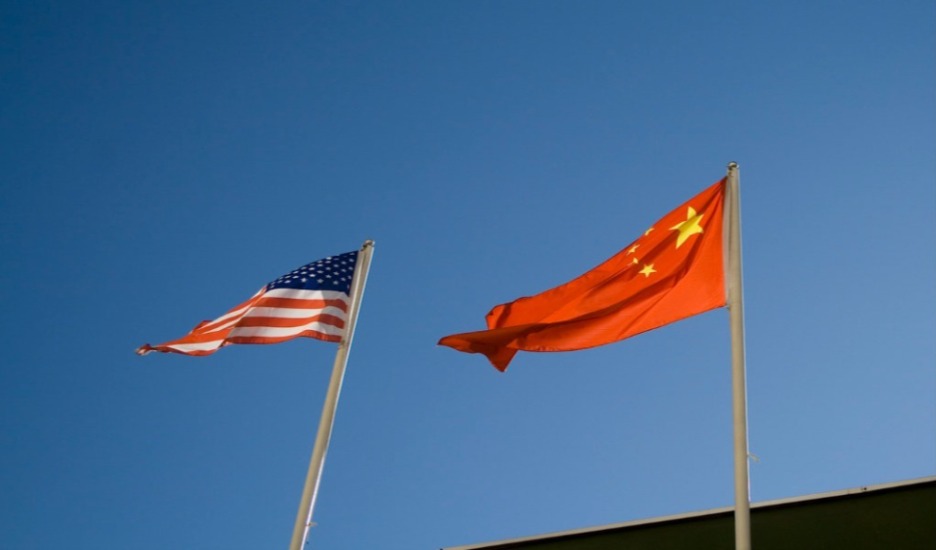
Lawfare Daily: The U.S. Withdrawal from Iraq and the Future of the Iraq-U.S. Relationship
A panel of Iraq experts discusses what the U.S. withdrawal from Iraq means for the region.
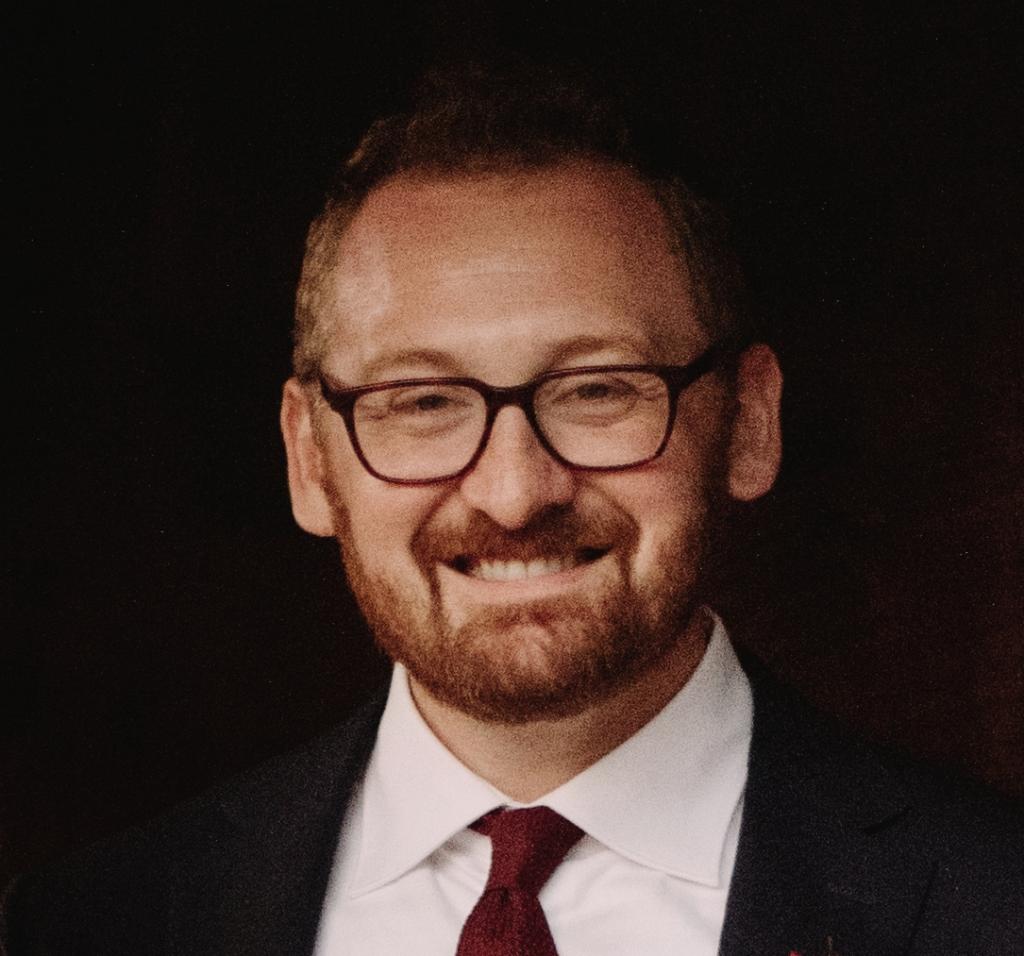
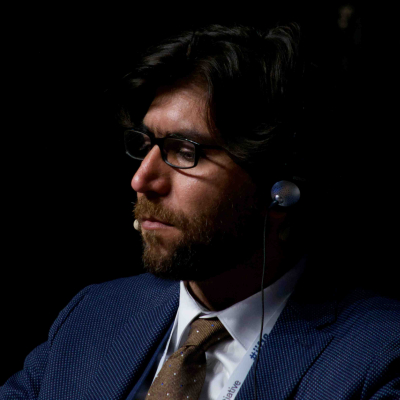


For today’s episode, Lawfare Senior Editor Scott R. Anderson sits down with Dr. Omar Mohammed, a senior researcher with the Program on Extremism at The George Washington University and the author of the blog Mosul Eye, which anonymously documented life under ISIS control in Iraq; Amb. Doug Silliman, President of the Arab Gulf States Institute and a former U.S. Ambassador to Iraq; and Victoria Taylor, Director of the Iraq Initiative and the Syria Project at the Atlantic Council and a former Deputy Assistant Secretary for Iraq and Iran at the U.S. Department of State.
They discuss the recent withdrawal of U.S. military forces from Iraq, what lessons can be drawn from the experience with the prior withdrawal in 2011, whether the current Iraqi government is up to preventing a resurgence of ISIS and pushing back against Iranian interests without a U.S. military presence, and what it all might mean for the future of the two countries, 23 years after the U.S.-led invasion and occupation.
To receive ad-free podcasts, become a Lawfare Material Supporter at www.patreon.com/lawfare. You can also support Lawfare by making a one-time donation at https://givebutter.com/lawfare-institute.
Click the button below to view a transcript of this podcast. Please note that the transcript was auto-generated and may contain errors.
Transcript
[Intro]
Doug Silliman: What I am most concerned about as you look at the possible threats to civilian targets, the U.S. Embassy or Consulate General, or industrial targets, you have had Iranian-backed militias who have attacked oil fields, both in the Kurdistan region and around Basra, and have attacked targets in Saudi Arabia, the UAE, Kuwait, and Jordan, and probably other regional countries as well.
Scott Anderson: It’s the Lawfare Podcast. I’m Senior Editor Scott R. Anderson, with Dr. Omar Mohammad, a senior researcher with the Program on Extremism at the George Washington University and the author of the blog Mosul Eye; Ambassador Doug Silliman, president of the Arab Gulf States Institute; and Victoria Taylor, director of the Iraq Initiative and the Syria Project at the Atlantic Council.
Omar Mohammed: What the Iraqis were expecting, and they are still expecting, is for the United States to start thinking more thoroughly about how to interact with Iraq, not having this by an impulsive type of behavior to the Iraqi issue.
Scott Anderson: Today, we are discussing the recent withdrawal of U.S. military forces from Iraq and what it means for the future of the relationship between the two countries.
[Main podcast]
So, Victoria, I wanna start with you about events of the past week. This is a pretty momentous occasion in a lot of ways. The departure of U.S. troops for the second time, really, in the last twenty-three years is the second time we have no military presence beyond, you know, the kinda usual adjuncts of a diplomatic presence, which we can get into in a little bit more detail in that time period.
It’s one that I think is leaving a lot of people with a lot of anxiety and uncertainty about where exactly this might lead. Before we get into looking to the future about what consequences this may have for Iraq, for the United States, I wanna get a little bit of ground truth about what the status quo is, this new status quo we’re living with.
Now that the troops are gone, what is the U.S. presence in Iraq, diplomatic, military, et cetera? And what are the lines of engagement that the Trump administration has signaled it intends to continue moving forward despite the departure of U.S. troops and the end of Operation Inherent Resolve?
Victoria Taylor: So maybe I’ll just go back a little bit further even to 2024 when the Biden administration negotiated and announced this timeline, and the timeline was that the Operation Inherent Resolve mission would end its operations in federal Iraq by September 2025, and then subsequently by September 2026, the remaining members of Operation Inherent Resolve would depart the Kurdistan region.
And at that point, I think the Biden administration very much had an idea that there would be a transition to some kind of bilateral security footprint. What has happened, however, was really that the Trump administration has, by and large fully departed, and the question of what a future bilateral security presence would look like really remains unanswered.
And so, at this point, on the ground, we have a U.S. diplomatic presence in Baghdad, and we still have not returned actually the diplomatic presence to our consulate in Erbil, which remains largely empty after having evacuated during the worst of the drone and rocket attacks occurring during the Iran war.
I think very much a question about whether the Trump administration really anticipates defining a future security relationship or whether this really is aligned with the Trump administration vision of a reduced overall military footprint for the United States in the Middle East.
Scott Anderson: And of course, the United States has for a long time been kind of the linchpin of particularly security engagement with Iraq, but it’s not the only channel.
We know NATO has had a mission in Iraq. We know the European Union and different member states have been involved. What sorts of engagement are, is still persistent there? Is that something that we’re gonna see ratcheted up with the departure of U.S. forces, or is that still another one of these issues to be decided?
Victoria Taylor: I think that’s still to be decided, and of course, I think the Iran war was extremely disruptive. We saw the NATO mission, I believe, also largely depart during the Iran war when we were seeing just a number of militia attacks and also attacks from Iran on Iraq. And so, I think there is a question not only for some of these missions about what the future will look like, but I think there’s also a question from the Iraqi side about what they are willing to really allow.
Of course, the departure of U.S. troops was very much framed in terms of a restoration of sovereignty, even though, of course the counter-ISIS mission was one that operated according to the request of the Iraqi government with the support of the Iraqi government. But I think there remains to be seen whether the Turkish military presence, the NATO presence will also become subject of future political consideration.
Scott Anderson: So, Omar, I want to come to you because one of the visuals that has circulated I think in American social media circles to some extent American media, have been some sort of striking images about, of examples being like the, some members of the Popular Mobilization Forces driving trucks over the American flag.
Statements by I think the Secretary General of Kata’ib Hezbollah saying essentially that this was around the resistance has won, something to that effect. Obviously, that is a perspective in a part among a segment of Iraqis that have long been openly hostile to the U.S. military presence.
Talk to us about the broader views towards that U.S. military presence and the fact of its ending among Iraqis. What is the kind of the diversity of views and what hopes does it bring with the end of the U.S. military presence, but also what anxieties, particularly given the events following the last withdrawal, which of course was followed short-relatively shortly thereafter by the resurgence of ISIS and another U.S. military intervention?
Omar Mohammed: Well, Scott, first of all, thank you for having me in this conversation. In fact, two things related to that matter. One, and probably they are the biggest issue when we talk about U.S.-Iraqi relations. One is I have seen recently when once again the Iran-backed militias, which is almost in control of the entire country, would drive through and over American flags.
I don’t know... I mean, I was surprised that people were surprised that this happened. This was the case since two thousand and three. It was always the case. It never changed. There are reasons also why this always happens in the same way. And the second which is the way the multiple U.S. administrations interact with the Iraqi question of security, with the Iraqi question of reform and so on.
It has always been a U.S. partisan issue. It’s either a Democratic problem or a Republican’s problem. It’s their fault, it’s my fault, and so on. And they have never dealt with it through the Iraqi perspective. The U.S. withdrawal from Iraq would create a problem because of the fact that the United States has never been able to establish or help Iraq establish a security system that functions to preserve the security of Iraq, to protect the security of Iraq, but also to reengage Iraq in a regional instability.
Iraq... The, the region is instable and Iraq has been always at the heart of this. But the biggest problem, once again, Scott, is that since 2003, once again, the multiple U.S. administrations, they have always come with the idea that it is possible to rehabilitate the Iraqi Kurdistan region. And this is the issue, is that we are dealing with individuals.
We alway— There is always a new one, and we say, he’s the right one. He is gonna, going to help Iraq restore its sovereignty, is going to reform Iraq. But the issue is not these individuals. The issue is that the entire system itself is rigged. The, the system is dysfunctional. No matter what you do, it’s going to be the same result.
We’ve heard this, for example, when Abadi came to power. He is the one who was going to do the reform. In fact, he is the one who led the efforts to institutionalize a militia, which is the Popular Mobilization Forces. They became an institutionalized force. And then they were always looking at Abadi as the reformist, the one who was going to reform the institutions.
But he failed. And see how he handled, for example, the battle to retake Mosul. And the second time, they said Kadhimi, the spy chief, the one who knows the security, he’s the right guy. Again, he tried and then they sent drones to his house, and then he had to resign. The same with everyone.
And now eventually... and in my opinion, one of the ways that U.S. withdrawal is being also marketed is that there’s a new sheriff in town. He is a banker. He is young. He’s going to read the reform again. And we are hearing the same cycle of trying to justify that it is possible for Iraq to run without the U.S. support, even without the U.S. relations, which is actually not accurate.
No one wants foreign troops on their land, but that is not the case with Iraq. As Victoria mentioned, Iraq has had these kind of agreements since the rise of ISIS. It’s also part of the coalition, not just a U.S. mission. There were also troops from European countries. So, it’s part of a mission.
But as you probably have seen, the current administration is promoting it. This is our way of disarming the militias, which, trust me, Scott, the militias will never leave their arms. One, is that they cannot. Second, is that their orders do not come from the Iraqi government. Their orders come from Tehran.
And leaving Iraq in such a fragile and a critical time is like... it’s another 2011 when Obama gave the keys of Iraq to Maliki, once again repeating the same scenarios. What I wanted to conclude, Scott, is that we are not dealing with something new. It’s like when it comes to Iraq and the way the United States has been handling the situation, it’s been repeating itself over and over.
And trust me, in another four years when the situation will deteriorate, there will also be another way of saying, well, let’s try another prime minister. This time let’s bring an academic. Probably everyone else failed after the banker. Let’s get an academic. I mean, why not?
Scott Anderson: Well, this point about kind of history repeating itself thing is a useful one to transition for my question to you, Ambassador Silliman, because you were in Iraq before, if I recall correctly, certainly during and certainly after, ‘cause I was there with you at the time, the last U.S. troop withdrawal in twenty eleven, which presented a lot of serious challenges both to the United States among other, you know, partner countries in Iraq, as well as to the Iraqi government.
Challenges as well as unexpected consequences that kind of came shortly afterwards, some of which Omar just alluded to in his comments. Talk to us about some of those challenges you encountered during your time in the embassy at that time. How many of those do you think are likely to recur? What’s different this time?
A-and what lessons can we pull from that experience that might be relevant to U.S. and Iraqi policymakers navigating this moment today?
Doug Silliman: Well, actually, Scott, I want to go back to something that Omar said about the partisanship of American policy in Iraq. I think the policy has been mostly bipartisan since two thousand and three.
For example, I was in Iraq in two thousand eleven during the first withdrawal of American combat forces. That withdrawal had been agreed to and directed by George W. Bush in December of two thousand and eight. So, you had a Republican president pledging that the next president would then have troops depart by the end of two thousand and eleven.
The same thing sort of in reverse has happened this time. You have a Democratic administration agreeing that this would be the timeline for departure from sort of southern Iraq, federal Iraq, and the Kurdistan region by the end of September of twenty twenty-six. So, I think that there is either bipartisan agreement or at least a bipartisan lowest common denominator that it is better to not have as many American forces in Iraq unless it is absolutely necessary.
And the more time that Americans have spent in Iraq, the appetite of the American population to leave troops there is goes down. So, I don’t see this as a controversial political issue for either party going forward unless and until there is another security incident where the Iraq government is gonna ask for the United States to come back.
Let me go back into a little bit about what we did in two thousand eleven and two thousand and twelve, because while we did have American combat forces depart the country in the middle of December, we increased the representation in the U.S. Military Assistance Office in the embassy, and in that point, the Consulate General in Erbil and the consulate in Basra, where we had military officers as military attachés continuing to provide some parts of assistance to the Iraqi government.
So, there was assistance in arms sales, in interoperability with American forces and American equipment. There was an awful lot of training that still went on. But the difficulty was when you have hundreds of people trying to run a bilateral security relationship, you can’t do everything that you can do if you have thousands of military personnel also doing that relationship.
So, in two thousand eleven, we had to focus on which of the Iraqi forces would be most amenable and would benefit the most from American training, from American mentoring. And we found that the Counterterrorism Service is really the one service where we had the greatest advantage, the greatest experience, and the greatest success in the period before two thousand eleven in improving their capabilities.
So, that’s some of the reason that you saw in two thousand fourteen the Iraqi army not performing well in the face of an onslaught from DAESH, ISIS from Syria. But the CTS did a much better job and at the end of the day, had to bear the brunt of the combat against ISIS. If I believe, and I generally do, my military colleagues and former military colleagues, the experience that the Iraqi military, the Federal Police, the Peshmerga, and the CTS have gotten in the period from two thousand fourteen up to today has given them skills and abilities to ferret out ISIS, to collect intelligence, and to figure out where the next attacks need to go.
They’ve progressed significantly from where they were in two thousand eleven. But that does not mean that they have all the capabilities that the United States brought to them or brought to the general fight. Iraq certainly has a weakness now in air defenses, and that’s what I am most concerned about as you look at the possible threats to civilian targets, the U.S. embassy or consulate general, or industrial targets.
You have had Iranian-backed militias who have attacked oil fields, both in the Kurdistan region and around Basra, and have attacked targets in Saudi Arabia, the UAE, Kuwait, and Jordan, and probably other regional countries as well. This is something that Iraq, at the moment, is not militarily capable of dealing with.
And certainly the previous Prime Minister Sudani and the current Prime Minister are going to try to deal with this question politically, to try to discourage politically the Iranian-backed militias, the fasa’il, from using the arms that they currently have against foreign targets or against sensitive targets inside Iraq.
So, that’s my biggest concern is in the context of the Iran war, the extent to which Prime Minister Rezadi is going to be able to discourage the militias from siding with Iran. It’s clear that they have direction, training, supply from the Revolutionary Guard Corps and that there has been obvious connection and cooperation probably through Tehran with Ansar Allah, the Houthis in Yemen as well, to put pressure on international oil markets.
This is where I see the biggest problem in the short term, one that is gonna take more than just air defense and political pressure to rectify.
Scott Anderson: That brings me to the issue I want to turn to you back on, Victoria, which is this question of kind of the security situation in Iraq and the broader region in where it intersects with Iraq moving forward.
A common narrative, common critique of the post twenty eleven period, of the twenty eleven withdrawal and its aftermath, was that it created a security vacuum that we created conditions that allowed for both the rise of ISIS and the sudden advance that happened in two thousand thirteen, as well as this increased influence of Iran-backed militias and other elements throughout Iraq that is still a very pervasive element of Iraqi politics to this very day and arguably was well before that as well, it’s worth noting.
What— How do we feel the United States and U.S. policymakers are approaching those sorts of problems now? Do we have a sense about what tools and levers they think they still have in place to either prevent a security vacuum or at least to push back on some of these concerns that Ambassador Silliman raises that you will see the PMF and other Iran-aligned elements kind of running roughshod to a certain extent?
Or is there a sense that the United States is just kind of out of that fight, that there’s not much they can do or at least are willing to do to engage on those issues moving forward?
Victoria Taylor: Yeah. So, I mean, I think I see the Trump administration decision to re-implement this twenty twenty-four agreement as really part of its broader vision for the Middle East, and a Middle East where the U.S. is not a major security guarantor, where the countries of the region are taking on the greatest responsibility for security.
And of course, this happens at a moment where the U.S. has launched alongside Israel, this significant and prolonged military conflict with Iran. But I think you still see in the way this administration is thinking about the Middle East and approaching policy as a sense of trying to figure out how the U.S. can eventually reduce that kind of long-standing military presence and engagement.
And so, I think for this administration, you know, I take very much Doug’s point about the bipartisan nature of the U.S. approach towards Iraq in many respects. But I think one difference between the Biden administration and the Trump administration on Iraq is that the Biden administration viewed the end of Operation Inherent Resolve as the beginning of a bilateral security relationship, which might look different, but had elements of continuity and a belief that there should be a continued security relationship.
I think the Trump administration approaches not only Iraq, but the region, with this idea that the security relationship is not necessarily continuous, it only should exist if it is viewed to benefit the United States in a more narrowly defined risk versus reward, I think, evaluation. And I think we’ve seen throughout the course of the Iran war that the administration is willing to use pausing security assistance as a lever to place pressure on the Iraqi government to take steps against the militia.
So, I think, you know, the future of the security relationship is certainly not one that’s guaranteed, at least under this administration. And I think we can see as this spring, the Trump administration paused the transfer of the dollar. The dollar and U.S. economic tools remain a lever that the Trump administration is prepared to use to affect the kind of policy changes it would like to see.
And I think overall, the driving factor right now is to see this Iraqi government take steps to disarm the militias. Now, I share Omar’s skepticism that this is something that is really achievable, and certainly in the context of this broader regional conflict with Iran, it’s even more difficult than it was before.
But I think this is maybe how the Trump administration is thinking about Iraq in this moment.
Scott Anderson: Your point on the economic relationship I think gets at something important that’s worth mentioning. We’ve heard both the Trump administration and Prime Minister al-Zaidi and other people in his government really emphasize ongoing economic ties as kind of the lingering relationship after the withdrawal.
I believe it was the Prime Minister who said something to the effect of, U.S. troops leave, but U.S. companies are still here, and President Trump other folks in the administration have said similar things, that these commercial relationships are moving forward. Have we seen much in terms of carrots in terms of ways to facilitate and build out those sorts of economic ties and relationships, or is this primarily gonna be a sort of stick situation where things like, you know, the dollar relationship, economic sanctions, other tools can be used to exert leverage over the Iraqi government in the eyes of at least the Trump administration, if not other administrations moving forward that, without that kind of effort to build and further deepen that economic relationship?
Victoria Taylor: I think it’s certainly a very stick-heavy approach from the administration right now, and I think one factor is that, you know, the U.S. government doesn’t control the carrots. The private sector controls the carrots. And so, even as the Trump administration is very eager to support U.S. companies to find ways to make deals, you know, the companies themselves have to believe that those deals will be profitable.
And of course, underlying many of these deals is the question of security. Doug mentioned earlier these attacks that were happening on oil fields. You know, certainly a lot of these companies will be looking to see what’s happening within Iraq in terms of the militias and the security situation, but they also have to look at what’s happening regionally.
Obviously, the closure of the Strait of Hormuz is a major problem for these companies. If they’re— You know, even if they can extract the oil, if they can’t actually get it to market, you know, this is not going to be a great investment opportunity for them. And so, you know, I think certainly there’s room for U.S. companies to do business in Iraq, and that can be an area of an expanded partnership between the two countries.
But security still will be a key question for many of these companies moving forward. And, you know, I think moving beyond oil is another challenge that the Iraqi government has. They are just totally dependent upon oil revenue. I think it’s over ninety percent of their government revenue are dependent upon oil.
You know, moving beyond the oil and gas sector to develop other types of economic investment will really be key to creating jobs for more people and to creating a more sustainable economy.
Scott Anderson: So, Omar, we’ve heard Ambassador Silliman and Victoria lay out a lot of the challenges that are presented, and it— frankly, the administration’s approach is one where it does seem leaning towards heavily disengagement, U.S. disengagement.
That, of course, puts the onus for such major challenges as ensuring we avoid a resurgence of ISIS, dealing with the PMF and other Iran-backed elements in Iraq in the hands of the Iraqi government. You’ve already expressed a lot of skepticism that at least certainly the current government is up to the task of addressing those sorts of challenges.
Talk to us about that a little bit. I mean, we have heard Prime Minister al-Zaidi say, I believe it’s June thirtieth next year is the deadline for disarming various elements of the PMF, although it’s a deadline that I think shifted once already, if I recall. We also know at the same time, you know, at least the reporting, at least I’ve read in public sources, is that he basically came to power in part because it was a facilitate, kind of bargained, relationship with Falih al-Fayyadh, who’s the chair of the PMFs, doesn’t mean that he’s necessarily in their back pocket.
I think it’s a more complicated relationship than that. But obviously, it’s a complicated political environment among those elements and their impact on Iraqi politics. So, talk to us about what is the realistic political space here for addressing these problems? How concerned are you, how concerned are many other Iraqis for the ability to tackle these big challenges?
Omar Mohammed: Well, Scott, you said I’m skeptic. I’m skeptic, but I’m now even more surprised. I mean, I appreciate what the ambassador said and mentioned I am more, more convinced that this is a partisan issue in the United States when it comes to Iraq. The 2011... I mean, speaking of the counterterrorism troops and how they were handling everything, it made me wonder then what was the third of Iraq doing under completely almost total control of terrorist organizations.
Speaking of Anbar, speaking of Mosul, things I can confirm from the ground. It has always been the view, and it has become really more proven, that the United States, as well as international community and its engagement in Iraq since 2003, was running when it comes... or the definition of its bilateral relations with Iraq or its engagement with Iraq has always been based on one concept: We’ve got to protect this government. We’ve got to keep it running.
It does not matter what happens around it, including a third of the country becomes under the control of terrorist organizations, whole cities getting destroyed. It does not matter. Militias running the entire socio-economy of the country.
It doesn’t matter. For the United States back then, and whether it’s under Biden, Obama and even under, under President Trump today, in their mindset, we need the government to keep running. We need that system to keep running. But it’s always producing the opposite what they are intending. It’s always producing the opposite results.
It has only encouraged more militias to arm even more and to enhance their relation with Iran. And today, the risk for Iraq is no longer just internal security. The attempts or the recent attempts, for example, of the militias, even prior to the U.S. withdrawal, is that they are trying to drag Iraq into becoming the ground from which they attack neighboring countries.
For example, the attempts against Saudi Arabia, they are risky. They are more dangerous to Iraq than just a U.S. withdrawal from the country. And I don’t see any way where a current prime minister of Iraq or even the entire system and administration itself I don’t see any capability or capacity of controlling any of that.
If another escalation happens, if there’s more escalation of the war tomorrow without the U.S. troops, you can also imagine that there are the Kurds in, in Northern Iraq, in Kurdistan. They might also be targeted even more because Iran has already viewed them beyond the U.S. presence. Iran has always, and its militias have always seen Kurdistan as a Mossad agent, more than just a U.S. presence.
So, the things are getting more complicated. Iraqis have always expressed... And I don’t speak on behalf of Iraqis. I don’t speak even on behalf of Iraq in that sense. I’m speaking through my academic lenses, but also someone who observes Iraq daily and knows this story from within.
There’s no way, there is no way Iraq can survive any coming war in the Middle East. And no prime minister will ever be able to disarm troops that are directly connected to Iran, where Iran views Iraq its last fortress and castle that is keeping it intact because Iran at one point will have to face its own people.
But what’s keeping Iran running is the Iraqi militias that are running on its behalf. The situation is going to be even more complicated. Once again, any relation with, between the United States and Iraq that does not view the security of the Iraqi cities, the development of the Iraq cities as an integral part to the development of Iraq and to putting back Iraq in a much more...
As a. as more stabilizer and a stabilizing force rather than keeping a system saying like, we need Iraq to be running the way it is. It’s the status quo that has been there since two thousand three. Things have changed. Iraqis have attempted multiple times to go out to the streets. They got killed, and it’s going to happen again.
But it’s going to be, unfortunately, uglier. It’s going to be even worse because I can tell you that, for example in Mosul or in Nineveh province in general, moving from ISIS economy where it was completely in control of the daily life of people, we are now living in a province which is a very important province, particularly after the regime change in Syria.
That region or that province is completely 100%, economically speaking, under the control and the grip of the militias. Whether it’s a Christian areas, Muslim areas, it doesn’t matter. They are in control of everything that is running economically there. Once again, it’s an interrupted opportunity.
Once again, it’s an interrupted... And unfortunately, various U.S. administrations have been doing the same because you can imagine that the 2011 when Maliki was in control, immediately after that the Iraq, the country went into chaos. And now once again, after we thought that Iraq is going to come back to a much more stabilization.
And even mentioning the counterterrorism forces, I mean, they are, they no longer have the same independence they played during the Battle of Mosul. The commander Saadi was sacked. He is no longer wanted and many more others, and even the current federalism is accused of being the puppet of America.
That’s how the things are running. Just to summarize, it’s once again another mistake, another misreading of the room by the U.S. administration to believe that someone like the current prime minister, good may he be. I don’t know. I don’t know anything about him. I don’t know who he is.
I don’t think Iraqis even know this guy. But anyway, if he intends to do good... But I don’t think, I don’t think good intentions are enough for a country like Iraq. I mean, it’s no longer, it’s no longer an individual. In other countries, an individual character might work. For example, Syria is now running solely on someone who is being projected as a pragmatic, who knows the game, no matter what the case is.
Many other countries are already involved in Syria, and it is running. No one knows how it’s going, knowing— how it’s going to end. But in Syria, one character can function, it works. In Iraq, the case is different. In Iraq, you have the sectarian system that took roots in the society, and also you have this kind of always confusion and misunderstanding and the assumption, and I’ve heard this from American diplomats, from European diplomats, but also from military commanders who’ve always said, we know that the situation is bad around, but we’ve got to keep the government intact because you’ve got to have a system running.
But the, the issue is the system itself, Scott. I mean, this is also an expectation that is unrealistic for any American administration. They say, we cannot get rid of that regime, but the issues will keep running. I mean, that, that is the view the way it is, Scott.
Scott Anderson: I wanna give you a chance to weigh in on that as well, Ambassador, but let me open the aperture a little bit broader to bring in one other set of issues that Omar’s alluded to, Victoria’s alluded to, I think you’ve alluded to as well, which is, of course, the backdrop of the Iran war against which all of this is happening.
You know, you can’t separate Iraq from the Iran war. There’s too much tying them geographically, politically, historically, economically, and there’s obviously big buffets from everything that happens in the Iran conflict, even where it doesn’t touch Iraq directly, impacts it very proximately, indirectly, in a lot of different ways.
Talk to us about the additional challenges that is presenting from, you know, the economic dynamics to the new dynamics of more militias, how militias may be choosing to use Iraq that Omar’s alluded to, and how that enters into this equation and perhaps amplifies some of these challenges that Omar’s talking about.
Doug Silliman: Well, Scott, first of all, I wanna say I don’t really disagree with anything that Omar just said. The real question goes back to what Victoria said earlier, whereas previous American administrations have wanted to stay more engaged in building an Iraqi government that functioned well, the Trump administration seems far less interested in building an Iraqi government.
So, if that is what the United States has been looking for until two years ago, I think that’s probably going to change, and the Iran war is gonna complicate the problem because Iraq is both a tool of Iran and a victim of Iran at the same time in this war. It’s clear that the IRGC has been using the, some of the Iraqi militias to target other countries, to target their real enemies or perceived enemies, particularly in the Kurdistan region.
They have also stopped most Iraqi oil from transiting the Strait of Hormuz. And of all the countries in the region, Iraq will be the most affected by this Iranian action because Iraq does not have the buffer of a trillion-dollar sovereign wealth fund that Kuwait or Qatar have so that they can survive several years until something else is built to go around the Strait of Hormuz.
So again, I think right now what you see is an Iran that is going to use Iraq to its own benefit whether that is positive for Iraq to the extent that they’re trying to help develop their supporters inside the country to govern and control Iraq, or frankly negative for Iraq needing to not have Iraqi crude on the market as they try to put international pressure on oil prices.
I think ultimately the answer to the question, Scott, is not so much about the war, but whether or not the Trump administration and whatever administration comes next will want to continue to try to work with the Iraqi government and build an Iraqi government and Iraqi government institutions that will continue to function, or whether they will be willing to take steps either positive or negative to try to preserve the independence of a private sector.
I know that when Victoria was the Deputy Assistant Secretary and Alina Romanowski was the ambassador, there was a real push in the Biden administration to essentially play to America’s economic and cultural and educational strengths in Iraq. And I think that there is some resonance among Iraqis for that kind of an approach.
It does not resonate with the pro-Iran militias. And it is clear to me from conversations I have had, from starting in two thousand and six and up until today that for many communities in Iraq, for Kurds, for Christians, for Yazidis, even for educated urban Sunnis and Shia, an American presence is seen as, American military presence, as seen as some sort of security for their communities going further, that it is not possible for Iran and the militias to be as extreme in trying to change Iraq if there are American soldiers on the ground.
I don’t think the presence of American soldiers on the ground has ever really constrained Iran or the militias as they move forward. There’s been as much constraint from, you know, diplomatic and governmental steps as military. But nonetheless, it is something that is emotionally very powerful for a lot of communities in Iraq.
And I know just in conversations with various Iraqis over the course of the past six months, many did not want President Trump to remove the troops at the end of September. Not really answering your question except to say, I go back to the point I made in my first intervention. I think Americans believe that it is no longer the responsibility of the United States to have Iraq turn out in a positive way.
They’re willing to have Iraq part of America’s general foreign economic and security policy, but they don’t want to see American troops. They do not want to see a significant amount of American assistance, their tax dollars expended on Iraq, and that they are quite happy to let Iraq... leave Iraq to itself.
And unfortunately, that also means leaving Iraq to regional forces that might make it very difficult for Iraq to act independently and develop. Well, if I’m reading the tea leaves, I think it’s gonna be far less likely that the U.S. will continue to intervene to the extent that we have, certainly over the past decade.
Omar Mohammed: I mean, part of what you said, Ambassador, is absolutely correct, that Iraqis still see the U.S. presence in Iraq as a guarantee for their security. But equally important, the reason it didn’t work, not because that presence did not work, but in fact because how the U.S. administration, but also how the U.S. diplomacy in Iraq have behaved in the past 10 years.
That has always focused on what they think is that we can contain this government, we can rehabilitate. They believe that they can even rehabilitate a militia. I mean, whenever Iraqis would go out protesting, it all ends up in a, a diplomat taking a photo with Qais al-Khazali or other terrorist on the on the Iraqi soil.
And then it ends every, every Iraqi aspiration to get rid of that corruption and that regime. And also, the way the United States behaved in Iraq, once again, favored and always preferred people like the sectarian Maliki and his entourage. I mean, that’s what created this kind of ineffective policy of the United States, which is why it did not work.
But eventually it did work in areas like Kurdistan. Kurdistan has benefited from that continuously and built its power around it. But then in other areas, that U.S. behavior of aanting to or believing that we can bring the militias back to the table, we can have them integrated in the system, has never worked and it will never work.
You cannot convince a militia to become a state because they are completely on the two opposite sides. The Iran-backed militias was created by Iran in order to remain in control of Iraq, and that, once again, that American behavior have only enabled more control over the Iraqi government in the past years and still actually doing the same.
Doug Silliman: Scott, let me respond to that because basically Omar is right. The problem is the kinds of things— well, maybe I should ask Omar, what should the United States have done? In two thousand and eighteen, two thousand and nineteen when there were demonstrators in the streets and members of the fasa’il were shooting the demonstrators, should American forces have shot the fasa’il, shot the members of the militia?
Should the United States have taken on ground-level security for Iraqis? I don’t see a way that could have possibly happened, and the United States, for better or for worse, operates through institutions. We do not wanna take actions ourselves if we can help create institutions that will stabilize countries that are important to us.
So, I think that the expectations of Iraqis that America would actually provide physical security, except for the very early part after two thousand and three that’s not possible. So, I don’t know what the United States could have done.
Scott Anderson: I think what we’re getting at here a little fundamentally is the conception that the domestic constituency within Iraq that created political forces, particularly manifesting through elections and manifesting through the governmental structures that we have at the, within the constitutional system and related systems, haven’t always yielded those elements that are strongly critical or anti-corruption or strongly critical of the PMFs and other forces in a way that often U.S. policymakers have felt like they could engage with to that same degree.
So, my question for you, I want to give you a chance to respond, but I want to open the aperture a little bit and bring in another issue, too, which is what are the prospects for that movement that we’ve seen? I mean, it’s a very inspiring image as we recall from two thousand and eighteen and two thousand and nineteen with, I think the most high profile, at least in the Western media, youth protest, although not the first and not the last ones that were met with such brutal repression and then also got hit the, you know, global pandemic as another major constraining factor towards the tail end.
Is there a political force there? Because the one thing that was really notable about that, at least to, you know, someone like me who’s been a casual observer, interact with Iraq over the last decade or two, is that they really channeled a national Iraqi identity that was critical of U.S. intervention and Iranian intervention and sought to build a, you know, pan-sectarian Iraqi identity, or at least channeled that hasn’t seen as much political manifestation.
Do you think there’s prospects for that? Is there hope for that? And how does a U.S. troop withdrawal amplify, impact that, or otherwise perhaps diminish it?
Omar Mohammed: Scott, I think first of all, I think it’s shockingly surprising to believe or to think that the U.S. diplomacy thinks that Iraqis were hoping that the Americans would police the streets to protect them while they were protesting against the corruption in their country.
I mean, this is shocking. No one ever expected Americans or American troops to go on the streets to protect them, even though they were getting killed and they were getting shot. What Iraqis were expecting, at least, for example, not only the United States, by the way, but also... I mean, take for example, back then the UN mission in Iraq.
Back then the infamous blast of tweeting, protect the oil routes. Stop closing the routes, while people were getting shot on the streets. I mean, that’s what Iraqis were expecting. At least do not come for the defense of a regime standing against the people. People were going out, they were protesting, everything was peaceful until it turned violent when the government decided, which is in fact government that was back then also backed by the U.S. administration.
What Iraqis were expecting, and they are still expecting, is for the United States to start thinking more thoroughly about how to interact with Iraq, not having this by an impulsive type of behavior to the Iraqi issue. Since 2003, more mistakes were piling up.
This is not a 2018, 2019. This is the situation in 2007, 2006, 2004, and let me be frank, Scott, it’s all also the 2003 when the United States arrived with no plan. But also, the disastrous situation that turned after 2011. And then the continuous American misunderstanding of the Iraqi scene or what Iraqis want.
Iraq has been transformed into a land of sectarianism, where Iraqis in their own parliament do not meet with each other. I mean, that is a disaster. And it’s also equally disastrous that the United States would always want to believe that this regime can work. It’s never gonna work.
It will only produce... it can work, but would... it will always produce the same problems. And we will always be shocked, we will always be surprised that we are having the same problems again and again. But this time it’s completely different. Iraq have witnessed a terrifying period of its history with the rise of ISIS.
But today’s situation in Iraq is even more complicated because this is no longer a contained situation within one country’s border. This involves Iraq, it involves Iran, it involves the Gulf, and Iraq cannot afford attacking the Gulf on behalf of Iran. That’s a completely different story. The Iraqi militias shot drones against the United Arab Emirates.
They shot drones against Saudi Arabia, and that is very dangerous. These countries are not going to wait until Iraq puts its affairs in order. It’s not gonna work like that. As I mentioned, the... Any escalation happens in the coming months, it will immediately result in a disaster in Iraq. And you can imagine the situation on the ground, people are already developing the same old grievances because these grievances have never disappeared.
Iraqis are still living in a country where the level of corruption is unprecedented. It’s unimaginable. Every part of the country lives in a spiderweb type of corruption system that you don’t even know where to start to fix it. You fix it on the right, and then it gets exploded on the...
I mean, that’s the situation. But I do get it also, once again, the United States is working on for its own interest. But that lack of understanding that the interest of the United States is by leaving Iraq or by thinking that we are just going to put... police the situation in Iraq, this has never been the case.
I think the United States should start thinking about Iraq as a partner that can be rehabilitated, but not these governments. A rehabilitation of the entire system. And I think thinking about Iraq as a situation where it’s also definitely the work of Iraq itself. Iraq will have to think how do they want to fit in the next 10 or 20 years in a very changing situation and a very changing region.
Yesterday is different from today in that region, and tomorrow’s going to be completely radically different. And I don’t think Iraq has the mechanism, nor the United States also has the mechanism to put Iraq back on that path to move toward a more stabilized country because the opportunity, once again, is getting lost.
Scott Anderson: So that’s a good point, actually to pivot back to you, Victoria, ‘cause I wanna bring you back in on this point particularly ‘cause I know it’s something you have been thinking a lot about in your work at the Atlantic Council. You’ve alluded to the fact that Biden administration initially envisioned a more continuity, a more sustained, at least security relationship, and my understanding is a little more than that as well, beyond the security domain, other sorts of engagement.
Even after withdrawal of U.S. troops, the Trump administration has ratcheted that back substantially to a much more transactional relationship something that we’ve seen them do on a number of fronts in the region and other parts of the world. I guess the question I wanna present to you is, what is the case for that bolder vision?
What is the case for a more sustained engagement with Iraq on the part of the United States and U.S. allies? And what shape would you— do you think it should take? What should its contours be? What should its limits be moving forward, particularly given some of the challenges I think Omar’s articulated?
Victoria Taylor: Yeah, I mean, I think obviously the 2000s and the two thousand and three invasion was an era where U.S. goals were very transformative, and we had these broad visions that we could reshape Iraqi society and reshape the Middle East. And I think we’ve seen the limits over the past two decades of that kind of broad vision of American power.
What I would argue is, okay, I don’t think that approach has been successful, but it doesn’t mean that we don’t have any interests in the Middle East and that the U.S. shouldn’t remain engaged in any way. And I would say that the Iran war is also just giving us a lot more demonstration of the global impact of events in the Middle East, not only on the United States, but around the world.
And, you know, the Trump administration national security strategy was essentially making the argument that the Middle East isn’t important anymore to the United States because we produce our own oil, and we don’t need the oil from the Middle East. Well, maybe we don’t need the oil from the Middle East, but certainly we are seeing now that global oil prices do have an impact on American consumers.
And so, I think we have to find a middle ground here. We don’t have to try to transform the Middle East and transform Iraqi society, but I think that we should be more realistic that what happens in Iraq doesn’t stay in Iraq, that there are U.S. commercial interests in Iraq, that a stable Middle East is important to U.S. interests, and that we should have a more normal diplomatic relationship with Iraq that’s not based on a U.S. military presence, but that could include normal security cooperation in addition to the kind of educational and commercial exchanges that we undertake in many countries around the world.
You know, I wanna come back to something else, though, that Omar said, and I think, you know, ultimately, one of the failures I think of U.S. policy in Iraq is just to understand the extent to which the Iraqi government does not reflect the Iraqi people. And, you know, increasingly, the state institutions are very disconnected from the public.
Yes, there are elections, but those elections you know, produce results which are very disconnected from the vote. You know, people voted in November, but they didn’t vote for the party, you know, that led to the selection of the prime minister. It was a group of twelve Shia political leaders who decided among themselves who should become prime minister.
There was almost no connection to the actual vote count. And I think, you know, as U.S. diplomats and government officials engage in Iraq, I think it’s important to really remember that disconnect that exists between the public and many of these state institutions.
Scott Anderson: So, we are almost out of time. Before we part, though, I wanna ask each of you kind of one final question.
Over the next six months to a year, when we’re looking at the initial consequences, the initial fruit, you know, for good or for ill, that we get out of this withdrawal and this new tenor of the relationship the Trump administration is setting with the Iraqi government and with the Iraqi people more broadly, what are you looking for in terms of the biggest indicators of concern or of more optimistic sentiments?
What are the fronts that you’re watching to say, and that we should be watching as observers, to say, these are signs, these are areas where something goes in a particular direction, things are going off the rails or things to be going well? Ambassador, let me start with you, then I’ll come to Omar, and Victoria, I’ll close out with you.
Doug Silliman: The thing that I would like to see happen, and it’s going to be difficult but not impossible going forward, is increasing Iraqi economic connections with the rest of the world. This requires a better banking system, it requires a lot of Iraqis who have held their money outside of the country to invest in Iraq and to consciously create economic connections to produce things, to sell things, to even to invest in Iraq.
Those are the things that I will hope, even under the significant control of, as Victoria described them, 12 Shia political leaders in charge of the functioning of the government are things that would be beneficial to a greater number of Iraqis, and the more that can happen, the more Iraqis will benefit.
So, I’m not going to focus in the next year on security conditions and security capabilities unless things turn violent again as they did in 2018 and ‘19, but rather on the hope that some of the Iraqi businesspeople I have met over the course of the past 10 years that I’ve worked on Iraq will be willing to use their capital positively in the country and help link the Iraqi economy tangentially or eventually more directly to the world economy.
Scott Anderson: Omar, how about you? What are the, the biggest indicators that you’re watching?
Omar Mohammed: I do hope that none of that banking support will happen in Iraq because it’s only going to enrich more militias and they will only get more powerful. That is a precondition that can only happen when Iraq has stabilized politically, which I don’t see coming.
The issue also, once again, is now the militias are projecting themselves in Iraq as the, they were the ones who have driven the U.S. occupation outside Iraq, even though this was not an occupation. It was an agreement, security agreement. At the invitation of Iraq, the U.S. troops were in the country.
But as you know, they know how to market themselves. The misunderstanding now, they think that this is going to, to encourage and to give more cards to the current Iraqi administration to force the militias to disarm. Thinking, telling them Americans are no longer in Iraq, no foreign presence here, there is no reason for you to disarm.
But that’s completely wrong and b- because they don’t think this way. In fact, they are now going to think they have better opportunity at taking more control. And as I mentioned, I am very pessimistic about what might happen because escalation between Iran and the United States at one point is gonna happen, and that conflict is going to go out of control at one point.
And in the middle of that, you have a country where hundreds of thousands of militias aren’t in control of the country. They will never allow Iraq to be stable. They will never restraint when they... when Iran is gonna call them to, for its defense. That is... we are at a very critical moment.
We don’t know how the situation would evolve, and I do hope that there is not going to be once again the situation this government, this administration can contain the militias, because they have never been able to contain them. And I think it’s a good start to think in that way of thinking with what Victoria said.
I think the United States should start acknowledging that the Iraqi government is completely disconnected from the Iraqi people. That’s a, that’s an enterprise that works on behalf of some political parties. They are Sunnis, Shia, or whatever. It’s a, it’s an enterprise that is a corporation that works for its own interest.
But the Iraqi people are irrelevant to all that equation. So, I think we should start talking in that sense and try to understand how do we create a system that represent the people.
Scott Anderson: Victoria, I’ll let you close us out. What are, what will you be watching?
Victoria Taylor: Well, unfortunately, I think when I have to think over the next year what we have to watch to see what’s happening in Iraq, we have to watch what’s happening in Iran.
And, you know, the, the reality is that Iraq is not in full control of its own destiny right now. It remains very much a battleground on this conflict between the United States and Iran, and if that conflict persists, there’s going to be dramatic negative impacts on Iraq, not only on security but on the economy.
And so, while you know, I wanna remain hopeful that, you know, the situation in Iraq will continue to improve, I don’t think it can really happen with a prolonged conflict underway between the U.S. and Iran.
Scott Anderson: Well, we will have to leave it there. We will all be looking at these indicators and others in the months to come, and it may give us more reason to reconvene for another conversation.
Until then, Victoria Taylor, Ambassador Doug Silliman, Dr. Omar Mohammed, thank you for joining us here today on the Lawfare Podcast.
[Outro]
The Lawfare Podcast is produced by the Lawfare Institute. If you want to support the show and listen ad-free, you can become a Lawfare material supporter at lawfaremedia.org/support. Supporters also get access to special events and other bonus content we don’t share anywhere else. If you enjoy the podcast, please rate and review us wherever you listen.
It really does help. And be sure to check out our other shows, including Rational Security, Allies, The Aftermath, and Escalation, our latest Lawfare Presents podcast series about the war in Ukraine. You can also find all of our written work at lawfaremedia.org. This podcast is edited by Jen Patja with audio engineering by Cara Shillenn of Goat Rodeo.
Our theme song is from Alibi Music. And as always, thank you for listening.
-20260515.jpg?sfvrsn=800c0191_5)